Organic-claim checkers
Consumers who want to know exactly which ingredient is certified organic before choosing a tin. The Fish4ever product listed by Ocado identifies organic olive oil separately from the tuna.


For curry night, choose the packing liquid to suit the sauce, but check an organic claim ingredient by ingredient. The Fish4ever example contains certified organic olive oil; that does not establish that its tuna is organic. Water or brine gives you a more neutral starting point, while olive-oil-packed tuna suits a recipe where you want that oil and flavour; fishery-sourcing claims are a separate label check.
Consumers who want to know exactly which ingredient is certified organic before choosing a tin. The Fish4ever product listed by Ocado identifies organic olive oil separately from the tuna.
Consumers deciding whether tuna packed in water, brine or olive oil fits the sauce they plan to make. Tesco and Sainsbury’s list these different packing formats.
Consumers who look for MSC certification or a stated catching method and assess those claims separately from organic ingredients. Sainsbury’s and Princes publish sourcing statements for their tuna.
For a curry, decide what the label needs to establish, then choose a packing medium that fits the sauce and check how much tuna the tin provides.
| Concern | What to check | Who this matters to |
|---|---|---|
| Organic wording | Read which ingredient is marked organic and check the certification wording on the tin. Ocado’s Fish4ever listing identifies organic olive oil, with total organic ingredients stated as 33.5%. | If the organic claim drives my choice, I need to know whether it applies to the oil or to the product more broadly. About 33% of consumers put that distinction first. |
| Packing liquid | Choose between spring water, brine and olive oil according to the sauce; check the salt information on the pack. | When my curry already contains oil or a rich sauce, I may want the tuna’s packing liquid to play a smaller part in the flavour. For about 27% of consumers, sauce control is the primary concern. |
| Fishery sourcing | Look for the precise MSC or catching-method statement on the individual tin, separately from any organic claim. | If how the fish was sourced matters most to me, an organic-oil claim does not answer that question. About 20% of consumers place fishery-sourcing credentials first. |
| Usable quantity | Compare drained weight and the number of tins needed for the planned curry; check the pack size separately from drained weight. | When I am cooking for several people, I need to know how much tuna will go into the pan rather than relying on the tin’s total weight. Portion planning comes first for about 20% of consumers. |
Ocado’s Fish4ever listing identifies the olive oil as organic and states that total organic ingredients are 33.5%; it lists the skipjack tuna separately. That is narrower than a claim that the fish itself is organic.
Read the ingredient list and certification wording on the tin, and describe the product as tuna in organic olive oil unless the pack supports a broader claim.
MSC certification and pole-and-line statements concern fishery sourcing, not whether an ingredient is certified organic.
If both matter to you, check each claim separately on the specific tin.
Olive oil brings oil and flavour into the pan with the tuna; water or brine leaves more of that choice to the sauce.
Check the packing medium against the recipe and compare the tin’s salt information and drained weight.
Once a tin is opened, storage becomes part of the meal plan. Chelmsford City Council advises consuming tuna within two days after removing it from the tin.
Transfer any unused tuna to a suitable container, refrigerate it and follow any shorter instruction on the pack.
These examples show different ingredients, formats and sourcing statements. Check the particular tin rather than treating a brand name as an organic claim.
Its Azores skipjack tuna steaks are an option when a specifically certified organic ingredient is the priority.
A brand to compare for tuna formats and stated fishery-sourcing credentials rather than an assumed organic ingredient.
Own-label tuna to compare when choosing between spring water, brine and olive oil.
A format-comparison option when the packing liquid is central to the curry decision.
This selection suits a curry where tuna packed in organic olive oil fits the intended flavour. Check the tin’s wording if the exact organic claim matters to you.
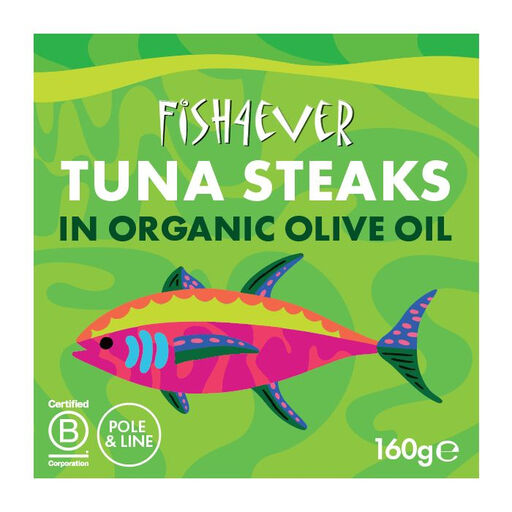 Image unavailable
Consider this tin when olive oil suits the curry and you want an identified organic ingredient rather than assuming the fish is organic.
The product information identifies skipjack tuna (65%), organic olive oil (33.5%) and salt (1.5%). The 160g pack weight is not the drained weight; check the delivered tin for its drained weight and certification wording when planning portions.
No. Ocado’s Fish4ever listing marks the olive oil as organic, lists the skipjack tuna separately and states that total organic ingredients are 33.5%. Check the exact wording and certification on the tin rather than extending the oil claim to the fish.
Choose water or brine if you want the sauce to determine most of the added oil and flavour. Olive-oil-packed tuna is another option when that oil suits the recipe; check the packing liquid and salt information before cooking.
No. MSC certification concerns fishery sourcing, while organic wording concerns the ingredients and their certification. If you want both, look for both claims on the individual product.
Remove unused tuna from the tin and refrigerate it. Chelmsford City Council advises consuming it within two days; follow the pack if it gives a shorter period.
The Food Standards Agency says that people who are pregnant or trying for a baby are advised to have no more than four cans of tuna a week, or no more than two tuna steaks a week.