Fishcake and savoury-bake cooks
If your recipe mixes tuna with potato, sauce or another binder, drainable spring-water chunks let you assess the mixture’s moisture before combining it.


For fishcakes and savoury bakes, tuna chunks in spring water are a starting point when you want to drain the fish and control moisture before mixing. No-drain tuna saves preparation when the recipe can accommodate its liquid; oil-packed tuna is another option when oil suits the dish. Check the exact tin’s ingredients, quantity and storage instructions rather than treating these formats as interchangeable.
If your recipe mixes tuna with potato, sauce or another binder, drainable spring-water chunks let you assess the mixture’s moisture before combining it.
A no-drain portion removes a preparation step when the intended savoury dish can take the liquid in the pack.
Choose between single tins and multipacks according to how many separate portions you expect to use. If a recipe needs only part of a tin, check its instructions for storing the remainder.
For a fishcake mixture, decide how much control you need over liquid before choosing a packing format. Then match the pack size and label instructions to the meals you plan to make.
Choose when: You want to drain the tuna before adding it to a fishcake mixture or savoury bake.
Trade-off: Draining takes a step, and post-opening instructions differ between products.
Choose when: A ready-to-use portion matters and the recipe can accommodate the liquid in the pack.
Trade-off: Check the mixture before substituting it for tuna that a recipe tells you to drain.
Choose when: Oil suits the flavour and texture intended for a savoury filling or bake.
Trade-off: The oil changes what you add to the mixture; drain it and consider other added oil in the recipe.
| Concern | What to check | Who this matters to |
|---|---|---|
| Mixture moisture | Whether the recipe expects drained tuna; whether the tin is a standard or no-drain format. | If a fishcake mixture needs to hold together, I want to control the liquid before adding tuna. About 45% of consumers put that moisture control first. |
| Preparation time | Whether the pack is explicitly no-drain and the recipe can take its included liquid. | For a quick savoury meal, I would rather add a ready-to-use portion than spend time draining it. Roughly 33% of consumers prioritise that convenience. |
| Pack and leftovers | The number and size of tins; the exact instructions for storing tuna after opening. | When planning several meals, I want separate tins that fit the portions I use, without leaving an opened tin for too long. Around 22% of consumers make portion and leftover planning their main concern. |
A fishcake recipe that expects drained tuna may need a different moisture balance if you use a no-drain pack.
Use drainable chunks when the recipe calls for drained fish. If using no-drain tuna, check the mixture before adjusting its binder.
The researched Sainsbury’s spring-water multipack lists 0.12g salt per 100g drained, while the researched Asda multipack lists 0.90g on that basis.
Compare the exact packs using the same nutrition basis and read the current label before choosing.
The researched Sainsbury’s product says to use refrigerated leftovers within one day; the researched Tesco, Asda and M&S examples say within two days.
Transfer unused tuna to a covered non-metallic container, refrigerate it and follow the timeframe on your tin.
Princes lists 180kcal and 9.5g fat per 100g drained for its sunflower-oil chunks, compared with 99kcal and 0.5g fat per 100g drained for its spring-water chunks.
Choose the packing medium to suit the intended dish, and account for oil already present before adding more to the recipe.
Its range includes standard and no-drain spring-water tuna; the format matters if you are deciding whether to drain the fish.
Princes offers chunks in spring water and sunflower oil, giving cooks a choice of packing medium.
Tesco’s own-label spring-water chunks are an option for comparing tin and multipack formats.
The researched own-label spring-water multipack provides a label to compare with other water-packed chunks.
Asda lists spring-water chunks as both a single tin and a multipack.
The researched spring-water chunks list skipjack tuna and spring water.
These spring-water tuna chunks include single tins, multipacks and a no-drain format for savoury fishcakes and bakes. Choose according to how much liquid your recipe can accommodate and how many tins you plan to use.
 No image available
A six-tin spring-water pack for repeated savoury meals where you want to drain the tuna before mixing. The separate 145g tins allow you to open a portion as needed; follow the pack’s instructions for any leftovers.
 No image available
A single spring-water tin for a savoury bake or fishcake recipe when you do not need a multipack. Drain according to the recipe before mixing, and follow the tin’s instructions if you keep leftovers.
 No image available
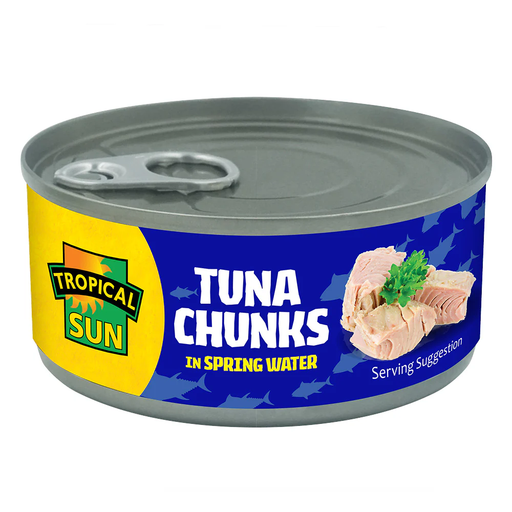
A single 160g tin of spring-water chunks to consider when a savoury recipe calls for drained tuna. If comparing its nutrition with another tin, check that both labels use the same measurement basis; check the current pack for allergen information.
 No image available
Three no-drain tins for quick savoury meals that can accommodate the liquid in the pack. For a tightly bound fishcake mixture, check the recipe before substituting these for drained chunks.
 No image available
Four separate spring-water tins for planning more than one savoury meal. Before using this exact pack in a fishcake mixture, check its drainage instructions rather than assuming it should be used straight from the tin.
This selection is for savoury fishcakes and bakes, not sweet cakes. Princes lists fishcakes and a tuna pasta bake among uses for its tuna chunks.
Transfer unused tuna to a covered non-metallic container and refrigerate it, then follow the exact pack’s use-by instructions. The researched Sainsbury’s product says to use leftovers within one day; researched Tesco, Asda and M&S products state two days.
Tuna is fish, so do not serve it to someone with a fish allergy. Check the current pack’s ingredient and allergen information, including for any other ingredients relevant to the person eating the dish.
The NHS advises people who are pregnant or trying for a baby to have no more than four cans of tuna a week or two tuna steaks a week because tuna contains higher levels of mercury than other fish. This guidance does not distinguish between the brands listed here.