What matters when choosing a tin?
For a plain tea-time tuna base, start with the exact product's ingredient list and sugars declaration, then choose a can size you can use and check its serving warnings.
| Concern |
What to check |
Who this matters to |
| Sugars and seasoning |
Read “of which sugars” on the exact tin, comparing the same per-100g basis, and check whether its ingredients include a sweetened seasoning. |
If I want tuna for a tea-time filling without a sweet sauce, the plain and flavoured variants need separate checks. About 42% of consumers would put sugars and ingredients first. |
| Portions and leftovers |
Compare drained weight and any stated serving size; follow the tin's storage instructions if you do not use it all. |
When one meal needs only a small amount, I want to avoid opening more tuna than I can use. A manageable portion would be the main concern for about 33% of consumers. |
| Allergens and bones |
Read the current fish-allergen declaration and any bone warning; inspect and prepare the tuna before serving. |
For a child with a fish allergy, tuna is not a suitable choice; other carers may be particularly concerned about bones. About 25% of consumers would place these safety checks first. |
Plain spring-water tuna on Joybuy
These products offer plain spring-water tuna in single-can and multipack formats for a tea-time recipe. Compare each current pack's nutrition, allergen and storage information before choosing.
 Image unavailable
Morrisons Fad Free Tuna Chunks in Spring Water, 6 × 145g
The six-pack provides individual cans if you expect to make tuna fillings on more than one occasion.
If a can is not used in full, transfer the remainder to a non-metallic lidded container, refrigerate and use within two days, as the product information directs. Contains fish.
View on Joybuy
 Image unavailable
John West Tuna Chunks in Spring Water, 4 × 125g
The four-can format offers separate tins for meals prepared at different times.
Sainsbury's product information for this 4 × 125g variant declares less than 0.1g sugars per 100g drained and warns that bones may remain. The Joybuy product information directs refrigeration and use within two days after opening. Contains fish.
View on Joybuy
 Image unavailable
Morrisons Fad Free Tuna Chunks in Spring Water, 145g
The single 145g can suits a purchase for one planned recipe rather than a multipack.
For any unused tuna, the product information directs transfer to a non-metallic lidded container, refrigeration and use within two days. Contains fish.
View on Joybuy
 Image unavailable
John West No Drain Tuna Chunks in Spring Water, 3 × 100g
The no-drain format is worth considering if draining tuna is an unwanted preparation step.
Its product information declares 0g sugars per 100g; check the current pack's nutrition basis before comparing that figure with products labelled per 100g drained. Refrigerate opened tuna and use within two days. Contains fish.
View on Joybuy
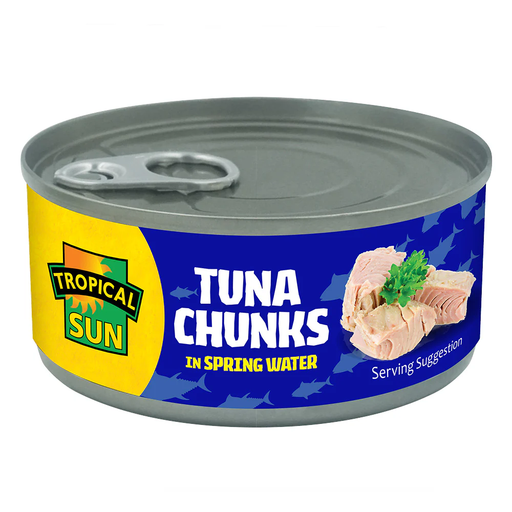 Image unavailable
Topical Sun Tuna Chunks in Spring Water, 160g
The 160g can is another single-tin format to compare with the amount your recipe needs.
Its product information declares 0g sugars per 100g; check the current pack's nutrition basis before comparing drained-weight figures. It advises checking for small bones and supervising children while eating. The product contains fish and may contain traces of soybeans and wheat.
View on Joybuy
Common questions
Do I need a special reduced-sugar tuna tin for kids' tea time?
Not necessarily: plain spring-water examples from Princes, Sainsbury's, John West and M&S declare 0g or less than 0.5g sugars per 100g. Compare the exact tin's sugars line and ingredients, particularly if you are considering a flavoured product.
Is tuna a shellfish allergen?
Tuna is fish, not shellfish. The Food Standards Agency identifies fish as an allergen, so tuna is not suitable for a child with a fish allergy; check the exact pack's current allergen statement for any other allergy concerns.
How should I store tuna left after opening?
Follow the instructions on the exact tin. The reviewed Sainsbury's labels direct transfer to a non-metallic container, refrigeration and use within one day; the reviewed John West and M&S labels specify use within two days after opening.
Does tinned tuna count as oily fish?
No. The NHS states that fresh and canned tuna do not count as oily fish. That classification does not determine an individual child's serving amount or how often they should eat tuna.
Should I choose tuna in spring water, oil or a flavoured variety?
For a plain tea-time base, start by checking a spring-water product's ingredients and sugars declaration. Princes also lists 0.0g sugars for its sunflower-oil tuna, so packing liquid alone does not establish sugar content; compare other nutrition lines if they matter to you. Check flavoured tins individually, as its sweet-chilli variant contains sugar in the seasoning.


