Solo meal planners
You can use a standard tin in one meal or have a plan for any remainder. The drained quantity, rather than the weight including liquid, helps you judge how much tuna the meal will contain.


For a one-person meal, a standard tin makes sense if you will use its drained contents or can store the remainder according to the label. Choose a smaller no-drain can when opening one ready-to-use portion matters more; either way, check drained weight, ingredients and the exact product's storage instructions rather than treating the weight on the front of the tin as the amount of tuna.
You can use a standard tin in one meal or have a plan for any remainder. The drained quantity, rather than the weight including liquid, helps you judge how much tuna the meal will contain.
You would rather open one smaller can, avoid draining and finish it at lunch than store part of a standard tin.
You compare ingredients, salt and stated sourcing details on the particular tin, especially if tuna appears regularly in your meals.
Start with the amount of tuna you intend to eat. A standard tin may suit a full meal, while a smaller no-drain can changes how much you need to prepare or store.
| Concern | What to check | Who this matters to |
|---|---|---|
| Usable portion | Compare drained weight with the amount your meal needs; check whether you will use the whole tin. | If I am making a substantial meal for one, I want to know how much tuna I can actually use rather than count the packing liquid. About 50% of consumers put the usable portion first. |
| Convenience and leftovers | Check the can size, whether it is labelled no-drain and the instructions for any opened remainder. | For lunch with no draining or leftover storage, opening one smaller can may be simpler. Avoiding that extra handling is the primary need for about 30% of consumers. |
| Label details | Read the exact product's ingredients, salt information and any fish-species or sourcing statements. | When tuna is a regular meal ingredient, I want to compare what each tin says before choosing a format. About 20% of consumers put those label details first. |
A 145g Tesco spring-water tin lists 102g of drained tuna: the rest of its stated weight is not drained fish. Sainsbury's labels its checked 145g spring-water tin as two servings, which is worth considering if you expect to eat only part of it.
A tin packed in liquid can weigh more than the fish left after draining. Tesco's checked 145g spring-water tin, for instance, lists 102g drained weight.
Use drained weight to plan the meal, then decide whether the contents will be eaten at once or stored.
Can size and no-drain preparation are separate product details. A multipack of individually sized cans does not, by itself, establish that draining is unnecessary.
If avoiding draining matters, look for a no-drain statement on the exact pack.
The checked Sainsbury's and Tesco spring-water tins specify different periods after opening: one day and two days respectively.
Follow the tin you have opened. Transfer unused tuna to a suitable container, refrigerate it and use it within that product's stated period.
The NHS says fresh and canned tuna do not count as oily fish. A tuna meal therefore should not be mistaken for an oily-fish portion when reading that guidance.
Keep that distinction in mind if fish type is part of your meal planning.
Its own-label spring-water chunks offer a standard-tin format to consider when a meal can use the drained contents.
Its checked 145g spring-water tin is another standard format and is labelled as two servings.
The checked spring-water chunks are a conventional 145g branded tin with an easy-open format.
Its No Drain formats are relevant when opening a smaller, ready-to-use can suits the meal.
Its checked 160g spring-water chunks may interest buyers comparing stated fishing methods.
These selections include No Drain 100g cans, multipacks of 125g cans and a single 145g tin. Choose by the can you would open for one meal, not the total weight of a multipack.
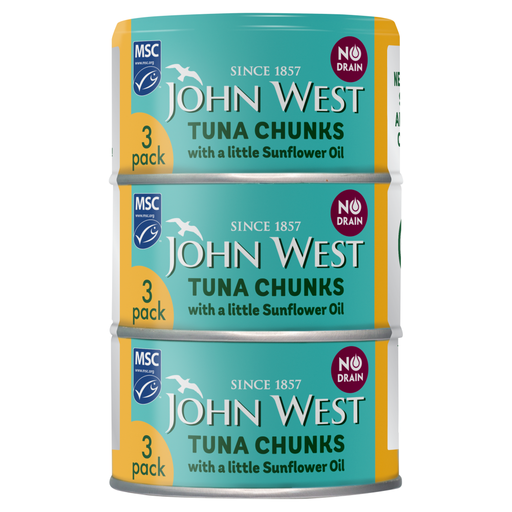 Image unavailable
If you want to open one can without draining, this pack contains three separate 100g cans. Choose this variant if sunflower oil is the packing medium you want, and check the label for the drained quantity relevant to your meal.
 Image unavailable
For a meal built around one ready-to-use can, this springwater variant has three separate 100g cans and is labelled No Drain. Compare the exact label with the sunflower-oil variant if the packing medium matters to you.
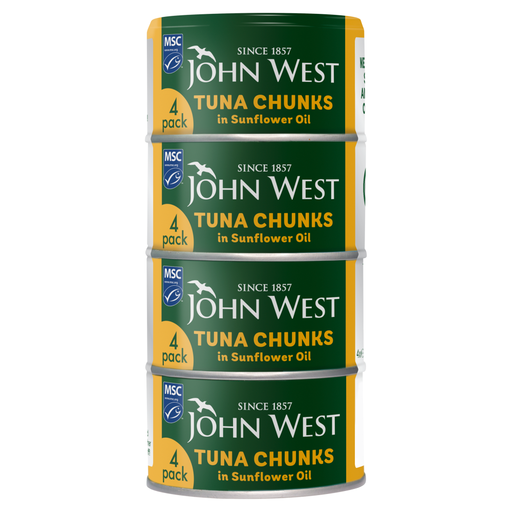 Image unavailable
Four individual 125g cans let you open one at a time for separate meals. Check each can's drained weight when planning a portion; do not assume this variant is no-drain.
 Image unavailable
This pack provides four individual 125g springwater cans for meals prepared on separate occasions. If you need to avoid draining, check this exact pack for a No Drain statement before choosing it.
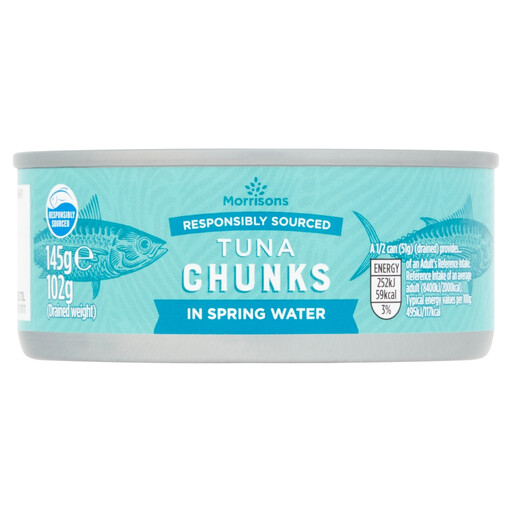 Image unavailable
This single 145g tin suits a meal that can use its contents or a plan for storing a remainder. Read its own drained-weight and after-opening instructions: another brand's 145g tin need not contain the same quantity of fish.
Not necessarily. Sainsbury's labels its checked 145g spring-water tin as two servings, while Tesco's checked 145g tin contains 102g of drained tuna. Use the drained weight and your intended meal size to decide whether you will finish the tin.
Transfer the remainder from the opened can to a suitable container and refrigerate it, then follow that product's instructions. The checked Sainsbury's tin specifies use within one day after opening; the checked Tesco tin specifies two days.
No. The NHS says fresh and canned tuna do not count as oily fish, so a tuna meal should not be counted as an oily-fish portion under its fish guidance.
Yes. The Food Standards Agency stated in November 2024 that Great Britain has a maximum mercury level of 1.0 mg/kg for tuna and certain other species. That regulatory limit does not tell you the mercury level in a particular tin.