What to check when buying
Start with the amount of fish you will use in one meal, then decide whether draining, cupboard planning or a particular label detail changes your choice.
| Concern |
What to check |
Who this matters to |
| Portion size and leftovers |
Compare drained weight per tin, not just pack weight. Sainsbury's lists 56g drained per 80g tin in one pack; Tesco lists 102g drained per 145g tin in another. |
If one sandwich or light salad is the plan, I want a tin I can finish rather than an opened remainder to store. About 28% of consumers would put portion fit first. |
| Preparation |
Check whether the exact product says no-drain. John West labels its 110g spring-water fridge pot as a no-drain format. |
When I am making lunch without a convenient place to drain a tin, avoiding that step matters most. About 22% of consumers would prioritise low-mess preparation. |
| Cupboard planning |
Check the number of tins, drained amount per tin and whether you can use each opened portion. Tesco's 4 × 145g pack lists 102g drained per can. |
If tuna features in several planned meals, I care more about having separate tins ready to use than about the smallest possible portion. Roughly 22% of consumers would make cupboard planning their primary concern. |
| Nutrition and packing liquid |
Compare the stated nutrition basis and your intended serving, particularly salt. Asda lists 14g protein and 0.50g salt per drained can for its 3 × 80g spring-water pack. |
For a meal I make regularly, I want to compare the label of the tuna I will actually eat, including its packing liquid. About 17% of consumers would put label comparison first. |
| Sourcing statements |
Read the statement on the exact pack rather than applying a range-wide claim to every item. Princes says its tuna can be traced to the original boat; that is the brand's own claim. |
If fishing or traceability information determines which tin I buy, I need a statement that applies to that product. Around 11% of consumers would prioritise sourcing information. |
Joybuy tuna selections
These tuna tins and multipacks offer different sizes and packing liquids for single meals or planned repeat use. Check the edible portion on the current pack before deciding that one can matches your meal.
 No image available
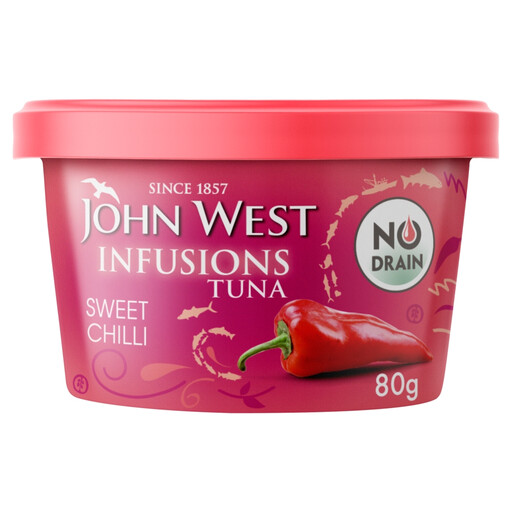
John West Infusions Tuna Sweet Chilli 80g
The 80g can is worth considering when you want a smaller unit for one meal and like a sweet chilli flavour. Check the drained amount if the quantity of fish matters to your portion, and read the ingredient label if oil, sugar or chilli affects your choice.
View on Joybuy
 No image available
John West No Drain Tuna Chunks in Springwater 3 × 100g
Three separate 100g cans suit meals where opening one unit at a time and avoiding a draining step are useful. Check the current label for the edible portion and the basis of any nutrition figures before comparing it with drained tuna from another tin.
View on Joybuy
 No image available
John West No Drain Tuna Chunks in Sunflower Oil 3 × 100g
This three-can no-drain pack is an option when you want individual 100g units and specifically want tuna packed in sunflower oil. It is a different packing liquid from the spring-water variant, so compare the exact labels if that difference matters to your recipe.
View on Joybuy
 No image available
John West Tuna Chunks in Springwater 4 × 125g
Four separate 125g cans may suit repeat meals if you expect to use a can when opened. Check its drained weight against your intended portion, and read the exact pack directions before relying on it as a no-drain option.
View on Joybuy
 No image available
Morrisons Fad Free Tuna Chunks in Spring Water 145g
This single 145g can is an option for a more substantial tuna meal or one with a planned second use. Check the drained weight to see how much fish the can provides, and follow the pack instructions if you keep any opened contents.
View on Joybuy
Questions about tinned tuna
Does tinned tuna count as oily fish?
No. The NHS says fresh and canned tuna do not count as oily fish, so a tuna meal does not fulfil an oily-fish portion in its guidance.
What does the NHS say about tuna during pregnancy?
For people who are pregnant or trying for a baby, the NHS advises no more than four cans of tuna a week or two tuna steaks a week because tuna contains higher levels of mercury than other fish.
How should I keep tuna left over from an opened tin?
Follow the instructions on your exact product. An Ocado listing for an M&S tuna-steak multipack says to move unused contents to a non-metallic container, refrigerate them and eat them within two days; check your own pack rather than applying that instruction to every tuna product.
What if I need to avoid fish allergens?
Tuna is fish, and the cited tuna products declare fish as an allergen. Read the ingredients and allergen information on the exact pack you are considering, including any statements about other ingredients.
Should I buy tuna in spring water, brine or oil?
Choose the packing liquid that suits the recipe, then compare the labels of the specific products. Check salt, the stated nutrition basis and the amount you will eat rather than assuming that all spring-water, brine or oil-packed tins have the same values.


