Family meal planners
If tuna appears in several planned meals, separate cans in a multipack may be practical. Compare the usable drained amount and choose a pack the household can finish without waste.


For a toddler dinner, a multipack makes sense when the household will use its separate cans; choose a smaller or no-drain format when easier serving matters more than buying a larger quantity. Choose steak-format tuna if you want that presentation, but check how it flakes before serving. Whatever the format, read the exact pack label, and do not serve tuna to a child with a fish allergy.
If tuna appears in several planned meals, separate cans in a multipack may be practical. Compare the usable drained amount and choose a pack the household can finish without waste.
A single can or no-drain portion may be easier to manage when only a small amount is needed at a time. The serving still needs a label check and an appropriate texture.
Tuna is fish and must not be served to a child with a fish allergy. For other dietary requirements, read the current pack rather than assuming that different products from one brand have the same ingredients.
Start with whether tuna is suitable for the child, then choose a pack size and serving format that fit the meals you have planned.
| Concern | What to check | Who this matters to |
|---|---|---|
| Label and serving suitability | Read the exact allergen, ingredient and salt information; inspect and flake the tuna before serving. | If a child has a fish allergy, tuna is unsuitable. For another toddler, I would check the label and flake the chunks before serving; about 42% of consumers place label and serving suitability first. |
| Usable quantity | Compare drained amounts and the number of cans with the meals the household will use them for. | When several dinners will use tuna, I want separate cans the household can finish rather than a pack that goes to waste; roughly 33% of consumers prioritise usable quantity. |
| Serving convenience | Check whether draining is required and how much tuna is in each container. | If I need tuna for an occasional dinner, fewer preparation steps and less opened tuna to manage matter to me; about 25% of consumers put serving convenience first. |
The stated can weight and the amount after draining are different measures. A larger multipack also brings little practical benefit if its cans will go unused.
Check the drained amount where it is stated, then choose the number of cans around the meals you plan to make.
Spring-water products can have different ingredient lists and salt values. Asda Groceries lists 0.90g salt per 100g drained for its checked tuna chunks in spring water.
Read the current ingredients and nutrition panel on the exact variant, including whether the salt figure is given per 100g drained or per serving.
Tuna is fish, and the checked Asda Groceries and Princes product listings declare Fish. A familiar brand or similar-looking tin is not a substitute for the exact pack label.
Do not serve tuna to a child with a fish allergy. If an allergy is suspected, follow the child’s clinical advice rather than choosing between tuna variants.
The NHS says tuna has higher mercury levels than other fish, but its stated canned-tuna limit for people who are pregnant or trying for a baby is not a toddler serving rule.
If tuna would be a frequent staple, ask a health visitor, GP or registered dietitian for advice suited to the child.
Tesco’s own-label spring-water tuna includes different multipack sizes for households comparing how much they will use.
Asda’s checked own-label multipack offers another spring-water format for planned family meals.
Princes offers branded tuna chunks in spring water in a conventional multipack format.
John West’s No Drain range is relevant when avoiding a draining step matters at dinner time.
M&S offers chunk and steak formats for shoppers choosing a particular presentation or stated sourcing method.
These spring-water tuna chunks cover single cans and multipacks, including a No Drain option. Choose between them by the amount your household will use and the preparation each pack requires.
 Image unavailable
The No Drain format suits a dinner where you want to skip draining a can. The pack contains three 100g cans; check the current label and flake and inspect the tuna before serving it to a toddler.
 Image unavailable
Six separate 145g cans suit a household planning several tuna meals, provided they will all be used. Check the drained amount and current pack label, then flake and inspect the chunks before serving.
 Image unavailable
A single 145g can may be easier to plan around than a multipack for an occasional tuna dinner. Read its label and check whether any unused tuna will need storing; flake and inspect the portion served.
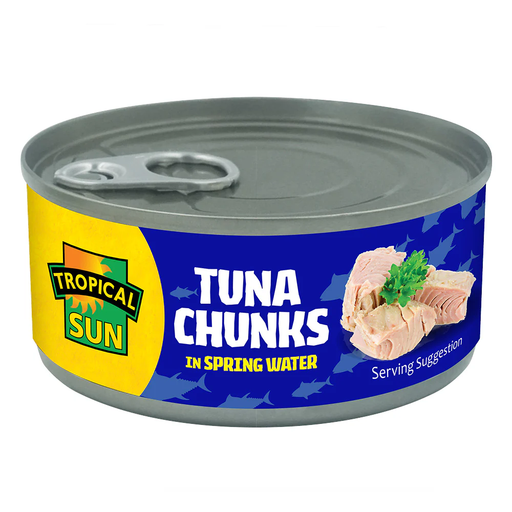 Image unavailable
This 160g single can is another format for an occasional meal. Check its ingredient and allergen label and whether it needs draining; inspect and flake the tuna before serving.
 Image unavailable
Four separate 125g cans may suit repeat meals when that quantity will be used. Check this variant’s pack for draining instructions rather than assuming it is No Drain, and inspect and flake the tuna before serving.
Tinned tuna can be used in a toddler meal if it is suitable for the child. The NHS includes canned tuna among suggested fillings for young children; Royal Devon University Healthcare NHS Foundation Trust advises removing bones and preparing tuna in pieces the child can eat. Check the label, inspect the tuna and flake it before serving.
No. Tuna is fish, and the checked tuna listings declare Fish as an allergen. Tuna is not itself shellfish, so check the exact pack for any other allergen information rather than assuming what it contains. If an allergy is suspected, follow the child’s clinical advice.
Not necessarily. Asda Groceries lists 0.90g salt per 100g drained for its checked spring-water tuna chunks. Compare the ingredients and salt information on the exact pack you intend to serve.
Do not use the NHS canned-tuna limit for people who are pregnant or trying for a baby as a toddler serving rule. The NHS notes that tuna has higher mercury levels than other fish; if you are considering it as a frequent staple, ask a health visitor, GP or registered dietitian for advice suited to the child.