Dinner-for-two planners
You want enough usable tuna for the recipe without judging a pack by its tin weight alone. Drained weight and the number of portions matter when deciding how many tins to open.


For a dinner where tuna is mixed into pasta, a bake or a filling, start with the drained weight of chunks and the amount your recipe needs for two. If the tuna remains visible, a steak format may better fit the planned dish; choose no-drain or oil-packed tuna when its preparation method or packing medium matters, while checking the exact tin for allergens and storage instructions.
You want enough usable tuna for the recipe without judging a pack by its tin weight alone. Drained weight and the number of portions matter when deciding how many tins to open.
You plan to leave the tuna visible in a salad or topping. Whether the product is labelled chunks or steak, and whether it needs draining, may matter more than it would in a sauce.
You want a stated basis for your choice, such as fishery certification, a catch method, a retailer policy or can-code traceability. Check that the statement applies to the exact tin you intend to use.
Decide how the tuna will appear in the meal, then check the usable quantity and the exact variant’s label. A format that matters in a lightly dressed salad may matter less once the fish is mixed into a sauce.
| Concern | What to check | Who this matters to |
|---|---|---|
| Usable portions | Compare stated drained weights and add up the quantity your recipe calls for. | If I’m making pasta for two, I want to know how much tuna remains after draining rather than relying on the tin weight. About 33% of consumers put usable portions first. |
| Presentation and format | Check whether the tin says chunks or steak and whether the fish will stay visible in the dish. | For a lightly dressed salad or topping, I want a format that suits how I plan to serve the tuna. Around 27% of consumers make presentation and format their primary concern. |
| Recipe fit and handling | Read the packing medium, salt figure and instructions for any tuna left after opening. | If my dressing supplies the flavour, I want to choose the packing medium deliberately and know how to handle leftovers. Approximately 20% of consumers put recipe fit and handling first. |
| Sourcing information | Look for a catch-method, fishery-certification, sourcing-policy or traceability statement on the exact product. | When the sourcing statement shapes my choice, I need it to apply to the tin I’m buying, not just the brand. About 20% of consumers treat that as their primary need. |
A tin’s stated weight can include spring water, brine or oil. The drained weight is the more useful figure when the recipe calls for a quantity of tuna.
Check the drained weight on the pack and add together the tins you expect to use for two portions.
Tesco Groceries lists 0.90g salt per 100g drained for its researched spring-water multipack, while Sainsbury’s lists 0.12g per 100g drained for its researched single tin. Their stated instructions after opening also differ.
Read the ingredients, nutrition panel and storage instructions on the exact variant rather than using another tin as a guide.
Sainsbury’s describes pole-and-line catching and Marine Stewardship Council fishery certification for the researched spring-water product. M&S describes its researched chunks under its Forever Fish policy, while John West offers a can-code traceability tool. These statements have different scopes.
Check which claim appears on the product you choose and what it describes.
Tuna is fish, so check the actual can’s allergen declaration and do not serve it to someone with a fish allergy. For people who are pregnant or trying for a baby, the Food Standards Agency’s November 2024 guidance repeats the NHS advice of no more than four cans of tuna or two tuna steaks a week.
Account for tuna eaten during the rest of the week when that guidance applies.
Tesco Groceries lists own-label spring-water chunks in multipack formats that give a stated drained weight for planning portions.
Princes offers chunks in spring water, brine and sunflower oil for dishes such as pasta, salads and jacket potatoes.
John West presents chunk, no-drain and recipe-oriented tuna formats, including a can-code traceability tool.
The researched Sainsbury’s spring-water tuna provides product-specific catch-method and fishery-certification statements.
M&S presents spring-water chunks alongside a stated sourcing policy and pole-and-line catch method for the researched product.
These chunks in spring water or sunflower oil offer options for mixed dishes and simple salads; the list also includes a no-drain format. Use the exact pack’s drained weight to plan how much tuna you need for two.
 Image unavailable
A no-drain chunk format for a dish where you want to add the tuna without a separate draining step.
The pack contains three 100g tins. Check the label’s usable quantity, fish allergen declaration and instructions after opening when planning the meal.
 Image unavailable
Consider these chunks for a salad or pasta dish where sunflower oil suits the planned dressing or sauce.
The pack contains four 125g tins. Check the drained weight for the amount of tuna your recipe requires and read the fish allergen declaration.
 Image unavailable
A spring-water chunk format to consider for pasta or a salad when the recipe provides its own dressing.
The pack contains four 125g tins. Use the stated drained weight, rather than the tin weight, to work out the quantity for two; check the fish allergen declaration.
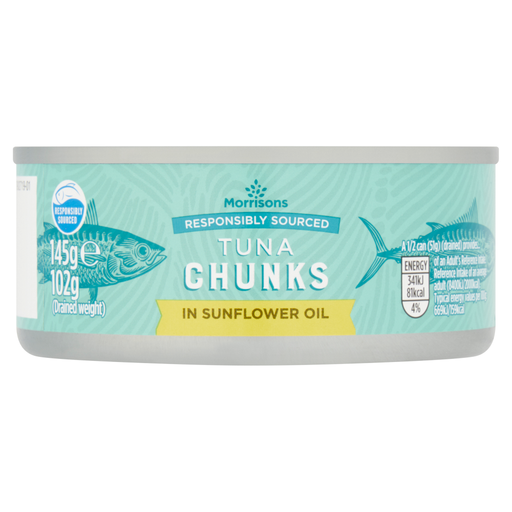 Image unavailable
This single tin offers sunflower-oil-packed chunks for a dish in which that packing medium fits the recipe.
The tin is labelled 145g. Check its drained weight before deciding whether one tin meets the recipe’s quantity, and read the fish allergen declaration.
 Image unavailable
A single spring-water tin to consider for pasta or salad when you plan to supply the dressing separately.
The tin is labelled 145g. Check its drained weight against the amount your recipe needs, along with the fish allergen declaration and after-opening instructions.
Use the recipe’s required amount and each tin’s drained weight, rather than counting tins alone. Tesco Groceries lists 4 x 10²g drained weight for its researched 4 x 145g multipack; add the drained quantities of the tins you plan to use before deciding whether they cover your recipe.
Choose the packing medium to suit your recipe: spring water leaves the dressing to the other ingredients, while an oil-packed tin brings oil into the dish. Check salt on the exact label rather than assuming the packing medium tells you the amount; the researched spring-water products from Tesco and Sainsbury’s list different salt figures.
Transfer leftovers to a non-metallic container, refrigerate them and follow the time stated on the exact tin. The researched Sainsbury’s single tin instructs use within one day, while the researched Tesco product says to consume leftovers within two days.
No. The NHS classifies both fresh and canned tuna separately from oily fish, so a tuna dinner does not count towards an oily-fish serving.
Account for tuna eaten throughout the week, not just at this dinner. The Food Standards Agency’s November 2024 guidance repeats the NHS advice that people who are pregnant or trying for a baby have no more than four cans of tuna or two tuna steaks a week; the can described in that guidance is around 140g drained.