Quick fakeaway cooks
If you are assembling a wrap, melt or rice bowl, a no-drain pack removes the step of tipping away liquid. John West offers a no-drain tuna-chunk format.


For mixed fakeaway fillings, spring-water chunks provide a base you can season with the other ingredients. Choose tuna steaks when you want distinct pieces in the finished dish, or a no-drain format when skipping the draining step matters. Oil-packed chunks are another option if that preserving liquid suits your recipe; check the exact pack for ingredients, fish allergen information and instructions after opening.
If you are assembling a wrap, melt or rice bowl, a no-drain pack removes the step of tipping away liquid. John West offers a no-drain tuna-chunk format.
If you plan several meals from cupboard supplies, consider how many tins you will open and whether their contents match your planned portions. Princes lists both single tins and multipacks of tuna chunks in brine.
If tuna will be visible rather than mixed into a filling, consider whether chunks or steaks suit the dish. For sourcing claims, read the statement on the specific pack: Sainsbury’s describes its spring-water chunks as pole-and-line caught.
Decide whether the tuna will be mixed into a filling or kept in distinct pieces, then consider the preparation step and the number of portions you need.
| Concern | What to check | Who this matters to |
|---|---|---|
| A base for mixed dishes | Check whether the tuna is in spring water, brine or oil, and whether the pack contains chunks or steak. | If I am making a seasoned wrap filling or pasta dish, I want tuna that mixes easily with the other ingredients; about 33% of consumers put that flexibility first. |
| Enough for planned portions | Check the number of tins and the drained weight where stated. | For several cupboard meals, I want a pack that fits the portions I plan to make without opening unnecessary tins; roughly 25% of consumers prioritise portion planning. |
| Fast, low-mess assembly | Look for an explicit no-drain claim; do not assume that every spring-water tin has one. | A quick tuna melt or wrap is easier to assemble when I can skip draining the tuna; around 25% of consumers make that convenience their main concern. |
| Distinct texture or sourcing details | Compare chunks with steaks, and read any sourcing claim on the exact pack. | When tuna is prominent on the plate, I want to choose its texture or check a stated sourcing attribute; about 17% of consumers put those details first. |
Spring water describes the preserving liquid, while no-drain is a separate, product-specific feature. John West explicitly identifies its no-drain chunks as such.
If avoiding the draining step matters for your filling, look for a no-drain statement on the exact pack.
Instructions differ: Sainsbury’s says to refrigerate its cited spring-water chunks in a non-metallic container and use them within one day; Marks & Spencer gives two days for its cited spring-water chunks.
Follow the storage and use-by-after-opening directions on the tin you actually open.
A pole-and-line or certification statement describes the product carrying that claim, not necessarily every tuna format from the same brand.
If sourcing affects your choice, check the wording on the exact product before buying it.
Relevant if you want to compare a no-drain tuna-chunk option with conventional tins.
Relevant for comparing chunks in brine, spring water and sunflower oil.
A supermarket range in which to compare tinned tuna formats for mixed dishes or a more visible topping.
Relevant for its own-label tuna chunks in spring water.
Relevant when comparing spring-water chunks with tuna steak in sunflower oil.
These options cover spring-water chunks for mixed dishes, no-drain chunks for quicker assembly, and oil-packed chunks or steaks for dishes where the tuna is more prominent.
 Image unavailable
Consider these for wraps or fillings when you want to skip draining. The pack contains three 100g tins of spring-water tuna chunks.
 Image unavailable
Consider this multipack if you plan several mixed-dish meals. It contains six 145g tins of spring-water chunks; check the pack’s draining instructions when preparing a filling.
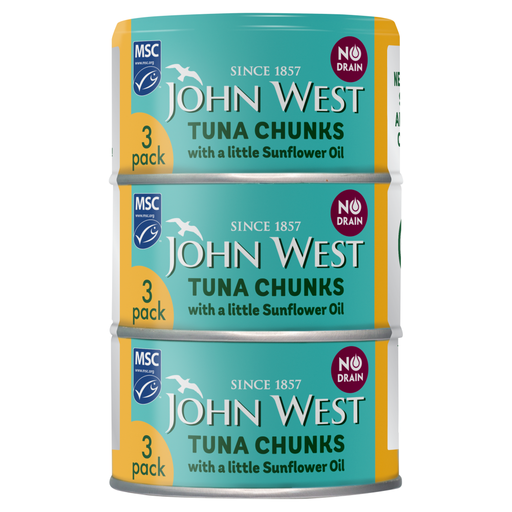 Image unavailable
Consider these for quick assembly when sunflower oil suits the dish. The pack contains three 100g tins of no-drain chunks; choose spring water instead if you do not want an oil-packed base.
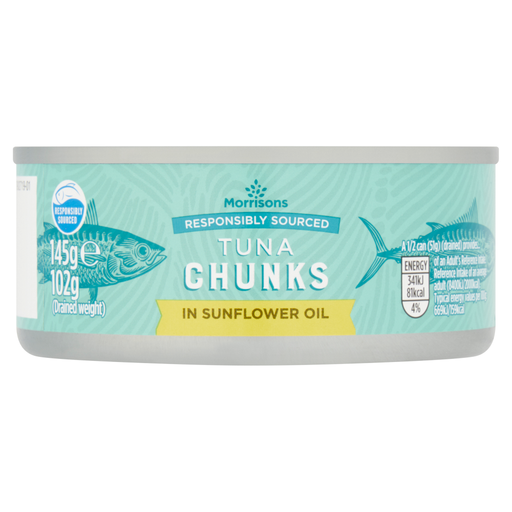 Image unavailable
Consider this tin for a mixed dish when you want tuna packed in sunflower oil rather than spring water. It contains 145g of tuna chunks; check the pack if draining affects your preparation.
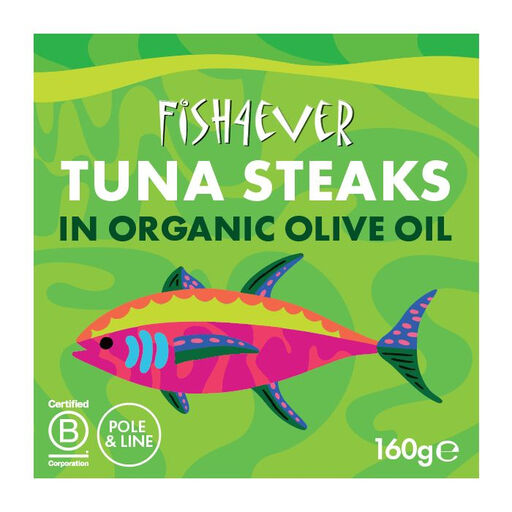 Image unavailable
Consider this when the tuna will be served in distinct pieces rather than stirred into a filling. The 160g tin contains tuna steaks in organic olive oil.
Choose spring-water chunks if you want to season tuna as part of a mixed filling, or consider an oil-packed format when the oil suits the finished dish. Brine products contain salt, so read the ingredients and nutrition label on the individual tin rather than choosing by the preserving liquid alone.
Follow the directions on the specific pack. Sainsbury’s instructs buyers to transfer its cited spring-water chunks to a non-metallic container, refrigerate them and use them within one day; Marks & Spencer gives a two-day period for its cited spring-water chunks.
Tuna is fish, and the cited John West, Sainsbury’s and Marks & Spencer product information identifies fish in the product details. Check the current ingredients and allergen declaration on the exact tin before serving.
Yes. NHS guidance says that during pregnancy, you should eat no more than four cans of tuna or two tuna steaks a week. That limit is relevant when planning how frequently to use tinned tuna, rather than a distinction between the cupboard formats on this page.
No. The NHS states that fresh and canned tuna do not count as oily fish. Packing tuna in oil does not change how that NHS guidance classifies tuna.