Who is this for?

Cooks building a dish around its sauce or seasoning

If the dressing, spices or tomato sauce should set the flavour, spring-water chunks give you a starting point without oil from the tin. Oil-packed tuna is another option when that oil suits the recipe; Marks & Spencer lists both formats.

Organisers assembling a shared meal quickly

For wraps, salads or fillings prepared close to serving time, a no-drain tin removes the draining step. John West describes this format for its No Drain range; a standard tin remains an option when draining is straightforward.

Consumers checking seafood sourcing

If fishing method or certification influences your choice, read the claim on the particular can. Sainsbury's and Asda describe certification on selected products, while Princes makes a fishing-method statement about its canned-tuna range.

What matters when choosing?

Start with the dish: decide whether the tin should contribute oil, then check the label and pack size against the people you are serving.

Concern What to check Who this matters to
Recipe fit Check whether the tuna is packed in spring water, brine or oil, and whether you plan to use the packing liquid. If I am adding my own spices and dressing, I want to decide how much flavour and oil comes from the tin. About 27% of consumers put recipe fit first.
Ingredients and nutrition Compare the exact products' fat and salt values on the same per 100g basis. Check the fish-allergen declaration before serving guests. When the rest of the meal is already planned, I need the ingredients and nutrition panel to help me choose a suitable tin. That is the primary concern for about 27% of consumers.
Sourcing claims Look for certification or fishing-method wording on the particular pack; distinguish it from a general brand statement. I would rather choose using a claim I can identify on the can than rely on the brand name alone. Sourcing assurance comes first for about 20% of consumers.
Servings and preparation Compare can count and drained weight where shown. Check whether the chosen product actually says no-drain. For a shared table or a meal assembled at short notice, I need enough usable tuna without an awkward preparation step. About 26% of consumers prioritise servings and convenience.

Buying pitfalls

  • Assuming water-packed tins have identical labels

    Spring water describes the packing medium, not a standard salt value or drained amount. Different can sizes can also change how much tuna is available for the dish.

    Compare the labels and drained weights of the specific products you are considering before choosing a multipack.

  • Adding oil-packed tuna to an already dressed dish by habit

    Oil from the tin changes the recipe and its nutrition. Marks & Spencer lists 9.0g fat and 189 kcal per 100g for one sunflower-oil tuna product, compared with 0.6g fat and 99 kcal per 100g for one of its spring-water products; those figures describe the two listed products, not every tin in either format.

    Choose oil-packed tuna when its oil suits the finished dish. If you want to control the dressing separately, consider a water-packed option.

  • Treating a sourcing claim as a whole-brand guarantee

    An MSC statement or fishing-method description may apply to a particular product rather than every tuna tin carrying the same brand.

    Read the certification mark and sourcing wording on the exact pack, and distinguish a certification statement from a manufacturer's own claim.

  • Planning servings without checking storage instructions

    An opened multipack may leave more tuna than the meal needs. Tesco instructs buyers of its listed spring-water four-pack to transfer unused contents to a non-metallic container, cover and refrigerate them, and consume them within two days.

    Choose a pack size that fits the meal and follow the storage and use-within instructions on the cans you open.

Brands to consider

John West

Its No Drain range is relevant when you want to assemble wraps, salads or fillings without draining a tin.

  • John West describes a twist-and-pull opening for its No Drain tuna chunks in spring water.
  • Check the chosen pack for its own ingredients, drained amount and sourcing statement; a claim on one product does not cover the entire range.

Princes

A branded range to compare when choosing between packing media and can formats.

  • Princes states that its canned tuna is caught using dolphin-friendly fishing methods.
  • That is the manufacturer's statement; check the selected can for its ingredients, nutrition and any product-specific sourcing wording.

Tesco

Its own-label tuna listings include chunks in spring water, brine and sunflower oil.

  • The listed packing media give cooks several ways to match a tin to the planned sauce or dressing.
  • Check the individual listing or shelf label for can size, drained weight and storage instructions.

Sainsbury's

An own-label option for shoppers comparing spring-water tuna and product-specific sourcing statements.

  • Sainsbury's states that its listed spring-water tuna four-pack comes from fisheries independently certified to the Marine Stewardship Council standard.
  • Check the exact product label rather than extending that statement to other Sainsbury's tins.

Asda

An own-label spring-water four-pack to consider when planning several servings.

  • Asda displays an MSC certification statement for its listed spring-water tuna chunks four-pack.
  • Read the salt value and sourcing wording on the product you choose; spring-water packing alone does not settle either question.

M&S

Its listed spring-water and sunflower-oil chunks illustrate a choice between adding your own dressing and using oil from the tin.

  • Marks & Spencer lists both formats and publishes nutrition information for the individual products.
  • Its listed sunflower-oil chunks and spring-water chunks have different fat and energy values per 100g; compare the particular tins you intend to use.

Tinned tuna options on Joybuy

These tins cover spring-water, sunflower-oil and brine choices for dishes you will season or dress yourself, alongside two John West no-drain formats for quicker assembly.

John West No Drain Tuna Chunks in Springwater, three 100g cans

John West No Drain Tuna Chunks in Springwater, 3 × 100g

For a quickly assembled salad or wrap when you want to add your own seasoning. The pack contains three 100g cans in a no-drain format. Contains fish; follow the pack's instructions for any leftovers.

View on Joybuy
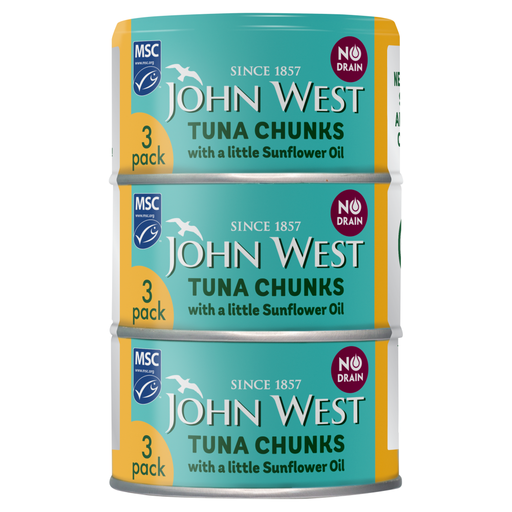
John West No Drain Tuna Chunks in Sunflower Oil, three 100g cans

John West No Drain Tuna Chunks in Sunflower Oil, 3 × 100g

For quick assembly when sunflower oil from the tin suits the dish. This no-drain pack contains three 100g cans. Contains fish; the product information also warns that some bones may remain.

View on Joybuy

John West Tuna Chunks in Springwater, four 125g cans

John West Tuna Chunks in Springwater, 4 × 125g

For several portions where the recipe supplies its own sauce or dressing. The pack contains four 125g cans of spring-water tuna chunks. Check this specific pack's instructions if a no-drain opening matters to you; it is not identified as a no-drain product in its name. Contains fish.

View on Joybuy
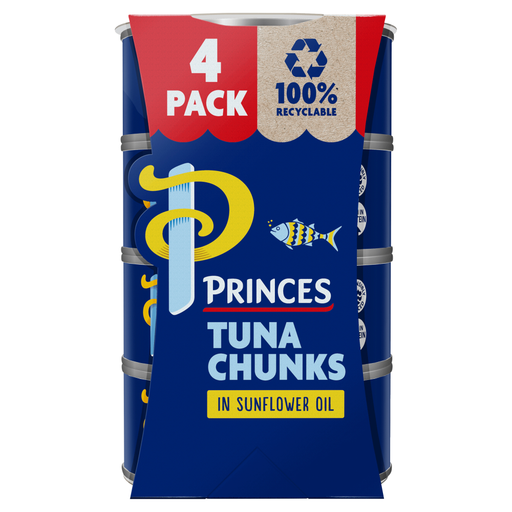
Princes Tuna Chunks in Sunflower Oil, four 145g cans

Princes Tuna Chunks in Sunflower Oil, 4 × 145g

For a multi-portion dish where oil from the tin fits the recipe. The pack contains four 145g cans of tuna chunks in sunflower oil. Compare its nutrition panel with the rest of your ingredients and check the fish-allergen information before serving.

View on Joybuy

Princes Tuna Chunks in Brine, four 145g cans

Princes Tuna Chunks in Brine, 4 × 145g

For a dish that calls for tuna without oil from the tin, provided brine suits your recipe. The pack contains four 145g cans. Compare the salt information with other tins you are considering; this product contains fish, and its information warns that some bones may remain.

View on Joybuy

Questions about tinned tuna

Which tuna format works with a dish that has its own sauce?

Spring-water or brine tuna lets you add the sauce separately without also using oil from the tin. Choose between them using the exact pack's ingredients, salt value and draining instructions; oil-packed tuna suits a recipe where its oil is welcome.

Is a no-drain tin necessary for a quick meal?

No. It removes a preparation step, which may be useful for last-minute wraps or salads, but a standard tin works when draining is practical. Check that the particular product is labelled no-drain rather than assuming the feature applies across a range.

How should I store tuna left after opening a can?

Follow that can's storage instructions. For example, Tesco instructs buyers of its listed spring-water four-pack to move unused tuna to a non-metallic container, cover and refrigerate it, and consume it within two days.

Can I serve tinned tuna to someone with a fish allergy?

Tuna is fish, so do not serve it to someone with a fish allergy. Check the current pack's ingredient and allergen declaration before preparing food for guests.

Does a brand name tell me how every tuna tin is sourced?

No. Check the particular can for a certification mark or fishing-method statement. Sainsbury's and Asda display MSC-related statements for selected products, while Princes states its fishing-method policy for its canned-tuna range; these statements have different scopes.