Students making one dinner
A single tin can be an ingredient for pasta, rice, a jacket potato or sandwiches. Check the drained quantity against the meal you plan to make, and decide what you will do with any leftovers.


For a student dinner, start with a single tin of plain tuna in brine or spring water if you want to mix it into pasta, rice or a jacket potato. Choose oil-packed tuna when the oil suits the dish, or a no-drain format when draining a tin is impractical; whichever you choose, check the drained quantity, nutrition label and instructions for leftovers.
A single tin can be an ingredient for pasta, rice, a jacket potato or sandwiches. Check the drained quantity against the meal you plan to make, and decide what you will do with any leftovers.
Brine, spring water and oil are different recipe choices. Read the nutrition values for the exact tin, using the same per-100g drained basis when comparing them.
Look for a sourcing statement on the particular tin if that matters to you. If draining tuna is awkward in a shared kitchen, a no-drain format is another option to consider.
Choose the packing format for the meal first, then check how much tuna you can use and what the label says about nutrition and storage.
| Priority | What to check | Your needs |
|---|---|---|
| Usable quantity | Check the tin size and its stated drained weight; the liquid-packed weight is not all tuna. Consider whether you will use the whole tin at once. | I want enough tuna for the dish I am making, without opening more than I can use or store. |
| Packing liquid | Read whether the tuna is packed in brine, spring water or oil. For nutrition comparisons, use values stated on the same per-100g drained basis. | For pasta or a jacket potato, I may want plain tuna; for another dish, the oil might be part of the recipe. |
| Salt and allergens | Compare salt on the exact label. Check the ingredients and allergen declaration; some tuna labels also warn that small bones may remain. | Salt or allergens may affect which tin I can use, especially if I am preparing food for someone else. |
| Leftovers | Follow the tin’s after-opening instructions. The ASDA product information says to move unused tuna to a covered, non-metallic container, refrigerate it and use it within two days. | If I only need part of a tin tonight, I need a plan for the rest. |
| Sourcing | Check certification and catch-method claims on the exact product. Tesco identifies its 145g brine tin as MSC-certified; sourcing statements differ between products. | I want to know what a particular tin says about sourcing rather than assuming every tin carries the same claim. |
A 145g tin includes packing liquid, so its stated weight does not tell you how much tuna remains after draining.
Check the drained weight when deciding whether one tin suits your meal or leaves a usable second portion.
The packing medium affects the label values. Sainsbury’s sunflower-oil tuna lists 8.5g fat per 100g drained; that figure should not be applied to its spring-water tin.
Choose the packing liquid for the dish, then read the nutrition panel on the exact product.
After-opening instructions matter when a single tin makes more than one portion. Product labels may also warn that small bones remain.
Move leftovers to a suitable covered container, refrigerate them and follow that tin’s use-within instruction. Check for bones where they are a concern.
These examples describe particular tins and formats, not every product made by each brand.
The reviewed Just Essentials tin contains tuna chunks in brine in a 145g format.
Tesco’s reviewed own-label option is a 145g tin of tuna chunks in brine.
The reviewed own-label 145g tins include spring-water and sunflower-oil formats.
Princes makes a 145g tuna-chunks tin in brine for recipes needing plain tuna.
John West offers standard brine chunks as well as a no-drain format.
The reviewed M&S spring-water chunks come in a 160g tin.
These tins cover plain spring-water and brine chunks, plus a seasoned tuna option for a rice-based meal. Check the individual listing and pack for the details that matter to your dinner.
 No image available
A single spring-water tin for a meal using plain tuna. Check the drained weight if the amount of tuna matters to your recipe.
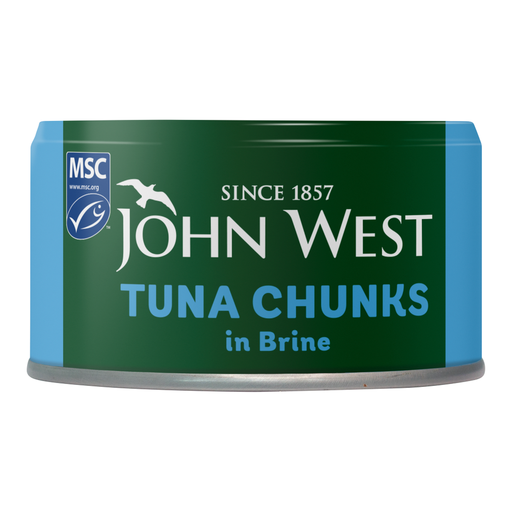 No image available
A smaller plain-brine tin to consider for a single meal. Check its drained weight rather than comparing tin sizes alone.
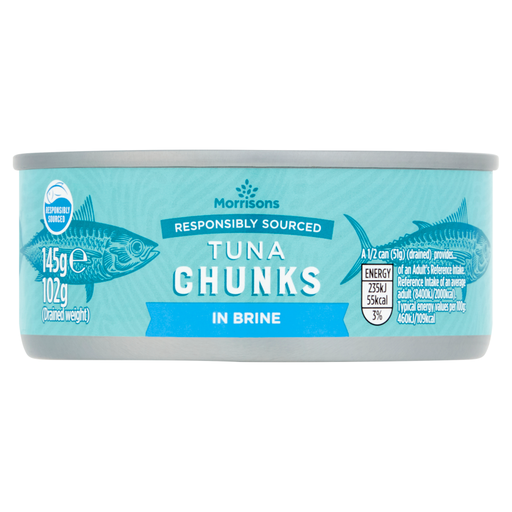 No image available
A single brine tin for pasta or sandwiches. The product information warns that some bones may remain; check the pack’s drained weight and after-opening instructions.
 No image available
Seasoned tuna flakes in sauce for a meal such as rice, rather than plain tuna to mix with your own dressing. Check the ingredients: the product information identifies fish, soybeans and wheat.
It can provide the tuna for a dinner, but the tin weight includes liquid. Check its drained weight against the amount you want for pasta, rice or a jacket potato, and plan how to store any remainder.
Choose brine or spring water for plain tuna to combine with other ingredients; choose oil when it belongs in the finished dish. Read nutrition values for the exact tin rather than assuming the formats are interchangeable.
Move unused tuna out of the opened tin into a suitable covered container and refrigerate it. Follow the use-within instruction on your product: ASDA’s reviewed Just Essentials tin specifies two days.
No. Check the exact product for the claim you want: Tesco identifies its reviewed 145g brine tin as MSC-certified, while M&S describes pole-and-line sourcing for its reviewed spring-water product. These statements do not apply automatically to other tins from either retailer.