Cooks assembling dinner straight away
A no-drain tinned format can go into pasta, a salad, a jacket potato or a wrap without draining. Fresh tuna steaks need chilled storage and cooking; check the instructions on the particular pack.


Choose tinned tuna when dinner needs to come together without cooking the fish: a no-drain format removes a preparation step, while chunks suit fillings and sauces. Choose a fresh tuna steak when you want to cook the fish as the centre of the meal and can follow its chilled-storage instructions. For tins, check the piece size, packing liquid and instructions after opening rather than assuming every format handles the same way.
A no-drain tinned format can go into pasta, a salad, a jacket potato or a wrap without draining. Fresh tuna steaks need chilled storage and cooking; check the instructions on the particular pack.
Spring water leaves the dressing or sauce to you, while oil is already part of the packed product. The labelled energy and fat differ between Sainsbury's cited spring-water and sunflower-oil tuna steaks, so compare the exact products rather than generalising across tins.
Check the fish allergen declaration and the instructions after opening. NHS tuna guidance is also relevant if someone is pregnant or trying for a baby.
Decide whether the meal allows time to cook the fish, then choose a tinned format that suits how you will use it.
| Priority | What to check | Your needs |
|---|---|---|
| Preparation | Check whether a tin says no-drain or gives draining instructions. For fresh fish, follow the pack's cooking and chilled-storage directions; Sainsbury's cited defrosted yellowfin steaks give a 10-minute pan-fry instruction. | If dinner needs assembling straight away, I want tuna I can add without cooking; avoiding draining may save another step. |
| Piece size | Look for steak pieces when distinct pieces matter. Princes describes its sandwich tuna as a mix of chunks and flakes, a different format for mixing into a filling. | For a salad or jacket potato, I may want visible pieces. In a sandwich filling or sauce, chunks and flakes can be mixed through. |
| Packing liquid | Compare ingredients and nutrition per 100g on the exact tin. Sainsbury's lists 116kcal and less than 0.5g fat for its spring-water steak, versus 165kcal and 6.0g fat for its sunflower-oil steak; salt is 0.75g and 0.85g respectively. | If I am adding my own sauce or dressing, spring water leaves that choice open. If the recipe calls for oil, I want to account for what is already in the tin. |
| Storage | Check the date marking and the instructions after opening. The cited John West no-drain and Princes drained products direct users to refrigerate unused tuna and consume it within 2 days. | When I will use only part of a pack, its opening instructions help me plan the remaining portions. |
| Dietary checks | Read the current fish allergen declaration. If pregnancy guidance applies, check the NHS advice for cans of tuna and tuna steaks. | I need to know whether the fish is suitable for everyone eating the meal and whether NHS tuna guidance applies to anyone in the household. |
Sainsbury's lists 165kcal and 6.0g fat per 100g for its sunflower-oil steak, compared with 116kcal and less than 0.5g fat for its spring-water version. Those figures describe these products, not every oil- or water-packed tuna.
Compare the exact labels per 100g and per serving, then choose the packing liquid for the dish.
Sainsbury's cited yellowfin steaks are sold defrosted, require chilled storage and give a 10-minute pan-fry instruction. They cannot simply be stirred into a meal like ready-to-eat tinned tuna.
Choose a ready-to-eat tin for an assembly-only dinner; choose fresh tuna when you can follow its cooking and storage instructions.
The cited John West no-drain and Princes drained tuna products specify refrigeration and use within 2 days after opening. GOV.UK says food whose pack instructs refrigeration after opening should be kept at 5°C or below.
Check the instruction on your pack before opening more than you plan to use.
Tuna is fish, and the cited products declare it as an allergen. NHS guidance sets tuna limits for people who are pregnant or trying for a baby.
Read the current allergen label and check the NHS guidance if it applies to someone eating the meal.
These examples show how formats vary within and between ranges; check the exact product rather than applying one pack's details to a whole brand.
John West offers no-drain tuna steak formats, including a spring-water fridge pot.
Princes lists spring-water chunks, a sandwich mix of chunks and flakes, and a drained tuna steak product.
Tesco lists own-label tinned tuna steaks in spring water, brine and sunflower oil, alongside separate chilled yellowfin steak listings.
Sainsbury's has cited spring-water and sunflower-oil tinned steaks as well as defrosted yellowfin steaks.
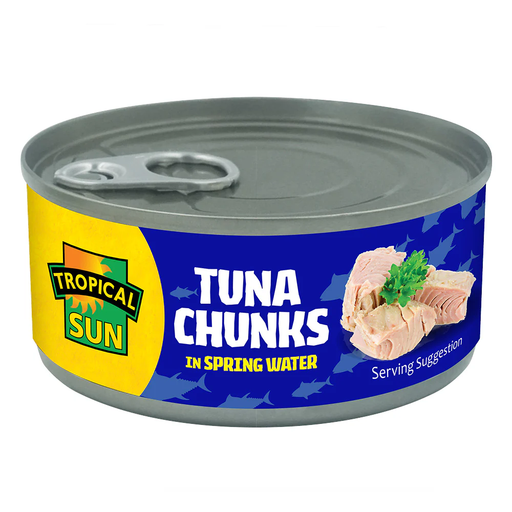
These tuna-chunk products are options for mixing into quick meals, rather than fresh steaks or tinned steak pieces. Check each pack if using the tuna without draining matters to you.
 No image available
The no-drain chunks suit a meal assembled without cooking the fish, such as a sandwich, salad or pasta. They are chunks rather than steak pieces; the product description says to refrigerate unused tuna and consume it within 2 days.
 No image available
Spring-water chunks can be mixed into pasta, salads or sandwiches. This is a six-pack of 145g tins; check the pack's draining directions if skipping that step matters. The product description directs you to transfer unused tuna to a non-metallic lidded container, refrigerate it and consume it within 2 days.
 No image available
This 145g tin offers spring-water chunks for a sandwich, salad or pasta. Check its draining directions if preparation time is the deciding factor. For leftovers, the product description calls for transfer to a non-metallic container, refrigeration and use within 2 days.
 No image available
These chunks can go into a salad, wrap, sandwich or pasta after draining the spring water, as the product description instructs. It also says to refrigerate unused tuna in an airtight container and consume it within 2 days. Check the current allergen label: the description lists fish and says the product may contain traces of soybeans and wheat.
 No image available
Four 125g cans of spring-water chunks offer portions for meals such as salads, sandwiches or pasta. Check the pack's draining directions if you need to use the tuna straight away. The product description says to transfer unused tuna to a non-metallic container, refrigerate it and consume it within 2 days.
Choose ready-to-eat tinned tuna when you need to assemble dinner without cooking the fish; check whether the particular tin needs draining. Fresh tuna suits a cooked-steak meal if you can follow its chilled-storage and cooking instructions. Sainsbury's cited defrosted yellowfin steaks give a 10-minute pan-fry instruction.
Choose the packing liquid for the recipe and compare the exact nutrition labels. Sainsbury's spring-water tuna steak lists 116kcal and less than 0.5g fat per 100g; its sunflower-oil version lists 165kcal and 6.0g fat per 100g. Those figures are specific to these two products.
Follow the instructions on the pack. The cited John West no-drain and Princes drained products specify refrigeration and use within 2 days; GOV.UK says that when packaging instructs refrigeration after opening, the food should be kept at 5°C or below.
Yes. Tuna is fish, and the cited tuna products declare fish as an allergen. Read the current label before serving it to anyone with a fish allergy.
The NHS advises people who are pregnant or trying for a baby to have no more than 4 cans of tuna a week or no more than 2 tuna steaks a week, because tuna contains higher levels of mercury than other fish. That guidance applies to this group, not to all shoppers.