Households making repeat tuna meals
If sandwiches, pasta or jacket potatoes regularly use tuna, the useful amount in each tin and whether the household will finish a multipack matter when choosing a format.


For familiar sandwiches, pasta and jacket potatoes, plain tuna chunks in spring water are a useful starting format if the eater accepts the texture. Choose a tin size the household can use, and compare the declared drained weight; if chunks or draining are the sticking point, consider a chunks-and-flakes or ready-drained product as a separate format.
If sandwiches, pasta or jacket potatoes regularly use tuna, the useful amount in each tin and whether the household will finish a multipack matter when choosing a format.
Standard chunks and a chunks-and-flakes filling offer different textures. Princes describes its Sandwich Tuna as a mix of chunks and flakes, but that does not establish which one an individual eater will prefer.
A single tin, smaller cans or a ready-drained format may fit a quick sandwich or lunch filling when an opened remainder or draining would be inconvenient.
Start with the issue most likely to change whether the tuna gets used: usable quantity, an acceptable texture or the work involved in preparing one portion.
| Concern | What to check | Who this matters to |
|---|---|---|
| Usable quantity | Declared drained weight and number of tins; whether the household will use the whole pack. | For repeat pasta, sandwich or jacket-potato meals, I need enough usable tuna without opening tins that will go unused. About 42% of consumers put usable quantity first. |
| Texture and flavour | Chunks versus chunks and flakes; packing liquid and ingredients on the exact tin. | If the eater notices the texture in a sandwich filling, I would try the format in that meal before committing to several tins. Texture or familiar flavour comes first for about 33% of consumers. |
| Portion convenience | Amount per tin, whether draining is needed and the opened-tin storage directions. | For one quick filling, avoiding a partly used tin or extra draining matters more to me than keeping a multipack on hand. Roughly 25% of consumers prioritise portion convenience. |
The total tin weight includes packing liquid. Tesco Groceries lists 102g drained weight for its 145g spring-water tin, illustrating why the two figures should not be confused.
Check the declared drained weight and whether that amount fits the meal you plan to make.
Sainsbury's lists 0.12g salt per 100g drained for its checked spring-water four-pack, while ASDA Groceries lists 0.90g per 100g drained for its checked four-pack. The packing liquid alone does not tell you the figure.
Read the nutrition panel for the exact product and variant if salt content affects your choice.
Princes describes its Sandwich Tuna as chunks mixed with flakes, rather than the same format as its standard chunks. Neither description establishes what a particular eater will accept.
Try the intended meal with a single tin or small pack before choosing a larger pack.
If the texture is rejected, the remaining tins may not suit the meals you bought them for.
The checked Tesco, Asda and M&S product information warns that bones may remain in tuna chunks.
Check the exact tin's warning and inspect the tuna when preparing a meal for someone who may notice small bones.
Tesco Groceries lists a single 145g tin of skipjack chunks in spring water with 102g drained weight.
Sainsbury's lists its spring-water tuna chunks in a 4 × 145g pack.
ASDA Groceries lists skipjack chunks in spring water in a 4 × 145g pack.
John West has spring-water chunks in multiple pack formats, including a 4 × 125g product listed by Joybuy.
Princes Food and Drinks describes standard spring-water chunks, a Sandwich Tuna mix of chunks and flakes, and a ready-drained range.
Marks & Spencer lists a 160g tin of tuna chunks in spring water.
These tuna chunks include single tins and multipacks for familiar meals, plus a no-drain option for a smaller portion and less preparation. Check each format against the eater's texture preference and the amount needed for the meal.
 Image unavailable
Consider the no-drain format when preparing a small sandwich or lunch filling without a draining step. The pack contains three 100g cans; check the label for the amount that suits your portion and for storage directions after opening.
 Image unavailable
The six-pack is a format to consider if plain tuna chunks are already accepted in repeat meals. Check the drained weight per tin and whether the household will use all six tins.
 Image unavailable
Four separate 125g cans may fit meals made across several days. This is a spring-water chunks product; check the exact pack's drained weight and handling directions before treating it as a no-drain option.
 Image unavailable
A single tin lets you try spring-water chunks in the intended sandwich or pasta meal before choosing several tins. Check its declared drained weight against the portion you need.
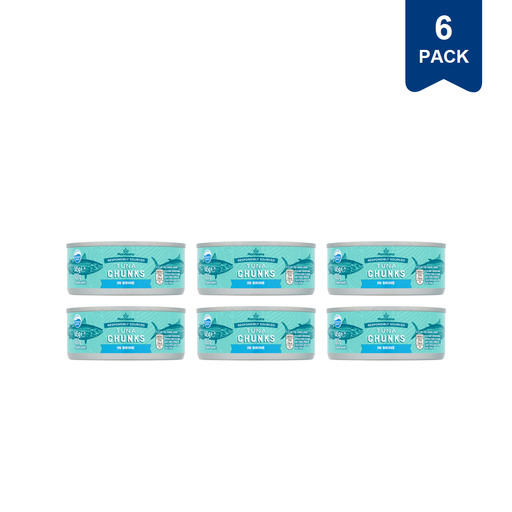 Image unavailable
This six-pack is an option only if the eater accepts tuna packed in brine rather than spring water. Check the ingredients and drained weight on the exact pack before using it for repeat meals.
Drained weight tells you how much remains after the packing liquid is removed, so it is more useful than total tin weight when planning a portion. Tesco Groceries, for example, lists 102g drained weight for its 145g spring-water tin.
No. The checked Sainsbury's spring-water four-pack lists 0.12g salt per 100g drained, while the checked ASDA Groceries spring-water four-pack lists 0.90g per 100g drained. Read the nutrition panel on the exact pack you choose.
Follow the storage directions on that product. The checked Tesco and John West listings instruct shoppers to transfer unused tuna to a non-metallic container, refrigerate it and use it within two days; the checked Sainsbury's listing says to use it within one day.