Parents fitting meals into short breaks
A no-drain pack removes a preparation step when there is little time between feeds, naps or work. Check the packing medium and salt on the particular pack rather than treating convenience as a nutrition claim.


Choose spring-water tuna chunks for adaptable family meals when draining a tin is manageable; choose a no-drain pack when that extra step gets in the way of a quick meal. Compare salt, storage instructions and any sourcing claim on the exact pack rather than assuming a premium format settles those questions. NHS guidance also distinguishes canned tuna from oily fish.
A no-drain pack removes a preparation step when there is little time between feeds, naps or work. Check the packing medium and salt on the particular pack rather than treating convenience as a nutrition claim.
Spring-water chunks can go into pasta, jacket potatoes or sandwiches. Tin size and instructions for storing opened contents matter if a meal uses only part of a pack.
If a stated catching method or independent certification matters to you, look for it on the exact product. A brand name or premium-looking format does not establish how every variant was sourced.
Start with the step that most affects your household’s meals, then compare the exact pack’s label. No-drain convenience, the packing medium, salt and sourcing answer different questions.
| Concern | What to check | Who this matters to |
|---|---|---|
| Low-mess preparation | Check whether the exact pack is no-drain, and identify its packing medium. | If draining a tin interrupts a brief meal break, removing that step matters most. About 36% of consumers would put low-mess preparation first. |
| Protein and fish choices | Compare protein per 100g on the label; plan oily fish separately if following NHS fish guidance. | When tuna is a regular cupboard ingredient, I want to know what it contributes without mistaking it for oily fish. For about 29% of consumers, that distinction would be the primary concern. |
| Sharing family food | Compare salt on the exact pack and check its fish-allergen and possible-bones information before preparing food for a child. | If a family meal might be adapted for a baby who has started solids, salt and preparation need particular attention. Around 21% of consumers would prioritise that family-sharing question. |
| Sourcing assurance | Look for an MSC ecolabel or a specific catching-method statement on the product itself. | For a shopper choosing between similar tins, a clearly stated sourcing credential may decide the purchase. It would be the leading need for about 14% of consumers. |
NHS guidance says fresh and canned tuna do not count as oily fish. A tuna sandwich therefore does not fulfil the oily-fish part of its fish guidance.
If oily fish is part of your meal planning, include it separately rather than relying on the tuna tin.
The cited Sainsbury’s spring-water pack lists 0.12g salt per 100g, while the cited Tesco and Asda packs list 0.90g per 100g drained. The packing medium alone does not tell you the salt value.
Read the nutrition panel of the variant you are buying, particularly if you might adapt the meal for a baby who has started solids.
A no-drain pack removes a handling step, but it can contain spring water, brine or oil. That format alone does not establish its salt level or suitability for a particular meal.
Choose it when avoiding draining genuinely helps, then check the packing medium and nutrition panel against the standard chunks you would otherwise use.
Storage directions differ between products, and some pack information warns that bones may remain. A partly used tin needs the same attention as the meal you make from it.
Follow the exact label’s refrigeration and use-by instructions, check allergen information, and inspect the fish when preparing it for children.
These brands offer relevant formats and labelled product examples; the details below apply to the particular packs described, not every tuna product bearing the brand.
Its no-drain tuna chunks address meals where draining adds an unwanted step.
Its spring-water chunks are an option for routine family meals and cupboard stocking.
Its cited spring-water multipack suits shoppers seeking standard chunks for repeat meals.
Its cited spring-water multipack provides another labelled option for comparing salt and sourcing.
Its cited spring-water multipack has displayed nutrition and storage information for comparison.
Its cited spring-water chunks may interest shoppers looking for a stated catching method.
These no-drain and spring-water tuna chunks cover quick, low-handling meals and standard cupboard options. Compare pack size and the exact label according to the meal you have in mind.
 Image unavailable
Consider this pack when draining would interrupt a short meal break. It contains three 100g cans of no-drain spring-water chunks; compare its salt on the label if sharing or adapting a family meal.
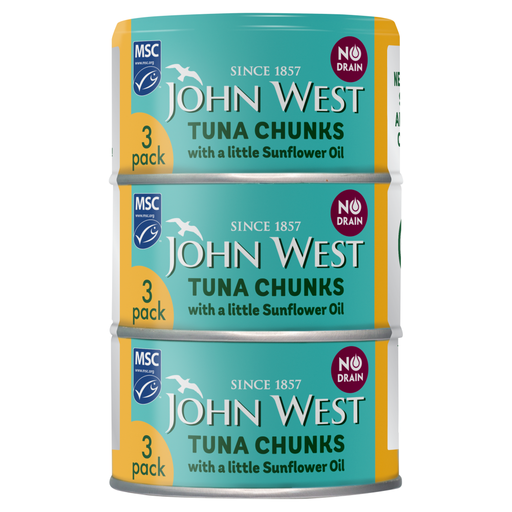 Image unavailable
This is another no-drain option for a quick sandwich or salad, but its sunflower-oil packing medium differs from spring water. The pack contains three 100g cans; check the label for salt and the possible-bones warning when preparing a family meal.
 Image unavailable
The six-can format may suit households keeping spring-water chunks for repeat meals. Each can is 145g. Check the salt on the exact pack and follow its instructions for any contents left after opening.
 Image unavailable
These four 125g cans offer spring-water chunks for routine meals. If avoiding draining is important, check the instructions on this exact variant before treating it as a no-drain pack.
 Image unavailable
A single 145g can suits a smaller cupboard purchase or one planned meal. Check its salt on the label, and use the pack’s storage directions if you do not use all the tuna at once.
No. NHS guidance says fresh and canned tuna do not count as oily fish. Its breastfeeding guidance advises at least two portions of fish a week, including one portion of oily fish, so tuna does not take the place of that oily-fish portion.
For pregnancy or when trying for a baby, NHS guidance says to have no more than four cans of tuna or two tuna steaks a week because tuna contains more mercury than other fish. That guidance should not be presented as the limit for every adult.
When a baby starts solids at around six months, the meal needs age-appropriate preparation rather than an adult serving taken straight from the tin. NHS guidance says babies should not eat much salt; check the tuna’s label, possible-bones information and texture, and supervise eating. Ask a health visitor about your baby’s circumstances if you need individual feeding advice.
Follow the instructions on the exact pack. The cited Tesco, Asda, Princes and M&S examples direct shoppers to transfer unused tuna to a non-metallic container, refrigerate it and use it within two days; the cited Sainsbury’s pack specifies one day.
No. The cited Sainsbury’s spring-water pack lists 0.12g salt per 100g, compared with 0.90g per 100g drained for the cited Tesco and Asda packs. Compare the nutrition panel of the product you are buying rather than using its packing medium or premium positioning as a shortcut.