Hosts making several tuna dishes
Separate tins let you allocate tuna across different recipes and open more as needed. John West, Princes and Tesco list multipack formats relevant to this kind of menu.


Choose separate tins, such as a 4 x 145g multipack, if you are making several dishes and want to open only what each recipe needs; consider a 400g can when most of the tuna will go into one dish. No-drain portions reduce preparation mess but come in a different pack size. Match spring water, brine or sunflower oil to the recipe, and use drained weight—not the number on the front of the tin alone—to plan portions.
Separate tins let you allocate tuna across different recipes and open more as needed. John West, Princes and Tesco list multipack formats relevant to this kind of menu.
If recipes call for a particular amount of tuna, compare the drained weight with what each dish requires. A 4 x 145g multipack and a 400g can describe different pack formats, not necessarily the amount of tuna available after draining.
The packing liquid needs to suit the dishes, while guests may need fish-allergen information. If an MSC ecolabel matters to you, check the exact tin rather than assuming it applies to a brand's whole range.
| Concern | What to check | Who this matters to |
|---|---|---|
| Usable quantity | Check drained weight and the amount needed for each dish. | If several recipes need tuna, I want enough usable fish without opening every tin at once. About 31% of consumers would put portion planning first. |
| Recipe fit | Choose spring water, brine or sunflower oil to suit the seasoning and dressing. | When I am adding my own sauce or spices, the liquid in the tin can change the finished dish. Roughly 31% of consumers would make recipe fit their primary concern. |
| Preparation | Compare separate tins, one larger can and no-drain portions for the way you will assemble the food. | If food must be assembled quickly, I would rather spend less time opening and draining tins. About 23% of consumers would prioritise preparation convenience. |
| Guest and sourcing checks | Read the fish-allergen information and look for an MSC ecolabel if it matters to you. | When guests have dietary requirements, I need to check the exact ingredients before serving; sourcing may also shape my choice. Around 15% of consumers would place these checks first. |
A 3 x 100g no-drain pack, a 4 x 145g multipack and a 400g can are different formats. Tin count and stated pack weight alone do not establish how much drained tuna a recipe will receive.
Add up the quantities your dishes require, then check the drained weight and pack configuration before deciding how many to buy.
Spring water, brine and sunflower oil can affect how you season or dress the tuna. Princes lists tuna and spring water as the ingredients in its spring-water chunks; other variants need their own ingredient checks.
Use spring water when you want to add the flavouring yourself, or choose brine or sunflower oil when that liquid suits the recipe.
Tuna is fish, so an unfamiliar tin or a prepared dish may not be suitable for a guest with a fish allergy. Added ingredients also vary by product.
Check the exact tin and any other ingredients in the finished dish, and share that information with guests who need it.
Princes lists tuna chunks in several packing liquids and multipack sizes.
John West offers conventional tuna-chunk multipacks and a no-drain format.
Tesco lists own-label tuna chunks in multipacks and larger cans.
These multipacks suit a menu that uses separate tins across dishes. Choose the packing liquid to fit each recipe, and check drained weight when planning portions.
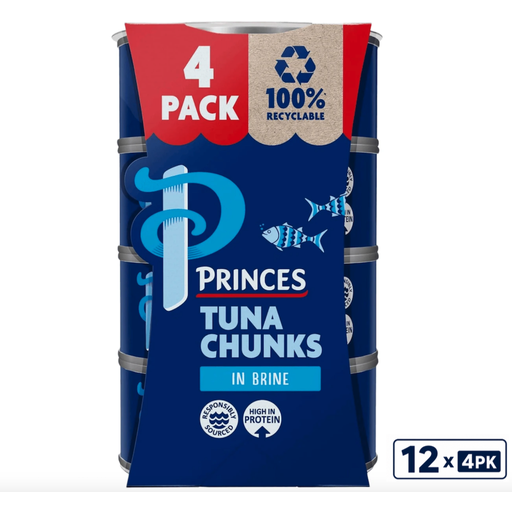 Image unavailable
This larger multipack configuration suits a menu using tuna across several brine-friendly dishes. It contains 12 packs of 4 x 145g tins; check the drained weight on the pack before planning the amount for each recipe.
 Image unavailable
Consider this pack for dishes where sunflower oil suits the recipe. Its four separate 125g tins can be opened as needed; check drained weight when working out portions.
 Image unavailable
This pack suits dishes that will be seasoned or dressed separately. It has four 125g tins of tuna in spring water; read the exact ingredients and drained weight before using it in a recipe.
 Image unavailable
Four separate tins allow you to use brine-packed tuna in different dishes as needed. Each tin is labelled 145g; check its drained weight before scaling a group recipe.
 Image unavailable
Choose this four-tin pack when sunflower oil works with the planned dishes. The tins are labelled 145g each; use the drained weight on the pack to work out the tuna available for serving.
Separate tins, such as a 4 x 145g multipack, give you flexibility when making several dishes; a 400g can is worth considering when one recipe needs most of the tuna. Check drained weight before deciding how many tins or cans your menu requires.
Spring water suits recipes where you will add your own sauce or seasoning. Choose brine when its saltiness fits the dish, or sunflower oil when you want that oil in the recipe; check the exact ingredient list for the variant you buy.
The NHS advises that people who are pregnant or trying for a baby have no more than four cans of tuna a week because tuna contains higher mercury levels than other fish. Tuna served at an event forms part of that weekly total.
Tuna is fish, so check the exact product's allergen information and the ingredients of the finished dish. Share those details with guests who need them before serving.
Look for the MSC ecolabel on the exact product you plan to buy. A label on another tin, pack size or product from the same brand does not establish that this one carries it.