Buffet buyers planning mixed dishes
If tuna will go into a salad or sandwich filling, compare the amount of tuna after draining with the quantity needed for preparation. Can size alone does not tell you the usable yield.


For tuna mixed into buffet salads or sandwich fillings, spring-water chunks offer a straightforward starting point; compare drained weight and the exact product label before choosing a pack size. A ready-drained format may suit a kitchen where draining is inconvenient, while steaks suit dishes where larger pieces are wanted. Whichever format you choose, plan for fish-allergen information and the product’s post-opening storage instructions.
If tuna will go into a salad or sandwich filling, compare the amount of tuna after draining with the quantity needed for preparation. Can size alone does not tell you the usable yield.
Tuna contains fish. Staff preparing and serving a buffet dish need its allergen information to remain clear after the contents leave the can. The UK Food Standards Agency says catering businesses must provide allergen information for non-prepacked as well as prepacked food.
If spring-water tuna fits the intended recipe, check the exact pack’s ingredients and nutrition panel, including fat, protein and salt. A single can and a multipack may also provide different amounts of drained tuna.
Choose a format for the dish and preparation workflow first, then check usable quantity, the label and the handling needed during service.
Consider when: Tuna will be mixed into salads, fillings or other prepared buffet dishes.
Allow for: The can’s stated weight may include liquid, so use its drained weight for quantity planning.
Consider when: Avoiding a draining step matters to the kitchen workflow; Princes describes its drained range as ready to use.
Still check: The exact pack’s usable quantity, ingredients and storage instructions.
Consider when: The dish calls for larger, visible pieces rather than tuna mixed through a filling.
Still check: The product’s bones warning, nutrition panel and post-opening instructions; M&S’s cited spring-water steak says it may contain bones.
| Priority | What to check | Your needs |
|---|---|---|
| Fish allergens | Read the exact ingredients and allergen declaration. Carry fish information through to the prepared dish and buffet service. The UK Food Standards Agency requires catering businesses to provide allergen information for non-prepacked food. | I need guests to be able to identify fish in the finished tuna dish, not just on the unopened can. |
| Usable quantity | Compare drained weight, can count and the quantity needed for each preparation. Tesco lists 102g drained for its cited 145g spring-water can; that figure applies to that product. | If I am making several batches of filling, I need to plan with the tuna available after draining rather than the weight printed prominently on the can. |
| Preparation | Check whether the exact product requires draining and whether chunks or larger pieces suit the dish. Confirm the pack’s handling instructions before building a ready-drained workflow around it. | Less draining would help when preparation time or liquid handling is a constraint; for a mixed sandwich filling, chunks may be the more useful format. |
| Ingredients and nutrition | Compare the packing liquid, ingredients and the stated basis for protein, fat and salt figures on each product. Do not assume a prepared tuna meal has the same ingredients as plain spring-water tuna. | I want the tuna to fit the planned recipe, and I need to know whether other ingredients or allergens will enter the buffet dish. |
| Storage after opening | Read the exact pack’s transfer, refrigeration and use-by instructions. Tesco’s cited 145g can instructs users to move unused contents to a non-metallic container, cover, refrigerate and consume within two days. | Large packs only work for my service if the team can handle and store any unused tuna as the label directs. |
| Sourcing information | If a purchasing policy requires particular species, catch methods or certification, check evidence for the exact product. Treat a retailer’s or brand’s sourcing statement as product-specific unless it expressly covers more. | Where sourcing criteria apply, I need the ordered product to match them rather than relying on a general impression of the brand. |
Can weight can include packing liquid. Tesco lists its cited 145g spring-water can at 102g drained, so the two figures answer different planning questions.
Use the exact product’s drained weight when estimating how much tuna a recipe or service period will require.
Plain spring-water tuna and a prepared tuna meal need not have the same allergen declaration. The cited John West Mediterranean tuna lunch lists wheat and egg as well as fish.
Check ingredients, allergens and the nutrition panel on the product being ordered, especially if substituting a prepared or flavoured option.
The cited Tesco and M&S labels call for refrigeration and use within two days after opening. An unopened can’s ambient-storage role does not replace a plan for leftovers and cold service.
Set out the transfer, labelling, refrigeration and service controls the team will follow, using the exact pack instructions. Food Standards Agency MyHACCP guidance also addresses suitable refrigeration and temperature-monitoring facilities.
A catch-method or certification statement for a named product does not establish the same details for another product from that retailer or brand.
Keep the current specification for the SKU being purchased if species, fishing method or certification forms part of the hotel’s buying criteria.
These examples help distinguish product formats and labels; a brand’s different tuna lines should not be treated as interchangeable.
Princes lists spring-water chunks in several sizes, including 4 x 145g, alongside a separate drained-tuna range.
Tesco’s cited spring-water chunks include a 145g single can and a separate four-can product.
M&S’s cited products include a 640g four-pack of spring-water chunks and a separate spring-water tuna steak.
The cited John West products illustrate the difference between plain spring-water tuna chunks and a prepared tuna lunch.
These options cover spring-water chunks for buffet dishes, including a no-drain multipack and single-can or multipack formats. Check the exact product’s drained quantity and handling instructions when planning portions and service.
 No image available
The no-drain chunk format is relevant where staff want to avoid a draining step when preparing salads or sandwich fillings.
The pack contains three 100g cans. Confirm the usable quantity needed for portion planning, and communicate fish as an allergen in the finished dish.
 No image available
This four-can chunk format can be considered for tuna mixed into buffet salads or sandwich fillings.
The cited product lists tuna, spring water and salt, and declares fish as an allergen. Confirm the exact pack’s draining instructions and drained quantity before planning preparation and portions.
 No image available
The six-can spring-water chunk pack is an option when preparing tuna salads or fillings from several cans.
Each can is labelled 145g. Check its drained weight to plan the usable quantity, and include fish in the finished dish’s allergen information.
 No image available
This single can of spring-water chunks is an option for a smaller batch of salad or sandwich filling.
The can is labelled 145g; check its drained weight when planning portions. The product contains fish, which must be reflected in the prepared dish’s allergen information.
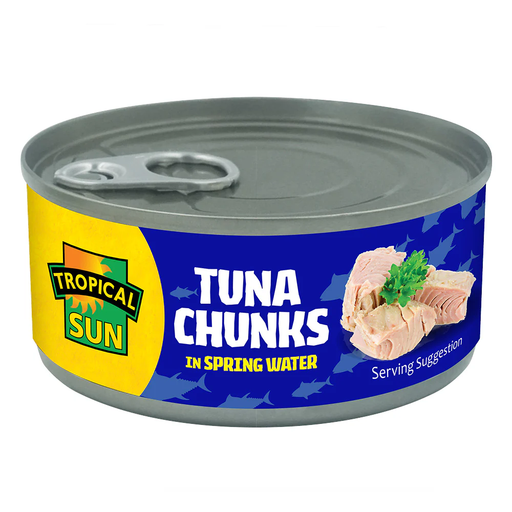 No image available
This single can of spring-water chunks is an option for a small buffet preparation using tuna in a salad or sandwich filling.
The can is labelled 160g; check its drained weight for portion planning. Its listing notes possible traces of soybeans and wheat as well as identifying fish, so check the current label when preparing allergen information.
Yes. The UK Food Standards Agency says catering businesses must provide allergen information for non-prepacked as well as prepacked food. Tuna contains fish, so the hotel’s allergen process needs to cover the prepared buffet dish, not just the original can.
Follow the exact product label rather than assuming an opened can can be stored like an unopened one. The cited Tesco and M&S instructions call for unused tuna to be transferred to a non-metallic container, refrigerated and consumed within two days; check the covering or sealing instruction on the pack being used.
Chunks suit a dish where tuna will be mixed into a salad or filling; consider steaks when larger pieces are wanted in the presentation. Check the exact product’s usable quantity, nutrition panel and bones warning: M&S’s cited spring-water steak says it may contain bones.
No. NHS guidance says fresh and canned tuna do not count as oily fish, so that classification should not be used to describe a tuna buffet dish.