Families making tuna tea regularly
If tuna goes into several planned meals, separate tins let you open only what each meal needs. Princes Food and Drinks lists spring-water multipacks in several sizes.


Choose a multipack if your household uses tuna across several teas; consider a larger single can when one recipe will use most of it, or a smaller no-drain pack when quick preparation matters more than quantity. Compare the stated amount, packing liquid and current label, including ingredients and storage directions. Tuna contains fish, so avoid it for a child with a fish allergy, and check for any possible-bones warning before serving.
If tuna goes into several planned meals, separate tins let you open only what each meal needs. Princes Food and Drinks lists spring-water multipacks in several sizes.
If draining a tin is awkward during a quick teatime, a pack explicitly labelled no-drain may suit the routine. John West lists a 3 x 100g no-drain format.
If a child has a fish allergy, tuna is not a suitable choice. The NHS advises careful label reading for children with food allergies; check the exact product for other relevant allergen information and possible-bones warnings.
For a child with a fish allergy, rule out tuna before comparing formats. Otherwise, start with how much you will use, then check the liquid and label of the exact variant.
| Concern | What to check | Who this matters to |
|---|---|---|
| Amount for planned meals | Compare tin count, stated weight and drained weight where given; check opened-product storage directions. | If I make tuna tea regularly, I want enough unopened tins without leaving more from one can than we can use. About 40% of consumers put the amount needed for repeated meals first. |
| Ingredients and nutrition | Check whether the tuna is packed in spring water, brine or oil, then compare the exact labels per 100g. | When choosing tuna for a particular recipe, I want its liquid and ingredients to fit what I am making. For about 30% of consumers, that label choice is the primary concern. |
| Preparation | Look for an explicit no-drain description and check the quantity in each tin. | After school, I may want to assemble tea without draining tuna, even if a smaller pack covers fewer meals. Quick, low-mess preparation comes first for about 20% of consumers. |
| Allergens and bones | Read the current ingredients and allergen information, and check for a possible-bones warning. | Before serving a child, I need to establish that the food is suitable and check it for bones. About 10% of consumers place this screening above their other buying concerns. |
John West lists a 3 x 100g no-drain pack, while Princes Food and Drinks lists spring-water chunks in 4 x 145g, 6 x 145g and 8 x 145g formats. These quantities suit different meal plans.
Check both the number of tins and the stated or drained amount before deciding how many meals a pack will cover.
Spring water, brine and oil describe how the tuna is packed, not the full ingredients or nutrition of every variant.
Read the exact tin’s ingredients and per-100g nutrition panel for the products you are comparing.
Tuna is fish, and Marks & Spencer warns that its spring-water tuna chunks may contain bones. A shellfish warning should be checked on the particular product where relevant, not assumed for every tuna tin.
Do not serve tuna to a child with a fish allergy. Check the current label and inspect servings for bones.
A large single can may leave tuna to store after tea. Marks & Spencer’s spring-water tuna directions say to refrigerate unused contents and eat them within 2 days.
Follow the storage directions on the exact tin, or choose separate tins if that better matches your planned meals.
Princes Food and Drinks lists spring-water tuna chunks in single-tin and multipack formats, including 4 x 145g, 6 x 145g and 8 x 145g.
John West lists No Drain Tuna Chunks in Brine MSC in a 3 x 100g pack.
Tesco Groceries lists own-brand spring-water tuna chunks in a 4 x 145g multipack and a 400g format.
Marks & Spencer lists spring-water tuna chunks in 160g and 640g formats.
These tuna-chunk multipacks offer separate tins for planned family teas. Choose among their stated pack sizes and liquids, and confirm the retail pack details before buying.
 Image unavailable
Consider this spring-water multipack if you plan to open separate tins across several meals.
 Image unavailable
This four-tin brine pack suits a plan to use tuna across separate family meals.
 Image unavailable
Consider this pack when sunflower oil suits the recipe and you want separate tins for planned meals.
 Image unavailable
This spring-water multipack offers separate tins for meals that call for the stated 125g can size.
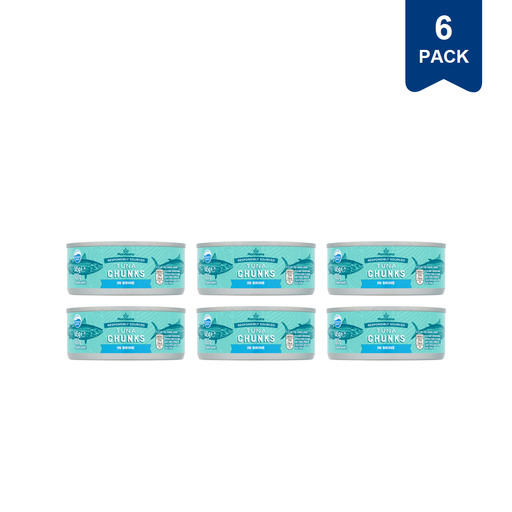 Image unavailable
Consider this brine-packed option for planned meals after confirming how much tuna the retail pack contains.
Choose a tin count you can use across your planned meals, rather than assuming the largest pack is more practical. Princes Food and Drinks lists 4 x 145g, 6 x 145g and 8 x 145g spring-water packs; if one recipe needs more tuna at once, compare a larger single can and its opened-product storage directions.
Choose the liquid to suit the recipe, then read the nutrition and ingredients of the exact variant. Princes Food and Drinks lists tuna and spring water as ingredients in its spring-water chunks, but that does not describe every tuna product.
No: tuna is fish. The NHS advises checking food labels carefully for children with food allergies and avoiding food when you are unsure whether it contains the relevant allergen.
Read the exact tin’s warning and storage directions, and inspect the tuna before serving it to a child. Marks & Spencer warns that its spring-water tuna chunks may contain bones and directs users to refrigerate unused contents and eat them within 2 days.
No. The NHS states that fresh and canned tuna do not count as oily fish, so do not treat a tuna tea as an oily-fish meal.