Families planning several tea-time meals
If tuna is used regularly, the drained quantity in each tin and the ability to use leftovers matter when choosing a pack.


For regular family meals, a multipack of standard tins makes sense when you can use each opened tin within its pack’s storage instructions; a smaller tin may suit an occasional child-sized meal with fewer leftovers. Compare drained quantities rather than tin sizes alone, and check the exact pack for fish allergen information, possible bones, salt and opened-pack directions before serving.
If tuna is used regularly, the drained quantity in each tin and the ability to use leftovers matter when choosing a pack.
For an occasional sandwich or small meal, an individually smaller tin may leave less tuna to store after opening.
The current pack is the place to check fish allergen information, any possible-bones warning and the sourcing claim for that particular product.
| Concern | What to check | Who this matters to |
|---|---|---|
| Usable quantity | Compare drained weight and the number of tins, then consider how much tuna each planned meal will use. | If tuna is on the menu repeatedly, I want a pack that supplies enough usable fish without opening more than I need. About 36% of consumers put usable quantity first. |
| Fish allergen and bones | Read the current ingredient and allergen information, plus any warning that bones may remain. | Before serving a child, I need to know what the tin contains and whether the tuna needs careful checking for bones. For about 29% of consumers, those label and preparation checks come first. |
| Portions and leftovers | Compare individual tin sizes and follow the opened-pack storage directions on the product you buy. | When I only need tuna for one small tea, I would rather avoid an opened tin I cannot finish. Keeping leftovers to a minimum is the primary concern for about 21% of consumers. |
| Sourcing and nutrition details | Check the exact product’s sourcing statement and compare salt figures on the same per-100g basis. | If a stated fishing method or the salt figure guides my choice, I need to compare the particular lines on offer. Around 14% of consumers put those details first. |
Pack sizes do not tell you how much tuna remains after draining or whether you will use an entire opened tin.
Check the drained weight where stated and choose the number and size of tins around the meals you plan to make.
Salt figures and ingredients can differ between products, even when their front labels describe the same packing liquid.
Compare the nutrition information on a consistent per-100g basis and read the ingredients on the exact pack.
The NHS states that fresh and canned tuna do not count as oily fish.
If you are planning meals around oily fish, do not count a tuna meal as that portion.
Tuna is fish, and the cited Tesco, Asda and M&S products warn that bones may remain. A tin is not a reason to skip the label or preparation checks.
Read the current pack and check and flake the tuna before serving it to a child. Do not assume that a tuna product contains shellfish unless its own label identifies it.
John West offers spring-water tuna chunks, including a line described by the brand as MSC-labelled.
Princes lists tuna and spring water as the ingredients in its cited spring-water chunks.
Tesco has own-label spring-water chunks in both a single 145g tin and a 4 x 145g pack.
Sainsbury's offers a 145g spring-water tuna product with a product-specific pole-and-line and MSC-certified fishery claim.
Asda lists spring-water chunks in both 4 x 145g and 3 x 80g formats.
M&S lists spring-water chunks containing skipjack tuna and makes a pole-and-line sourcing claim for the cited product.
These tins offer spring-water choices in single-can and multipack formats, a no-drain option, and a brine multipack. Choose by the packing liquid and the number of separate meals you expect to make.
 Image unavailable
Six separate tins suit several planned meals. Check the drained quantity when comparing packs, and follow the pack’s directions for any tuna left after opening.
 Image unavailable
Four individual tins can be opened across separate meals. Use the drained weight on the pack for quantity comparisons; the 125g tin size is not itself a drained-weight figure.
 Image unavailable
The no-drain format suits a meal where draining a tin is inconvenient, with three tins to open separately. When comparing nutrition labels, check the stated basis for figures per 100g rather than assuming they refer to drained tuna.
 Image unavailable
A single tin avoids buying a multipack for an occasional tuna tea. If it is not all used at once, follow the tin’s opened-pack storage directions.
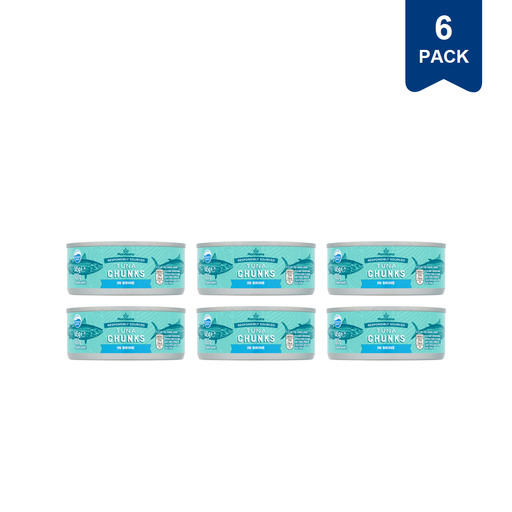 Image unavailable
This six-tin pack suits meals planned around tuna in brine rather than spring water. Its product information warns that bones may remain; check and flake the tuna before serving.
No. The NHS says fresh and canned tuna do not count as oily fish, so a tuna tea does not fulfil an oily-fish portion.
Tuna is fish, but that does not establish that a particular tin contains shellfish. Read the current ingredients and any cross-contact statement on the exact pack, especially when an allergy affects the choice.
Follow the storage instruction on the tin you open. The cited Tesco and Asda products direct consumers to transfer leftovers to a non-metallic container, refrigerate them and use them within 2 days; the cited Sainsbury's product specifies 1 day.
No. The cited Tesco, Asda and M&S products warn that bones may remain. Check and flake the tuna before serving it to a child.