Hosts serving tuna in visible pieces
If tuna is part of a salad, pasta dish or sharing platter, consider steaks or fillets and how their packing liquid will work with the other ingredients.


For wild-caught tinned tuna, check what an organic claim actually covers: Fish4Ever identifies the certified organic ingredient in its tuna steaks as the olive oil, not the fish. Choose steaks or fillets when the pieces will be visible in a dinner-party dish, and check for an MSC label if independent wild-seafood certification matters to you. Organic ingredients, catch methods and MSC certification are separate considerations, so read the wording on the particular pack.
If tuna is part of a salad, pasta dish or sharing platter, consider steaks or fillets and how their packing liquid will work with the other ingredients.
Check whether organic certification applies to the oil or another added ingredient. Fish4Ever says its wild-caught seafood cannot be labelled organic because organic is a farming standard.
If sourcing is a deciding factor, distinguish an MSC label from a pole-and-line catch claim or a retailer’s traceability statement. They convey different information about the tuna.
Start with the claim that matters most to you, then choose the cut and packing liquid to suit the dish. No single label establishes that the fish, added ingredients and sourcing all meet the same criteria.
| Priority | What to check | Your needs |
|---|---|---|
| Organic wording | Read the ingredient list and the wording beside the certification. Fish4Ever’s Joybuy listing identifies its organic olive oil as certified by Ecocert Portugal PT-Bio-02; Fish4Ever does not describe the wild tuna as organic. | I want to know which ingredient is certified, rather than assuming the claim covers the fish. |
| Cut and presentation | Look for steaks or fillets if you plan to place recognisable pieces on a salad or platter. Chunks are an option when the tuna will be mixed through a filling or sauce. | The tuna will be visible on the plate, so the size and form of the pieces matter to my dish. |
| Packing liquid | Check whether the tuna is packed in olive oil or spring water. Oil contributes its own flavour to a dish; spring water leaves you to add the dressing or oil separately. | I want to decide how much of the dish’s flavour comes from the packing liquid and how much I add myself. |
| Sourcing claims | Look for the MSC label if independent wild-capture seafood certification is essential. The Marine Conservation Society describes MSC certification as a sustainability standard with traceability requirements; a pole-and-line claim identifies a catch method instead. | For me, a named certification and a statement about how the tuna was caught answer different questions. |
| Serving guests | Check the fish allergen declaration and the particular pack’s instructions for storage after opening. If pregnancy is relevant to a guest, consult NHS tuna guidance when planning the menu. | I need to check whether guests can eat the dish and how to keep opened tuna before serving it. |
The two descriptions apply to different ingredients. Fish4Ever says wild-caught seafood cannot be labelled organic and identifies the certified organic component of its tuna-steak product as the olive oil.
Read the certification wording alongside the ingredient list before deciding whether the product meets your organic-ingredient preference.
According to the Marine Conservation Society, MSC certification covers a wild-capture seafood sustainability standard with traceability requirements. Pole-and-line describes a catch method, while a retailer’s traceability statement describes its own sourcing approach.
If independent certification is important, check the particular pack for the MSC label rather than relying on other sourcing wording alone.
Steaks and fillets make sense when you want visible pieces of tuna; chunks can work when the fish will be mixed into a filling or sauce.
Decide how you will serve the tuna before choosing between these formats.
Tuna is fish, so its allergen information matters when serving guests. Storage directions apply once a pack has been opened, regardless of its organic or sourcing claims.
Check guest allergies, keep the pack available for ingredient checking and follow its instructions after opening. Consult NHS tuna guidance if pregnancy is relevant to the menu.
These examples show why the wording on an individual product matters more than a general impression of its brand or range.
An option to examine if you want tuna steaks packed in a certified organic ingredient.
A reference for hosts considering tuna steak in spring water and stated sourcing information.
A reference for comparing chunks and drained steak formats in different packing liquids.
A reference for shoppers comparing spring-water chunks and no-drain formats.
A reference for fillets in olive oil where presentation and a product-specific sourcing label matter.
These options cover tuna steaks in certified organic olive oil and tuna fillets in an olive-oil-packed glass jar. Both formats can be considered for a dish where pieces of tuna remain visible; check the distinct ingredient and sourcing claims on each product.
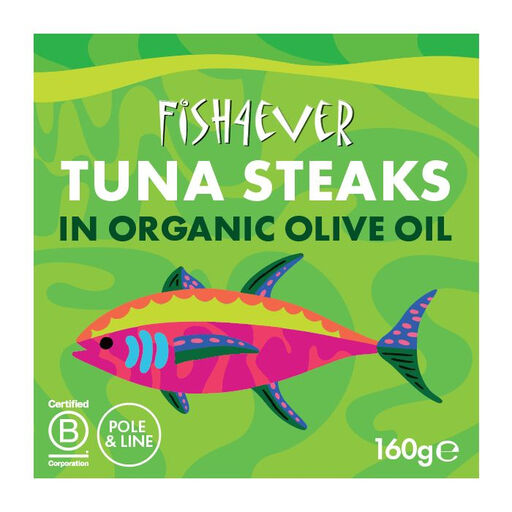 No image available
The steak format is an option for a salad, pasta dish or platter where the tuna remains visible. The listing gives 65% skipjack tuna, 33.5% organic olive oil and 1.5% sea salt; it identifies the oil, not the wild-caught tuna, as certified organic. Contains fish. Follow the pack’s instructions to refrigerate after opening and consume within 2 days.
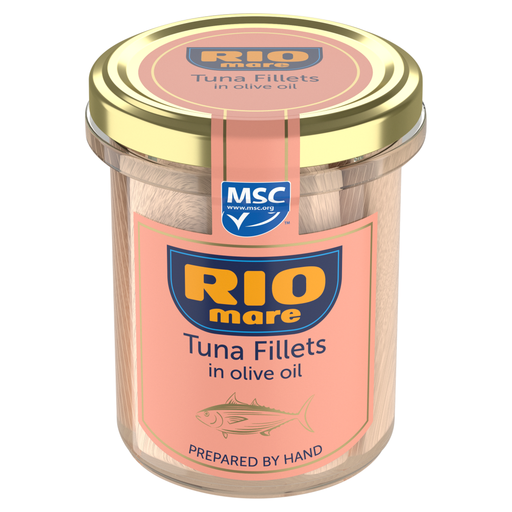 No image available
Fillets in olive oil offer another format for placing recognisable pieces of tuna in a salad or pasta dish. The product description claims MSC certification; check the jar label if that certification is decisive. Check the exact pack if you require a certified organic ingredient, and do not eat the product if the lid is swollen or bloated.
Not necessarily. Fish4Ever says wild-caught seafood cannot be labelled organic because organic is a farming standard. Its tuna-steak listing identifies the olive oil as the certified organic ingredient, so check which ingredient the wording names on any pack you are considering.
Consider steaks or fillets when you want visible pieces in a salad, pasta dish or platter; chunks can work when the tuna will be mixed into a filling or sauce. Also check the packing liquid: olive oil contributes flavour, while spring water lets you add your own dressing or oil.
No. The Marine Conservation Society describes MSC as a sustainability standard for wild-caught seafood with traceability requirements. An organic claim about olive oil identifies a different attribute, and neither claim establishes the other.
Follow the instructions on the particular pack rather than its unopened shelf-life. The Fish4Ever Joybuy listing says to refrigerate after opening and consume within 2 days; Asda’s Rio Mare listing says to refrigerate after opening and consume within a few days.