What matters when buying?
For warming meals, decide which concern comes first for you, then compare the exact tin’s label, format and usable quantity.
| Concern |
What to check |
Who this matters to |
| Organic claim |
Check whether the food itself is labelled organic and carries appropriate certification information, or whether only the olive oil is described as organic. |
If organic food is the priority, an ingredient claim alone will not answer the question. About 31% of consumers would put clarity on the whole-product organic claim first. |
| Meal texture |
Choose between chunks and larger pieces, and check whether the tuna is packed in water, brine or oil. |
For a pasta bake or jacket-potato topping, some consumers want pieces that stay distinct while others want tuna that mixes into a filling. About 25% would make texture and packing medium their primary concern. |
| Fisheries sourcing |
Look for an MSC label or a specific sourcing statement on the product; assess it separately from organic wording. |
When the way the fish is sourced matters more than its packing medium, consumers need a claim about that particular product. Roughly 25% would prioritise a fisheries-sourcing signal. |
| Usable quantity |
Compare drained weights where stated, and check whether a multipack or no-drain format suits the meal. |
Batch cooking may call for several tins, while a quick filling may call for less preparation. For about 19% of consumers, usable quantity and convenience would come first. |
Joybuy product selection
This tuna-steak option is packed in organic olive oil and is listed for pasta and rice dishes. Check the label if you need an organic claim for the whole product rather than its oil ingredient.
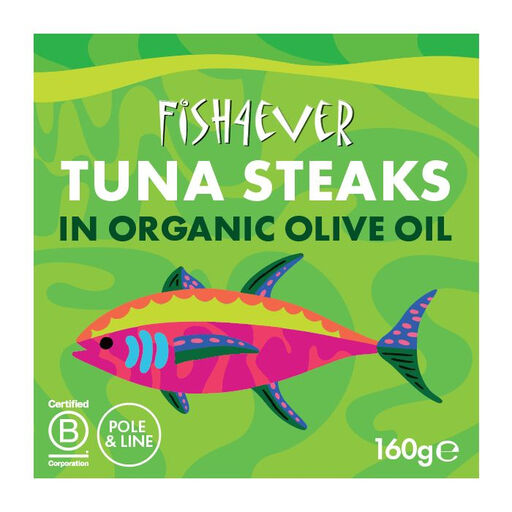 Image unavailable
Fish4ever Tuna Steaks in Organic Olive Oil 160g
Consider this oil-packed option when adding tuna to warm pasta or rice. The 160g pack identifies the olive oil ingredient as organic, not the whole tuna product. If distinct pieces or a particular quantity of fish matter to your recipe, check the actual piece format and drained weight on the tin.
View on Joybuy
Common questions
How can I check whether tinned tuna is organic?
Check whether the organic claim describes the food itself, then look for its certification information. The Department for Environment, Food & Rural Affairs says food can be labelled organic only when it meets the applicable organic production and labelling rules.
Does organic olive oil make a tuna product organic?
No whole-product organic claim follows from the oil ingredient alone. A listing for tuna in organic extra virgin olive oil, for example, identifies the oil as organic; check the complete product label if you want the food itself to carry an organic claim.
Is MSC-certified tuna the same as organic tuna?
No. MSC certification addresses fisheries sourcing, while organic wording concerns a different set of production and labelling requirements. Check which claim appears on the exact tin you intend to buy.
Should I choose chunks or steaks for a pasta bake?
Choose chunks if you want tuna to mix through the bake; consider larger pieces if you want them to remain more distinct. Marks & Spencer specifically suggests its spring-water chunks for pasta bakes and jacket potatoes, so steaks are not essential for either dish.
How should I store tuna left over from an opened tin?
Follow the directions on your particular product. For its spring-water chunks, M&S instructs customers to transfer unused contents to a non-metallic container, refrigerate them and eat them within two days.


