Comfort-dinner cooks watching added sugar
If tuna is going into a pasta bake, jacket potato or melt, plain spring-water and brine products give you a base whose declared sugars you can check separately from the sauce or topping.


For a tuna pasta bake, jacket potato filling or melt, start by comparing plain tuna rather than looking for a special reduced-sugar tin. The M&S and John West products described here declare 0g sugars, while the Sainsbury's spring-water product declares less than 0.5g per 100g drained; packing liquid, salt and the amount needed for the meal may make a more useful distinction. Check the exact label again for flavoured or sauce-based tuna.
If tuna is going into a pasta bake, jacket potato or melt, plain spring-water and brine products give you a base whose declared sugars you can check separately from the sauce or topping.
Pack size, drained quantity and the instructions for an opened tin matter when you are planning several quick meals or expect leftovers.
If sourcing affects your choice, look for an MSC ecolabel or a catch-method statement on the particular product rather than assuming it applies across a brand's range.
Compare nutrition values on the same per-100g drained basis where possible, then choose a packing liquid and tin size that work for the dish.
| Priority | What to check | Your needs |
|---|---|---|
| Sugars and ingredients | Read sugars per 100g drained and the ingredients list. The cited plain-tuna labels declare 0g or less than 0.5g sugars per 100g drained; check flavoured products separately. | I want plain tuna for a savoury filling without assuming a “reduced sugar” description tells me more than the nutrition panel. |
| Salt and packing liquid | Compare salt per 100g drained, particularly for brine. John West lists 1g for its brine chunks; Sainsbury's lists 0.12g for its 4x145g spring-water chunks. | My sauce or topping already has seasoning, so I want to account for the tuna before adding salt. |
| Amount and texture | Check the pack size and drained quantity against the number of portions. Decide whether chunks are the texture you want to mix through pasta or a filling. | A smaller tin may suit one dinner; for several meals, I would check how many tins are in the pack. |
| Sourcing | Look for an MSC ecolabel or a specific catch-method statement on the exact product. A statement about one tin does not establish how an entire range is sourced. | If sourcing matters to me, I want a claim I can identify on the tin I am buying. |
| Opened-tin storage | Read the pack's transfer, refrigeration and use-by instructions. The cited M&S and Princes examples specify two days after opening; Sainsbury's specifies one day. | I may use only part of a tin, so I need to know how to store the remainder. |
The cited plain spring-water and brine products already declare 0g or less than 0.5g sugars per 100g drained. Their salt levels, packing liquids and tin sizes still differ.
Compare the ingredients and nutrition panels on a like-for-like basis, then choose the packing liquid for the recipe.
John West's brine chunks list 1g salt per 100g, and the cited Princes brine tin lists 0.9g per 100g drained. That salt becomes part of the finished filling or sauce.
Drain the tuna, make the dish and taste it before adding more salt.
Product instructions differ: the cited Sainsbury's tuna specifies use within one day after opening, while the M&S and Princes examples specify two days.
Follow the particular pack's instructions for transferring and refrigerating leftovers.
A catch-method statement or certification applies to the product identified, not automatically to other tuna from the same retailer or brand.
Check the current tin for an MSC ecolabel or a specific sourcing statement if that affects your choice.
These product-label examples illustrate differences to check; a value or sourcing statement for one tin should not be applied to a whole range.
The cited Princes products include tuna chunks in spring water and in brine.
John West offers the cited tuna chunks in brine as a plain option for savoury dishes.
The cited M&S product is a 160g tin of tuna chunks in spring water.
The cited spring-water products include a 4x145g pack and smaller 80g tins.
Tesco's tinned-tuna range includes own-brand and branded products in different packing liquids.
These are plain tuna chunks in spring water for pasta dishes, jacket potato fillings and similar comfort dinners. Check each current label for sugars and salt on a comparable basis before choosing.
 No image available
Spring-water chunks are a plain option to mix into a pasta bake; the pack contains four 125g tins. Check the tin's salt value when seasoning the finished dish.
 No image available
For several pasta dishes or jacket potato fillings, this spring-water option comes as six 145g tins. Compare its current drained-basis nutrition panel with other packs you are considering.
 No image available
This single 145g tin is an option when you need a smaller quantity of plain spring-water chunks for a pasta dish or filling. Check the label for drained quantity and seasoning details.
 No image available
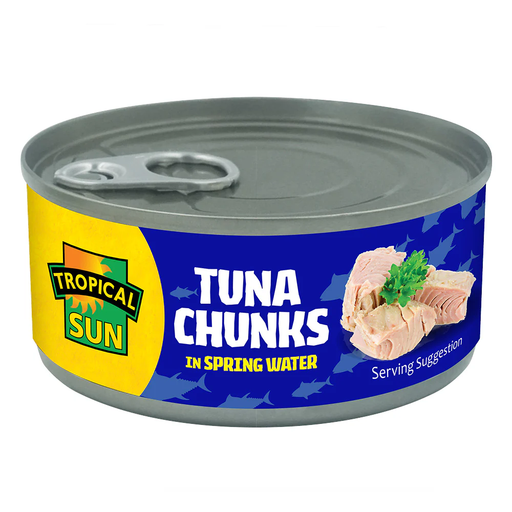
This 160g tin provides spring-water chunks for a savoury pasta dish. When comparing sugars or salt with other tins, check whether its current nutrition figures use the same drained basis.
Not necessarily if you are choosing plain tuna. The cited spring-water and brine products declare 0g or less than 0.5g sugars per 100g drained; read the exact nutrition panel for flavoured or sauce-based products rather than applying those figures to them.
Spring water is a straightforward choice when the bake already has its own sauce and seasoning. Brine can also suit a savoury dish, but account for the product's salt: John West lists 1g per 100g for its cited brine chunks, while Sainsbury's lists 0.12g per 100g drained for its cited spring-water chunks.
Follow that tin's instructions for transferring and refrigerating the remainder. The cited M&S and Princes products specify use within two days after opening, whereas the cited Sainsbury's product specifies one day.
Look for an MSC ecolabel or a specific sourcing statement on the exact tin. A catch-method or certification claim shown for one product should not be assumed to cover every tuna product from its brand or retailer.