Who is this for?

Shoppers seeking certified organic food

You want the exact tinned product to carry a substantiated organic claim, rather than relying on its sourcing or catch-method description. The Department for Environment, Food & Rural Affairs says an organic food claim requires certification by an approved organic control body.

One-meal convenience shoppers

You want enough tuna for one lunch or dinner without unnecessary draining or opened-can leftovers. Small and no-drain formats give you different quantities to compare.

Ingredient-conscious meal planners

You choose between spring water, brine, oil and seasoned tuna according to the dish. The exact ingredients, nutrition label and instructions for storing leftovers matter more than the brand name alone.

What matters when choosing tuna?

ConcernWhat to checkWho this matters to
Organic status Check the exact product’s organic claim and certification details. Under UK rules, the Department for Environment, Food & Rural Affairs requires certification by an approved organic control body. If organic production is my priority, catch-method wording cannot stand in for certification on the tin I buy. About 42% of consumers put verified organic status first.
Portion and preparation Compare drained or usable tuna per tin with your usual meal quantity; check whether the format needs draining. For a quick sandwich or salad, I want a tin I can use in one meal without handling leftovers. Around 33% of consumers make portion fit and easy preparation their primary concern.
Ingredients and leftovers Read the exact variant’s ingredients and nutrition label, then check its instructions for storing any remainder. When planning a dish, I need the packing liquid or seasoning to suit it and a workable plan for any tuna left over. Roughly 25% of consumers prioritise ingredients and leftover management.

Buying mistakes to avoid

  • Taking sourcing claims as proof of organic status

    Traceability, responsible sourcing and catch methods describe different things from organic certification. Under UK rules set out by the Department for Environment, Food & Rural Affairs, the product and its suppliers must be certified by an approved organic control body for it to be labelled organic.

    If organic is non-negotiable, check the claim and certification details for the exact product before choosing it.

  • Comparing only the weight on the front of the tin

    Packing liquid can make the stated pack weight different from the amount of tuna available for a meal. For example, Sainsbury's lists a 3 × 80g spring-water pack as 56g drained per tin.

    Compare drained or usable quantities where stated, then match an individual tin to the amount your meal needs.

    An oversized tin can also leave you with a remainder to store or use.

  • Overlooking instructions after opening

    Storage directions apply to the particular product. Marks & Spencer instructs buyers of one spring-water tuna product to transfer unused contents to a non-metallic container, refrigerate them and eat them within two days.

    Before choosing a larger tin, check its label and make sure you can follow its instructions for any remainder.

Brands to consider

John West

A reference point for small and no-drain tuna formats for one-person meals.

  • Tesco Groceries lists John West no-drain chunks in a 3 × 100g pack; Sainsbury's lists 3 × 60g tuna steaks.
  • These format listings do not establish organic certification for the tuna. Check any organic claim on the exact item.

Princes

Offers spring-water tuna chunks in several individual-tin and multipack formats.

  • Princes lists 145g and 3 × 80g spring-water formats and identifies tuna and spring water as ingredients for this product line.
  • Princes’ statements about traceability and catch methods are brand claims, not evidence of organic certification.

Tesco

An own-label option for comparing small packs and standard cans.

  • Tesco Groceries lists own-label tuna formats including 3 × 80g packs and 145g cans, with brine, spring-water and oil variants.
  • Choose by the details of the particular tin; the tuna listings alone do not establish an organic claim.

Sainsbury's

An own-label range with small packs and standard tuna cans in different packing liquids.

  • Sainsbury's lists 3 × 80g spring-water chunks with 56g drained per tin, alongside larger formats.
  • The listed portion formats do not, by themselves, establish organic status for the tuna.

M&S

A reference point for checking ingredients and opened-storage instructions on a standard can.

  • Marks & Spencer lists a 160g spring-water tuna product and gives instructions for refrigerating and using unused contents.
  • Its sourcing and catch-method descriptions are distinct from an organic certification claim.

Small-format tuna on Joybuy

These small, no-drain tuna formats suit meals where an individual 80g or 100g tin fits the recipe. If organic certification is essential, check the exact pack’s claim and certification separately.

John West No Drain Tuna Chunks in Springwater, 3 × 100g

John West No Drain Tuna Chunks in Springwater, 3 × 100g

Consider an individual tin when 100g suits your meal and you want a no-drain format. Check the exact pack for organic certification if required, and check its usable tuna quantity if your recipe calls for a specific amount.

View on Joybuy
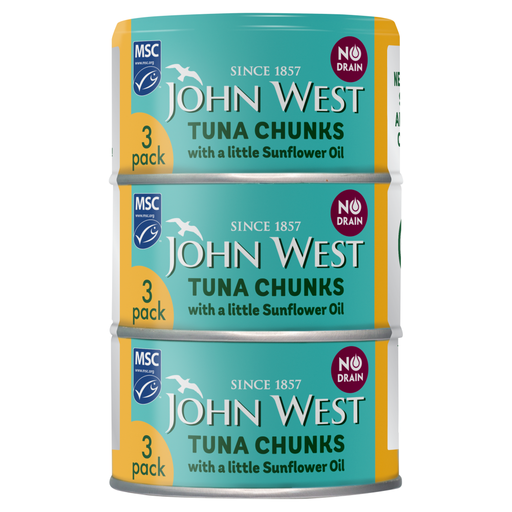
John West No Drain Tuna Chunks in Sunflower Oil, 3 × 100g

John West No Drain Tuna Chunks in Sunflower Oil, 3 × 100g

This is an individual-tin option when 100g suits your meal and the recipe calls for tuna in sunflower oil. Its no-drain format avoids a draining step; check the exact pack for organic certification and usable tuna quantity if either is essential to your choice.

View on Joybuy
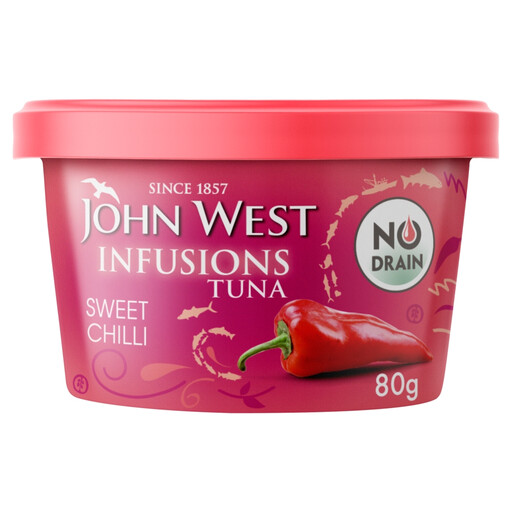
John West Infusions Tuna Sweet Chilli, 80g

John West Infusions Tuna Sweet Chilli, 80g

The 80g seasoned, no-drain format is an option when you want a smaller amount of sweet chilli tuna for a quick meal. Check its ingredients if you want plain tuna, and verify the exact pack’s organic claim and usable quantity if those affect your decision.

View on Joybuy

Common questions

Does wild-caught or responsibly sourced mean organic?

No. Catch method and sourcing are separate claims. Under UK rules set out by the Department for Environment, Food & Rural Affairs, food labelled organic must meet the applicable requirements and the product and its suppliers must be certified by an approved organic control body. Check the exact tin rather than inferring certification from other wording.

Which tin size works for a one-person meal?

Start with the quantity of tuna your recipe uses, comparing drained or usable amounts where stated. Sainsbury's lists a 3 × 80g spring-water pack with 56g drained per tin, while Tesco Groceries lists a 3 × 100g John West no-drain pack. A larger can also works if you use it all or can store the remainder according to its label.

Should I choose spring water, brine or oil?

Choose the packing liquid that suits your dish, then read the exact variant’s ingredients and nutrition label. Princes lists tuna and spring water as the ingredients of its spring-water chunks; brine, oil and seasoned products need to be assessed on their own labels rather than treated as identical.

What should I do with tuna left after opening?

Follow the instructions on that product’s label. Food Standards Scotland advises checking whether opened food needs refrigeration. For one Marks & Spencer spring-water tuna product, the instructions are to transfer unused contents to a non-metallic container, refrigerate them and eat them within two days; do not assume every tin has the same opened-life period.