Family meal planners
If tuna is going into several meals, such as pasta bakes, sandwiches and jacket potatoes, check the drained quantity as well as the number and size of tins.


For a large family shop, plain tuna in spring water or brine is a practical starting point when the aim is lower total sugars: check the sugars figure per 100g on the exact pack rather than relying on its packing liquid alone. Compare drained weight to work out how much tuna is usable across meals, and check salt separately; flavoured or sauced tuna needs its own nutrition-label check.
If tuna is going into several meals, such as pasta bakes, sandwiches and jacket potatoes, check the drained quantity as well as the number and size of tins.
If total sugars are the deciding factor, compare the per-100g nutrition panels of plain and flavoured varieties rather than assuming they have the same recipe.
If quick preparation or managing leftovers matters most, consider whether a no-drain or resealable format fits the meals you have planned.
For a large family shop focused on lower-sugar tuna, check the nutrition label and then match the usable quantity and storage instructions to the meals planned.
| Concern | What to check | Who this matters to |
|---|---|---|
| Usable quantity | Compare the number of tins and their drained weights; plan how many meals the pack needs to cover. | When I am stocking up for several family meals, I need enough drained tuna rather than simply more tins. About 42% of consumers put usable pack quantity first. |
| Total sugars | Read the ‘of which sugars’ figure per 100g on the exact product, particularly for flavoured or sauced tuna. | If I want a plain tuna base, I need the label to confirm its sugar content before choosing a variant. Roughly 33% of consumers make a clear low-sugar choice their primary concern. |
| Salt and leftovers | Check salt per 100g, fish-allergen information and the pack’s after-opening instructions. | With meals planned for different household members, I need to consider salt and what to do with an opened tin. For about 25% of consumers, those household-use checks come first. |
The sugar figures for specific plain spring-water and brine products do not establish the figures for every tuna recipe, especially one with a sauce or flavouring.
Compare the exact pack’s ‘of which sugars’ value per 100g. The NHS uses 5g of total sugars or less per 100g as its low-sugars guide.
Pack count and can size do not tell you how much tuna remains after draining, which matters when dividing a multipack between meals.
Check the drained weight and work out whether the usable quantity fits the meals planned.
Asda Groceries, Sainsbury's and Marks & Spencer list 0.75g to 0.9g salt per 100g for the plain tuna examples cited here. The NHS low-salt guide is 0.3g or less per 100g.
If salt matters to your household, compare its label entry independently of sugars and consider the other ingredients in the meal.
After-opening instructions affect whether the remaining tuna can be used in another planned meal. The cited Princes, M&S and John West products specify refrigeration and use within two days of opening.
Check the instructions on your pack and plan when you will use any leftovers.
John West offers plain spring-water multipacks and a resealable, no-drain pot format for different family-meal routines.
Princes has plain brine and spring-water formats to compare for routine family meals.
Tesco lists own-label spring-water tuna alongside branded tinned-tuna formats.
Sainsbury's lists own-label 4 x 145g tuna multipacks in spring water and brine.
Asda's own-label 4 x 145g spring-water tuna is a multipack option for repeated household meals.
The cited M&S spring-water tuna is a single-can option rather than a family multipack.
These spring-water and brine multipacks offer different can counts for planning several family meals. Check each pack’s current nutrition label and drained weight before choosing.
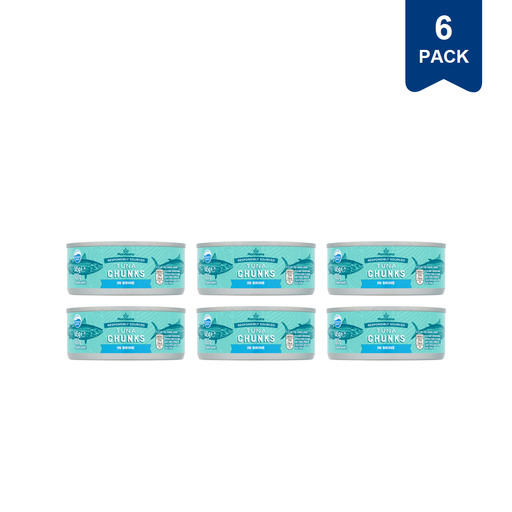 No image available
The six-tin format suits households planning tuna for several meals. Check the drained weight and the sugars and salt figures on the pack before deciding how it fits those meals.
 No image available
This six-tin spring-water pack is another format to consider for repeated family meals. Use its own nutrition panel to check sugars and salt, and its drained weight to plan portions.
 No image available
This larger pack description may suit a household planning many tuna meals. Confirm the supplied pack quantity, total drained weight and storage space needed before ordering; check its nutrition panel separately.
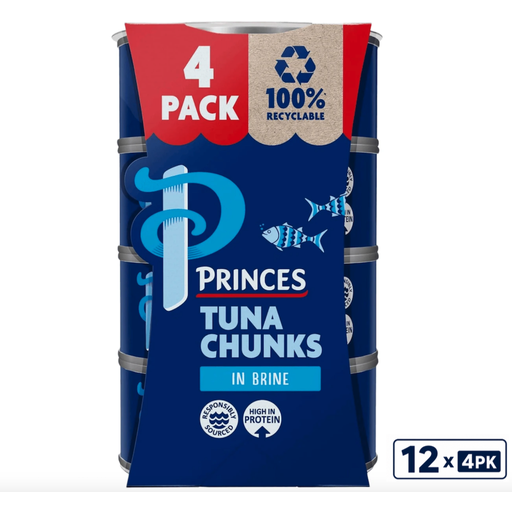
 No image available
The four-tin format can be planned across more than one family meal. Check its drained weight and nutrition panel, and follow this pack’s draining instructions rather than assuming it is a no-drain product.
 No image available
This four-tin brine pack is a smaller stock-up format than the listed 12-pack option. Compare the drained quantity needed for your meals and read the sugars and salt figures on this exact pack.
Read the ‘of which sugars’ figure per 100g on the exact product. The NHS low-sugars guide is 5g of total sugars or less per 100g; check flavoured, sauced and oil-packed varieties on their own labels rather than applying a plain tuna product’s figures to them.
No. The NHS low-salt guide is 0.3g salt or less per 100g, while the cited plain tuna products list higher salt figures. Compare the salt line separately if it affects your choice.
Follow the instructions on the individual pack. The cited Princes, M&S and John West products specify refrigeration and use within two days of opening; check whether your pack also directs you to transfer unused tuna to a suitable covered container.
No. Tuna is fish, which the Food Standards Agency identifies as an allergen. Check the current product label when shopping for a household member with an allergy.
Yes. The NHS notes that tuna contains higher levels of mercury than other fish and that fish advice differs during pregnancy. Check its current pregnancy guidance before planning frequent tuna meals for a pregnant household member.