Start with plain, unflavoured tuna if you need an ingredient list that is straightforward to assess during a low-FODMAP phase. To choose a tin that contributes less salt, compare the current labels on a like-for-like per-100g basis: spring water and no-drain packaging do not, by themselves, establish which tin has less salt. Brine remains an option if you prefer it and its stated salt content fits your needs.
Who this helps
Low-FODMAP ingredient checkers
If you are in a restriction or reintroduction stage, a plain tin is easier to assess than one with added flavourings. Monash FODMAP identifies unflavoured canned fish, including tuna, as a low-FODMAP option; Cambridge University Hospitals NHS Foundation Trust advises checking the full ingredients list of packaged foods.
Salt-conscious everyday tuna buyers
If tuna regularly goes into your sandwiches, salads or jacket potatoes, the salt shown on each tin matters alongside the rest of your food that day. The NHS advises adults to have no more than 6g of salt a day from all sources.
Shoppers choosing a convenient format
A no-drain pack can suit a lunch that needs little preparation. It still calls for the same ingredient and salt checks as a standard tin: John West lists 0.8g salt per 100g for its no-drain spring-water product.
What to check when buying
For a low-FODMAP phase, settle ingredient suitability first, then compare salt figures on the same nutrition basis. Pack format matters once those checks work for the meal you have in mind.
| Concern |
Buying check |
Who this matters to |
| Clear low-FODMAP ingredients |
Read the full ingredients list for added flavourings, particularly garlic or onion when these affect your current low-FODMAP stage. |
During a restriction phase, I want to assess the tin without working through a long list of flavourings. Clear ingredients are the primary concern for about 42% of consumers. |
| Salt contribution |
Compare salt per 100g using the same drained or undrained basis, then consider how much tuna you will eat. |
If tuna is a regular part of lunch, I want to know how much salt my portion adds to the day. About 33% of consumers put that salt contribution first. |
| Usable pack format |
Check whether the tuna needs draining and how much the pack contains; still check the exact format's ingredients and salt. |
For a lunch with little preparation time, I want a pack I can use conveniently without overlooking the label. Ease of use leads the choice for about 25% of consumers. |
Common buying mistakes
-
Assuming spring water means reduced salt
The packing liquid is not a salt figure. Princes lists 0.85g salt per 100g drained for its Tuna Chunks in Spring Water, while Marks & Spencer lists 0.75g per 100g for its spring-water chunks.
Use the current nutrition panels to compare tins, checking whether each figure refers to drained tuna before making a like-for-like choice.
-
Assuming every tuna flavour suits a low-FODMAP phase
Monash FODMAP identifies unflavoured canned tuna as a low-FODMAP option, but added sauces or flavourings change what you need to assess.
When your tolerances are uncertain, start with plain tuna and read the complete ingredients list. Check flavoured products against the requirements of your current stage.
-
Comparing packs without checking the nutrition basis
A small no-drain pack and a larger tin that needs draining need not provide the same usable amount. Their salt figures also need the same per-100g basis for a direct comparison.
Check the pack and drained weights, then compare the stated salt figures on a like-for-like basis.
Brands to consider
These product-line examples show why the ingredients and nutrition panel matter more than a brand name or packing liquid alone.
John West
Its standard brine and no-drain spring-water formats give shoppers different preparation options.
- ASDA Groceries lists tuna, water and salt for John West Tuna Chunks in Brine, with 0.9g salt per 100g drained.
- John West lists 0.8g salt per 100g for its no-drain spring-water product. Do not assume the no-drain format is reduced salt without comparing the current labels.
Princes
Its plain Tuna Chunks in Spring Water provide a short ingredients list to assess.
- Princes lists tuna and spring water as the ingredients for this product.
- Princes lists 0.85g salt per 100g drained; spring-water packing alone is not a reduced-salt claim.
M&S
Its spring-water tuna chunks offer another plain-ingredient label to compare.
- Marks & Spencer lists skipjack tuna and spring water as ingredients, with 0.75g salt per 100g.
- Check the current pack and its nutrition basis before comparing that figure directly with a drained-weight figure on another tin.
Tesco
Its tinned-tuna range includes spring-water and brine formats for shoppers comparing packing liquids.
- Tesco Groceries lists Tesco tuna chunks in both spring water and brine.
- Choose by the individual tin's current ingredients and salt panel rather than treating either format name as a reduced-salt figure.
Tinned tuna on Joybuy
These Joybuy options include spring-water tuna, a no-drain spring-water pack and brine tins. For a low-FODMAP phase and a lower-salt choice, compare the current ingredients and nutrition panels of the particular packs you are considering.
 No image available
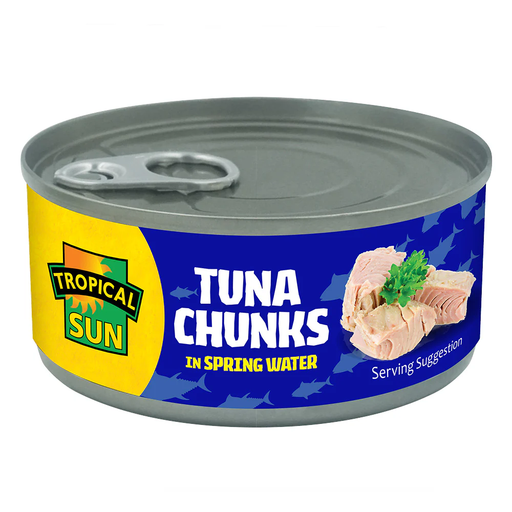
Topical Sun Tuna Chunks in Springwater 160g
A spring-water tin to consider when you want plain tuna for a low-FODMAP phase. The pack is 160g; check its current ingredients and salt per 100g, including whether the nutrition figure uses drained tuna, before comparing it with another tin.
View on Joybuy
 No image available
John West No Drain Tuna Chunks in Springwater 3 x 100g
The no-drain format suits a lunch where draining a tin is inconvenient. This is a pack of three 100g portions in spring water; compare the exact pack's ingredients and salt panel rather than using its format as a shortcut for a reduced-salt choice.
View on Joybuy
 No image available
John West Tuna Chunks in Springwater 4 x 125g
Consider this four-tin spring-water pack if you use tuna across several meals. Each tin is 125g; check the current pack for its ingredients, drained weight, salt figure and draining instructions before comparing it with a no-drain option.
View on Joybuy
 No image available
Princes Tuna Chunks in Brine 4 x 145g
This brine pack is an option if you prefer that flavour and its salt contribution suits your needs. It contains four 145g tins; read the current ingredients and compare salt per 100g on the same drained-weight basis as any alternative.
View on Joybuy
 No image available
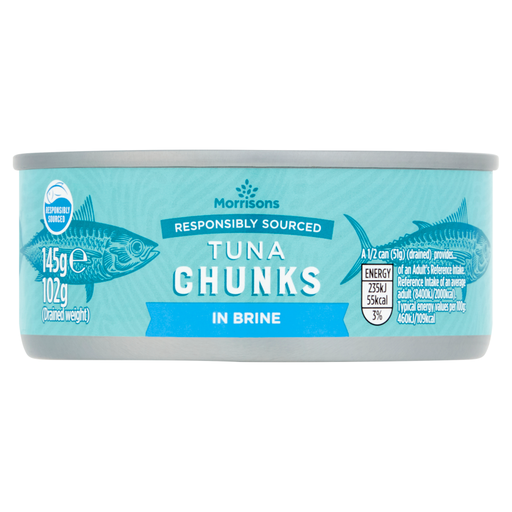
Morrisons Fad Free Tuna Chunks in Brine 145g
This single brine tin may suit a meal where a 145g pack is useful. Check the current ingredients for your low-FODMAP stage, then compare its salt figure and drained weight with the other tins you are considering.
View on Joybuy
Questions about tinned tuna
Is plain tinned tuna low FODMAP?
Monash FODMAP identifies unflavoured canned fish, including tuna, as a low-FODMAP option. Check the complete ingredients list of the tin you buy: a flavoured, marinated or sauce-based version needs its added ingredients assessed separately.
Does spring-water tuna always contain less salt than brine tuna?
No; the packing liquid does not establish the salt figure. Princes lists 0.85g salt per 100g drained for its spring-water chunks, Marks & Spencer lists 0.75g per 100g for its spring-water chunks, and ASDA Groceries lists 0.9g per 100g drained for John West chunks in brine. Check the current labels and use the same nutrition basis for a direct comparison.
How should I use the salt figure on a tuna tin?
Compare salt per 100g on a like-for-like drained or undrained basis, then consider the amount you will eat. The NHS advises adults to have no more than 6g salt a day in total; that is a daily maximum from all foods and added salt, not a target for one tin.


