Picnic planners watching salt
If tuna is going into sandwiches, wraps or salads, compare its salt per 100g and consider what else is in the lunch. Spring water describes the packing liquid, not a low-salt classification.


For a picnic lunch, compare salt per 100g on the exact tin rather than assuming that tuna in spring water is low in salt. M&S lists 0.75g per 100g for its Tuna Steak in Spring Water, while Asda lists 0.90g per 100g for its spring-water chunks; neither meets NHS Inform’s low-salt benchmark of 0.3g or less per 100g. Then choose a pack size you can use at the picnic, or plan how to refrigerate any leftovers.
If tuna is going into sandwiches, wraps or salads, compare its salt per 100g and consider what else is in the lunch. Spring water describes the packing liquid, not a low-salt classification.
A no-drain tin may be convenient when there is nowhere to pour off liquid. Check its salt figure separately: the opening format does not tell you how much salt the tuna contains.
A larger tin or multipack can provide portions for several people, but decide what will happen to any opened tuna. The reviewed product instructions call for leftovers to be transferred from the can, refrigerated and used within two days.
Start with the salt declaration on the exact tin, then choose an opening format and portion size that work at the picnic.
| Priority | What to check | Your needs |
|---|---|---|
| Salt | Compare salt per 100g on the exact product, noting whether the figure is for drained tuna. NHS Inform defines low salt as 0.3g or less per 100g; do not use “spring water” as a substitute for the nutrition panel. | I’m comparing tins for a lunch that may also include bread, cheese, crisps or condiments, so the tuna’s salt figure matters alongside the rest of the meal. |
| Opening format | Check whether the tin is specifically labelled no-drain and how it opens. A standard spring-water tin may need draining when you prepare the food. | If I’m making sandwiches or salad outdoors, I’d rather not have to dispose of liquid at the picnic spot. |
| Portions | Compare the number and size of tins with the amount you expect to serve. Check the chosen product’s instructions for storing unused contents after opening. | For a shared lunch, a larger pack could work if we will eat it or can refrigerate what remains. Otherwise, separate tins may be easier to portion. |
| Allergens | Tuna is fish. Check the current allergen declaration on every product you plan to serve, particularly when food will be shared. | I need to know which picnic dishes contain fish before offering them to other people. |
The reviewed spring-water products list between 0.75g and 0.90g salt per 100g. NHS Inform’s low-salt benchmark is 0.3g or less per 100g.
Compare the salt declaration on the exact tin, and consider the other foods you are packing.
Princes lists 0.85g salt per 100g drained for its Tuna Chunks in Spring Water and 0.90g per 100g drained for its Tuna Chunks in Brine. That comparison applies to those products, not every spring-water and brine tin.
If reducing salt is a priority, compare the nutrition panels of the particular tins you are considering.
Instructions for several reviewed tins require unused tuna to be transferred from the can, refrigerated and used within two days.
Choose a portion you expect to finish, or arrange to keep leftovers chilled and follow the tin’s storage directions.
Without a way to refrigerate opened leftovers, some of a larger tin may have to be discarded.
Salt figures and storage directions need to apply to the particular product you take to the picnic.
Before serving, check the physical label for salt, allergens, pack size and instructions after opening.
M&S Tuna Steak in Spring Water is an option to consider when a larger tin suits a shared picnic.
John West has conventional spring-water multipacks and a No Drain spring-water format for different ways of preparing picnic food.
Princes lists tuna chunks in spring water and brine, allowing a comparison between specific formats.
Asda Tuna Chunks in Spring Water 4 x 145g provides separate tins for planning several portions.
Tesco lists own-brand tuna chunks in spring water and brine.
Sainsbury's lists own-brand tuna chunks in spring water and brine, including 4 x 145g packs.
These Joybuy options include a No Drain multipack, a conventional spring-water multipack and a single spring-water tin. Compare each pack’s salt label and portion size for your picnic; the opening formats are not interchangeable.
 No image available
The No Drain format suits assembling sandwiches or salads where disposing of liquid would be inconvenient. This pack contains three 100g tins; check the salt per 100g on the pack separately from its opening format.
 No image available
Four separate 125g tins may help portion tuna across picnic lunches. Joybuy lists 0.80g salt per 100g drained for this product; check its opening and draining instructions if you plan to prepare the food outdoors. Transfer unused opened contents to a non-metallic container, refrigerate and use within two days, according to Joybuy’s product directions.
 No image available
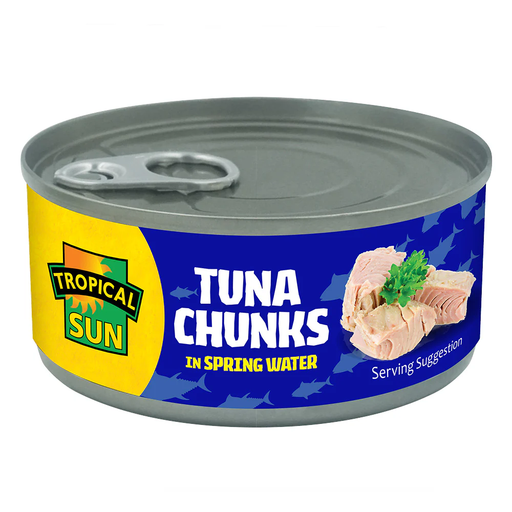
This single 160g tin is a different portion format from the multipacks. Check the current pack’s salt per 100g and whether the figure is for drained tuna before comparing it with other tins. Follow its directions for refrigerating any opened leftovers.
No. The reviewed spring-water tins list 0.75g to 0.90g salt per 100g, while NHS Inform defines low salt as 0.3g or less per 100g. Check the nutrition panel of the exact tin instead of relying on its packing liquid.
M&S Tuna Steak in Spring Water lists 0.75g salt per 100g, the lowest figure among the specific reviewed tins. It is not low salt under NHS Inform’s benchmark, and the figure should not be applied to other M&S tuna products.
Yes, if you follow the product’s unopened-storage directions and the tin remains intact. Check it before use, and plan separately for any tuna left after opening.
Follow the tin’s instructions: the reviewed M&S, John West and Asda products direct you to transfer unused contents from the can, refrigerate them and use them within two days. If you cannot keep leftovers chilled, open only the amount you expect to eat.
Check each product’s current allergen label: tuna is fish, and the reviewed products declare fish as an allergen. Identify tuna-containing dishes before sharing picnic food with anyone who needs to avoid fish.