For a lower-sugar late-night supper, start with plain tuna in spring water or brine and compare the sugars figure for the exact tin; a no-drain variety can also work if its label meets the same need. Prepared tuna fillings offer less assembly but may contain added ingredients, so consider salt, portion size and storage alongside sugars.
Who is this for?
Shoppers checking for added ingredients
If you want plain tuna as the base of a late supper, the distinction between a tin of chunks and a tuna-and-sweetcorn mayonnaise filling matters. Tesco, Asda and Princes list plain tuna products, while Asda’s prepared filling lists sugar among its ingredients.
Shoppers short on preparation time
A tin for toast, a jacket potato, pasta or salad keeps assembly simple. If draining is the step you want to avoid, compare a no-drain variety with conventional tins and check the amount in each can.
Shoppers comparing salt as well as sugars
A low sugars figure does not settle the salt question. Compare both figures on the same per-100g basis, then consider how much tuna you expect to use.
What matters when choosing?
Choose the product type before comparing nutrition panels: plain tins, no-drain tuna and prepared fillings serve different late-supper needs.
| Concern |
What to check |
Who this matters to |
| Unexpected sugar |
Compare sugars per 100g and for the portion you intend to use. Read the ingredients when moving from plain tuna to a filling or flavoured variety. |
If I want tuna as a plain base, I do not want to pick up a prepared filling without noticing its other ingredients. About 33% of consumers put avoiding unexpected sugar first. |
| Preparation time |
Check whether the tuna needs draining and how much is in each can. |
When supper needs to come together with little washing up, I want a format I can add to food quickly. Minimal preparation comes first for about 27% of consumers. |
| Salt |
Compare salt per 100g on the same stated basis, then consider your portion. Check spring-water tins as well as brine tins. |
I may choose plain tuna for its sugars figure but still want to compare salt between exact varieties. That is the primary concern for about 20% of consumers. |
| Portions and leftovers |
Compare can and drained weights, and follow the product’s storage instruction after opening. |
If one tin is more than I need tonight, I want to know whether I can use the remainder within the stated period. About 20% of consumers prioritise portion and leftover planning. |
Tesco lists 0g sugars per 100g drained for its plain brine chunks, while Asda lists less than 0.5g per 100g for a checked spring-water variety. Those figures do not transfer to every tuna product: Asda’s chilled tuna-and-sweetcorn mayonnaise filling lists 1.8g sugars per 100g and includes sugar in its ingredients.
What should you watch for?
-
Assuming anything named tuna is plain tinned tuna
Asda’s chilled tuna-and-sweetcorn mayonnaise filling contains other ingredients, including sugar, and lists 1.8g sugars per 100g. It is not interchangeable with a plain tin when you are comparing labels.
Choose the product type first. For a plain tuna base, check the exact tin’s ingredients and sugars figure before adding your own accompaniments.
-
Checking sugars but overlooking salt
The checked plain products have differing salt figures: Tesco lists 1.00g per 100g for its brine chunks, while Asda lists 0.90g per 100g for a spring-water variety.
Compare sugars and salt on the same per-100g basis, then relate both figures to the amount you plan to eat.
-
Leaving unused tuna in an opened tin
Opened-product instructions differ. Asda’s checked plain tuna calls for leftovers to be transferred to a suitable container, refrigerated and used within 2 days; a checked Sainsbury’s brine product says to use refrigerated leftovers within 1 day.
Choose a can size you can use conveniently. If there are leftovers, follow the storage and use-within instructions on that exact pack.
A larger opened tin can leave tuna you will not use within its stated storage period.
Brands to consider
These ranges include different packing liquids and formats. Judge sugars, salt and storage instructions by the exact product rather than the brand name.
John West
Conventional chunks and no-drain tuna appear in Tesco’s tinned-tuna range.
- No-drain brine, spring-water and sunflower-oil formats offer a way to avoid draining at supper time.
- Check the ingredients and nutrition panel for the exact variety; the format alone does not establish its sugars or salt figure.
Princes
Plain chunks in brine sit alongside other tuna formats in the range.
- Princes lists tuna, water and salt as the ingredients of its checked brine chunks, with 0.0g sugars per 100g drained.
- The same product lists 0.9g salt per 100g; do not apply its figures to a different Princes variety.
Tesco
Tesco’s own-label range includes plain chunks in brine and spring water.
- Its checked brine tin lists skipjack tuna, water and salt, and 0g sugars per 100g drained.
- That brine tin lists 1.00g salt per 100g. Read the current label when comparing another pack or variety.
Sainsbury's
Own-label tuna includes spring-water and brine formats.
- Different can sizes offer a choice between opening one tin and keeping others for later meals.
- A checked Sainsbury's brine product says to refrigerate opened contents and use them within 1 day; check the instruction on your pack.
Asda
Plain brine and spring-water tins can be compared with Asda’s prepared tuna products.
- A checked spring-water tin lists less than 0.5g sugars and 0.90g salt per 100g.
- Asda’s chilled tuna-and-sweetcorn mayonnaise filling is a different product type and lists sugar among its ingredients.
M&S
The range includes tuna chunks in spring water and tuna steaks in olive oil.
- The spring-water chunks provide a plain-format option to assess for a quick supper.
- Check the pack’s sugars and salt figures before treating that variety as suitable for your comparison.
Joybuy tuna selections
These plain and no-drain tuna products offer brine, spring-water and sunflower-oil formats for a quick supper. Compare the current label of the exact variety before choosing on sugars or salt.
 No image available
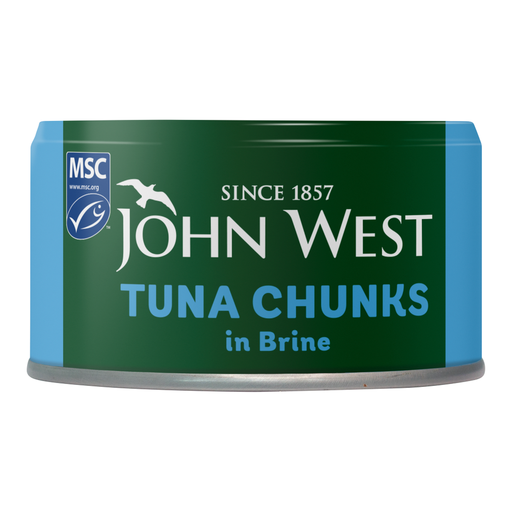
John West Tuna Chunks in Brine 125g
Consider this single brine-packed tin when you want plain tuna for one supper rather than a multipack. Check sugars and salt on the current label, and plan for any leftovers.
View on Joybuy
 No image available
John West No Drain Tuna Chunks in Springwater 3 x 100g
The no-drain format suits a supper where you want to skip draining. This pack contains three 100g cans; check the exact variety’s sugars and salt figures rather than assuming the format determines them.
View on Joybuy
 No image available
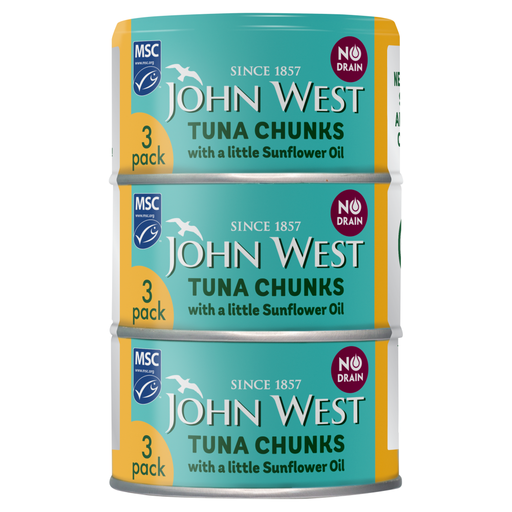
John West No Drain Tuna Chunks in Sunflower Oil 3 x 100g
Choose this no-drain format if you prefer tuna packed in sunflower oil and want separate cans for different meals. The pack contains three 100g cans; compare its label with the spring-water variety if the packing liquid matters to you.
View on Joybuy
 No image available
Morrisons Fad Free Tuna Chunks in Spring Water 145g
This single spring-water tin may suit a meal that calls for plain tuna without opening a multipack. It is a 145g can; check the current label’s drained-weight basis when comparing its nutrition figures with other tins.
View on Joybuy
 No image available
John West Tuna Chunks in Springwater 4 x 125g
This spring-water multipack suits someone who wants to open separate tins across several suppers. It contains four 125g cans; compare the label’s sugars and salt figures with other spring-water and brine products.
View on Joybuy
Common questions
Is plain tinned tuna a lower-sugar choice than a prepared filling?
The checked plain tins provide lower listed sugars figures than the checked Asda tuna-and-sweetcorn mayonnaise filling, but compare exact products. Tesco lists 0g sugars per 100g drained for its plain brine chunks, and Asda lists less than 0.5g per 100g for a spring-water tin; Asda’s prepared filling lists 1.8g per 100g.
How should I store tuna left over from an opened tin?
Follow the instruction on the exact pack. Asda’s checked plain tuna says to transfer unused contents to a suitable container, cover, refrigerate and use within 2 days; a checked Sainsbury’s brine product says to refrigerate and use within 1 day.
Can someone who is pregnant include tinned tuna in supper?
The NHS advises people who are pregnant or trying for a baby to have no more than four cans of tuna or two tuna steaks a week because tuna can contain mercury. That guidance concerns how often tuna is eaten, not its sugars figure.


