For a storecupboard lunch, choose between spring-water or brine chunks and no-drain tuna by checking the nutrition label, tin size and preparation needed. Compare protein and salt on the same per-100g basis, and check the instructions for any leftovers. The NHS says fresh and canned tuna do not count as oily fish.
Who these tins may suit
Lunch planners comparing nutrition
If tuna is a regular sandwich, salad or jacket-potato ingredient, compare protein and salt for the portion you intend to use. Product labels from Asda Groceries, Sainsbury's and M&S Food show why the exact tin matters.
Regular storecupboard users
If you use tuna often, a multipack may fit your routine. Check the drained quantity in each tin and whether its size works for one lunch or leaves you with tuna to store.
Low-prep lunch makers
If you assemble lunch away from a kitchen, a smaller tin or a product labelled ready to use may be easier to handle. Princes describes its drained-ready tuna steak as ready to use; check the pack for the format and opening instructions.
What to check before buying
Start with the label and the amount of tuna you will use, then decide whether tin size, preparation or product-specific sourcing information changes your choice.
| Concern |
What to check |
Who this matters to |
| Nutrition label |
Compare protein and salt per 100g drained where stated, then check the amount you plan to eat. |
If I build lunch around tuna, I want to know what is in my portion rather than rely on the packing liquid alone. About 36% of consumers put nutrition-label comparison first. |
| Usable quantity |
Check drained weight, the number of tins and the instructions for leftovers after opening. |
When tuna is a regular lunch ingredient, I need tin sizes that fit how often I use it and how much I can finish. For about 28% of consumers, usable quantity is the primary concern. |
| Preparation |
Check whether the tin is labelled no-drain or ready to use, its size and how it opens. |
For lunch assembled without a sink, I would rather avoid draining a conventional tin. Preparation is the first consideration for about 18% of consumers. |
| Sourcing and ingredients |
Read the current pack for species, fishing-method or certification statements, ingredients and the fish allergen declaration. |
If catch details or ingredients determine which tuna I buy, I need those statements on the exact product. About 18% of consumers make this their primary check. |
Common buying mistakes
-
Assuming all spring-water tins have the same nutrition
The packing liquid does not tell you the salt or protein content of a particular product. Asda Groceries lists 25g protein and 0.90g salt per 100g for its spring-water chunks; Sainsbury's lists 26.1g protein and 0.70g salt per 100g drained for its cited chunks.
Read the exact tin's nutrition panel and check whether its figures refer to drained tuna before comparing portions.
-
Judging the amount of tuna by the tin's total weight
Spring-water and brine tins contain liquid, so total contents and drained tuna are not necessarily the same quantity.
Check the stated drained weight and choose a tin size that fits your lunch. Follow the pack's storage instructions if you keep leftovers.
-
Counting tuna as oily fish
The NHS says fresh and canned tuna do not count as oily fish. A tuna lunch therefore does not fulfil the oily-fish part of its fish guidance.
If you are following that guidance, account for oily fish separately rather than treating tuna as a substitute.
-
Overlooking the label after opening
Tinned tuna contains fish, and storage instructions can differ between products. The John West product information cited by Asda Groceries also warns that some bones may remain.
Check the current allergen and storage directions, inspect the tuna before eating and follow the stated refrigeration and use period for leftovers.
Brands to consider
John West
Its spring-water chunks and no-drain format offer different preparation choices for a tuna lunch.
- Asda Groceries lists 25g protein and 0.8g salt per 100g drained for the cited John West spring-water multipack.
- That product's information warns that some bones may remain; read the label for the particular pack you choose.
Princes
Its cited drained-ready tuna steak is a format to consider when draining a tin would be inconvenient.
- Sainsbury's describes the cited product as drained and ready to use.
- Check the current pack if the steak format, ingredients or sourcing statement is important to your choice; these details are product-specific.
Tesco
Its own-label spring-water chunks include a multipack format for repeated storecupboard use.
- Tesco Groceries lists a 4 x 145g spring-water chunks pack.
- Check each tin's drained weight before deciding whether the format fits your usual lunch portion.
Sainsbury's
Its cited own-label spring-water chunks have nutrition and catch information for shoppers comparing exact products.
- Sainsbury's lists 26.1g protein and 0.70g salt per 100g drained for the cited chunks and describes them as pole-and-line caught.
- The cited product's instructions say to transfer opened contents from the can and use them within one day.
Asda
Its own-label spring-water chunks include multipack and smaller-tin formats.
- Asda Groceries lists 25g protein and 0.90g salt per 100g for both cited formats.
- Asda advises checking the current pack label, particularly when comparing product details across formats.
M&S
Its cited spring-water skipjack chunks carry a product-specific sourcing statement.
- M&S Food states that the cited tuna is pole-and-line caught under its Forever Fish policy.
- That statement and the product's nutrition figures should not be assumed to apply to every M&S tuna variant.
Joybuy tuna selections
These Joybuy selections cover spring-water and brine chunks in single tins and multipacks, plus a no-drain format for lunches with less preparation.
 No image available
Morrisons Fad Free Tuna Chunks in Spring Water, 145g × 6
A six-tin format to consider if spring-water chunks are a regular lunch ingredient. Compare the drained quantity and nutrition panel with other pack formats, and follow the tin's directions for any leftovers.
View on Joybuy
 No image available
John West Tuna Chunks in Springwater, 4 × 125g
Four tins of spring-water chunks for lunches made across several days. Check the drained weight of this 125g variant rather than applying figures from a different John West multipack.
View on Joybuy
 No image available
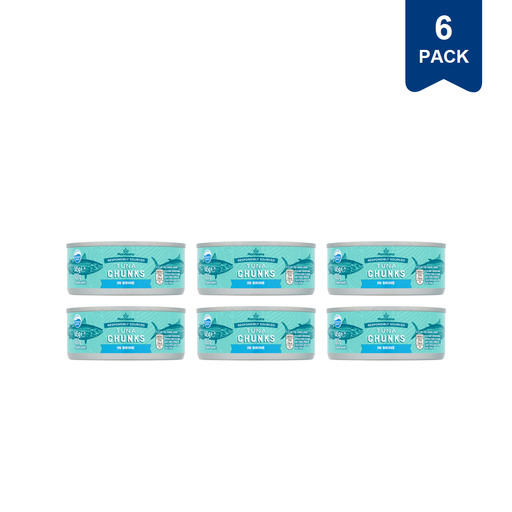
Morrisons Fad Free Tuna Chunks in Brine, 145g × 6
A brine-packed six-tin option for recurring lunches. If salt is a deciding factor, compare this exact variant's nutrition label with spring-water products rather than judging by the liquid name.
View on Joybuy
 No image available
Morrisons Fad Free Tuna Chunks in Spring Water, 145g
A single spring-water tin to consider when a multipack does not fit your routine. Check its drained weight against the amount you want for lunch and follow the label if any tuna remains.
View on Joybuy
 No image available
John West No Drain Tuna Chunks in Springwater, 3 × 100g
The no-drain format suits a lunch assembled where draining a conventional tin is inconvenient. When comparing its nutrition with other tuna, check the pack's per-100g basis rather than assuming it matches a drained-weight figure.
View on Joybuy
Questions about tinned tuna
Does tinned tuna count as oily fish?
No. The NHS says fresh and canned tuna do not count as oily fish. If you are following its fish guidance, choose oily fish separately rather than counting a tuna lunch towards that portion.
What does the NHS say about tuna during pregnancy?
For people who are pregnant or trying for a baby, the NHS advises no more than four cans of tuna a week or two tuna steaks a week because tuna contains more mercury than other fish. That advice is specific to those circumstances, rather than a limit for every shopper.
How should I store tuna left in an opened tin?
Follow the directions on the exact product. The cited Sainsbury's chunks say to transfer opened tuna from the can and use it within one day; the cited Asda and M&S products give a two-day period. Cover and refrigerate leftovers as the pack directs.
Is tinned tuna suitable for someone with a fish allergy?
No. Tuna is fish, and the Food Standards Agency identifies fish as an allergen that can pose a risk to someone with a fish allergy. Check the current product's ingredient and allergen label before use.


