For a lunch assembled between lectures, choose a no-drain tuna steak pot if avoiding liquid and keeping an unfinished portion in a resealable pack matter most. An already-drained multipack also avoids draining, while a conventional spring-water tin is worth considering when you can handle the liquid and follow its leftover-storage instructions. These are shelf-stable tinned products, not chilled fresh tuna fillets; check the exact pack rather than assuming every product labelled ‘tuna steak’ has the same format.
Who these formats suit
Students eating between lectures
If lunch needs to go straight into a sandwich, wrap or salad, look for no-drain or already-drained wording on the exact pack. A resealable pot can hold an unfinished portion, but the cited John West pot still requires refrigeration after opening.
Students planning several lunches
Check how many portions a pack contains and whether you can use them within its opening and storage instructions. An individually sized pot, a multipack and a large tin create different leftover-handling needs.
Students checking sourcing details
Look for a catch method or certification stated for the exact product, rather than relying on the retailer name. The cited Sainsbury’s tuna steak states pole-and-line catch and MSC fishery certification; the cited M&S products make pole-and-line and traceability statements.
What to check before choosing
No-drain, resealable pot
Choose when: You may assemble lunch away from a kitchen or leave some tuna for later. The cited John West fridge pot is labelled no-drain and resealable.
Bear in mind: Resealing does not replace refrigeration; the cited pot says to refrigerate it after opening and use it within two days.
Already-drained multipack
Choose when: You want ready-to-use tuna for several lunches without choosing a resealable pot. Sainsbury’s describes the cited Princes 3 × 110g product as already drained.
Bear in mind: An opened portion needs covering, refrigeration and use within two days according to that product listing.
Conventional spring-water tin
Choose when: You can open and prepare a tin where draining and storing leftovers are manageable.
Bear in mind: ‘Tuna steak’ alone does not establish a no-drain or resealable format. Follow the instructions on the particular tin.
| Priority | What to check | Your needs |
|---|
| Preparation | Look for no-drain or already-drained wording on the exact product. Check whether its container can be resealed. | I need to put lunch together between lectures without finding somewhere to drain a tin. |
| Pack and storage | Check the portion size, instructions after opening and whether leftovers need another container. The cited Sainsbury’s own-label tin specifies transfer to a non-metallic container, refrigeration and use within one day. | If I will not finish the pack at lunch, I need a way to store the rest as its label directs. |
| Ingredients and nutrition | Identify the packing medium and compare nutrition on the same per-100g basis. For example, Sainsbury’s lists 28g protein and 0.8g salt per 100g for its cited John West spring-water pot. | I want to know what is in the tuna and compare labels without confusing per-100g and per-serving figures. |
| Sourcing | Check the exact pack for a stated catch method, fishery certification and traceability information. Do not transfer a claim from one product to another. | A product-specific sourcing statement matters to me more than a general impression of the brand. |
Common buying mistakes
-
Assuming ‘tuna steak’ means no-drain
‘Tuna steak’ describes the product, not a universal packaging format. The cited John West pot is no-drain and resealable, whereas the cited Sainsbury’s own-label tin gives instructions for transferring leftovers out of the can.
Check the format and opening instructions for the exact pack if you expect to prepare lunch away from a kitchen.
-
Comparing protein wording without reading the full label
The cited spring-water products have different protein and salt figures per 100g. Packing medium and serving basis also matter when comparing labels.
Read the ingredients and compare per-100g figures for the products and variants you are considering.
-
Overlooking guidance for frequent tuna lunches
The UK Food Standards Agency advises pregnant people and those trying for a baby to have no more than four medium cans of tuna or two tuna steaks in a week. Its guidance uses around 140g drained weight for a medium can and a 140g cooked steak.
When applying that guidance, distinguish tinned tuna from a cooked fresh tuna steak and check the drained weight of the cans you use.
Relevant brand references
John West
The cited No Drain fridge pot is a tuna-steak format for preparing lunch with less liquid to handle.
- Sainsbury’s describes the cited 110g spring-water pot as ready to eat and resealable, and lists 28g protein and 0.8g salt per 100g.
- After opening, its lid must be replaced and the pot refrigerated and used within two days.
Princes
The cited 3 × 110g spring-water tuna steak is an already-drained multipack.
- Sainsbury’s describes this product as ready to use and lists 28.2g protein and 0.8g salt per 100g.
- Once opened, the product instructions say to cover, refrigerate and use it within two days; it is not described as a resealable pot.
Tesco
Tesco lists its own-label 110g tuna steaks with a little spring water among its tinned tuna products.
- The listing identifies the packing medium and pack size for this conventional tin.
- Check its current pack for drainage, storage and sourcing details rather than assuming it shares the features of a no-drain pot.
Sainsbury’s
The cited own-label 3 × 120g spring-water tuna steak has product-specific catch and certification statements.
- Sainsbury’s states that this skipjack tuna is pole-and-line caught and comes from an MSC-certified fishery; it lists 27g protein and 0.75g salt per 100g.
- Its instructions specify transferring leftovers to a non-metallic container, refrigerating them and using them within one day.
M&S
The cited tuna steaks include an 800g spring-water tin and a 120g product with pole-and-line and traceability statements.
- M&S states that its cited tuna products are pole-and-line caught and traceable; its 800g spring-water product lists 23.5g protein and 0.75g salt per 100g.
- An 800g tin needs a plan for unused contents: the cited instructions require a non-metallic container, refrigeration and use within two days.
Tuna steak options on Joybuy
These tuna steak products are packed in sunflower or olive oil. If avoiding drainage is central to your lecture-day lunch, check the exact pack’s preparation instructions before choosing one.
 No image available
Tropical Sun Tuna Steaks in Sunflower Oil
For a tuna-steak lunch packed in sunflower oil, check whether the oil needs draining before relying on this for quick assembly. Follow the pack’s instructions for any leftovers.
View on Joybuy
 No image available
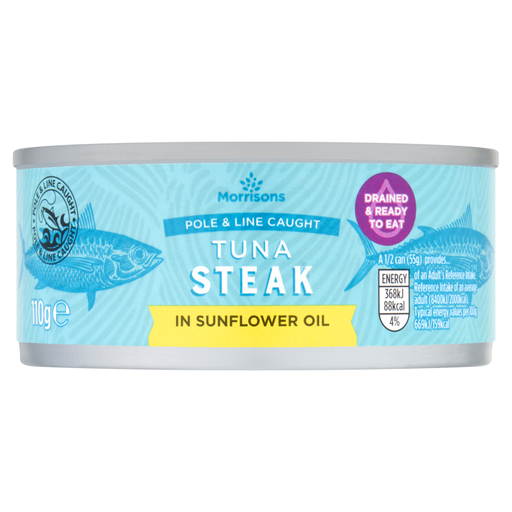
Morrisons Drained Tuna Steaks with Sunflower Oil 110g
The 110g sunflower-oil tuna steaks are an option for a sandwich or salad lunch. Check the pack’s drainage wording before counting on a no-drain format, and read its instructions for storing an opened portion.
View on Joybuy
 No image available
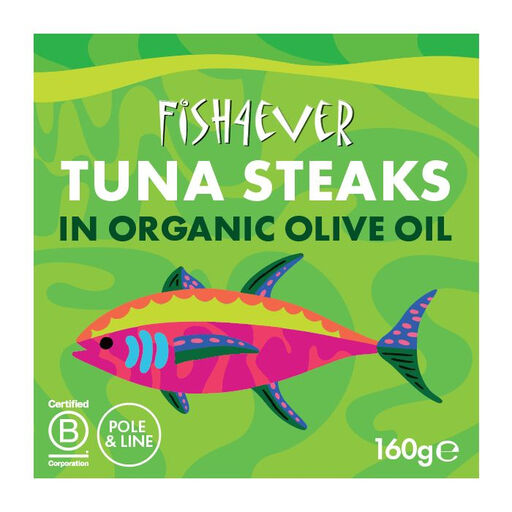
Fish4ever Tuna Steaks in Organic Olive Oil 160g
This 160g olive-oil product is labelled tuna steaks. If the size and shape of the pieces matter for your lunch, check the pack description; also check its preparation and leftover-storage instructions.
View on Joybuy
Frequently asked questions
Is tinned ‘fillet-style’ tuna fresh tuna?
No. The tuna steak and fillet-style products discussed here are shelf-stable tinned tuna, not chilled fresh fillets. If you want pieces described as steaks, check the exact product wording and packing medium rather than treating ‘fresh fillet’ as a tinned-tuna format.
Does tinned tuna need refrigerating after opening?
Yes, follow the instructions for the particular opened product. The cited John West pot and Princes product say to refrigerate and use leftovers within two days; the cited Sainsbury’s own-label tin requires transfer to a non-metallic container, refrigeration and use within one day.
What is the UK guidance on tuna during pregnancy or when trying for a baby?
The UK Food Standards Agency advises no more than four medium cans of tuna a week or two tuna steaks a week for pregnant people and those trying for a baby. Its examples use around 140g drained weight for a medium can and a 140g cooked steak, so check pack weights rather than treating every can as the same size.
Does a retailer’s sourcing claim cover every tuna tin it sells?
No. Check the claim on the exact product: the cited Sainsbury’s tuna steak states pole-and-line catch and MSC fishery certification, while the cited M&S products make pole-and-line and traceability statements. Do not apply either product’s details to a different tin.


