Choose tinned tuna labelled steak or fillet-style when you want a more intact piece for a salad, jacket potato or plated lunch; chunks can work when that presentation matters less. If lunch needs to be assembled quickly, look for an explicit no-drain or already-drained description, then compare the packing liquid, can size and preparation instructions on the exact product. A tinned fillet-style product is not chilled fresh fish.
Who these formats suit
Home workers with short lunch breaks
If draining a tin would interrupt a lunch between calls, compare products explicitly described as no-drain or already drained. Tesco lists a John West No Drain product, while M&S describes its spring-water tuna steak as already drained.
Salad and jacket-potato lunch makers
If the tuna will be visible on the plate, a steak or fillet-style tin is a useful starting point for comparing piece size and presentation. Tesco, Princes and M&S list spring-water tuna steak products.
Label-led shoppers
If packing liquid, ingredients and salt determine your choice, compare the exact cans rather than treating spring-water, brine and oil versions as interchangeable. Princes lists separate ingredient information for each of those tuna steak formats.
What matters when choosing
For a working-from-home lunch, decide whether serving speed, the appearance of the tuna or the packing liquid will drive your choice, then check the corresponding pack details.
| Concern |
What to check |
Who this matters to |
| Quick, tidy serving |
Look for explicit no-drain or already-drained wording, and check the amount in each can. |
When lunch falls between calls, I want to open the tuna and add it to the meal without a separate draining step. About 42% of consumers put minimal lunchtime handling first. |
| Intact pieces |
Check for steak or fillet-style wording rather than assuming a tin of chunks has the same presentation. |
For a salad or jacket potato, I want pieces that remain visible when served. Intact steak or fillet-style presentation is the primary need for about 33% of consumers. |
| Packing liquid and label details |
Compare ingredients and salt per 100 g and per can on the exact product; note whether nutrition values refer to drained contents. |
If tuna is a regular cupboard lunch, I want to choose the liquid and compare the labels before buying. That is the main concern for about 25% of consumers. |
Buying pitfalls
-
Reading “fillet” as “fresh fish”
Steak or fillet-style wording describes the presentation of tuna in a tin; it does not make it equivalent to a chilled fresh fillet.
Choose a tinned format for a cupboard lunch, but choose chilled fish if fresh fish is what the recipe requires.
-
Comparing tins by format alone
Packing liquids change the ingredients being compared. Princes lists salt in its brine tuna steak, and its stated salt values differ between that product and its spring-water steak.
Read the ingredients, drained weight and salt values on each exact product before deciding between spring water, brine and oil.
-
Assuming every steak tin needs no draining
No-drain and already-drained are features stated for particular products, including the John West product listed by Tesco and the M&S spring-water steak.
If avoiding a draining step matters, check for that wording on the pack and read its serving instructions.
-
Overlooking instructions after opening
Tuna is fish, and product labels may also warn that minor bones remain. Storage instructions apply to the particular tin you open.
Check the fish allergen and bone warnings before serving. For leftovers, follow the pack's refrigeration and use-by instructions.
Brands to consider
John West
A reference point for no-drain tuna steak when a short lunch break makes draining inconvenient.
- Tesco lists John West No Drain Tuna Steak in Spring Water as a 3 x 60 g pack and gives 0.6 g salt per 60 g can.
- The Tesco listing warns that minor bones may remain; its figures describe this product, not the whole John West range.
Princes
Useful for comparing tuna steaks packed in spring water, brine or sunflower oil.
- Princes lists tuna and spring water as the ingredients of its spring-water steak.
- Princes states 0.85 g salt per 100 g drained for that steak and 0.9 g for its brine steak. Compare the particular product rather than applying either value across the range.
Tesco
An own-label reference for a single spring-water tuna steak or a drained multipack.
- Tesco lists a 110 g spring-water tuna steak containing skipjack tuna and spring water, with 0.90 g salt per 100 g.
- Check the current listing if you need the 3 x 110 g drained multipack; availability can change.
M&S
A reference for a larger spring-water tuna steak product described as already drained.
- M&S lists its 360 g spring-water steak as already drained and states 0.83 g salt per 100 g.
- Those format and nutrition details apply to this M&S product; check the pack size against the number of lunches you plan to make.
Tuna steak selections on Joybuy
These tuna steak selections are packed in sunflower oil, olive oil or brine. Choose according to the meal you are making, and check each pack's preparation instructions if lunch needs to be served straight away.
 No image available
Tropical Sun Tuna Steaks in Sunflower Oil
Consider this oil-packed steak format if you want tuna for a salad or sandwich rather than a spring-water version. Check the current label for serving details; after opening, the product information calls for refrigeration and use within 24 hours.
View on Joybuy
 No image available
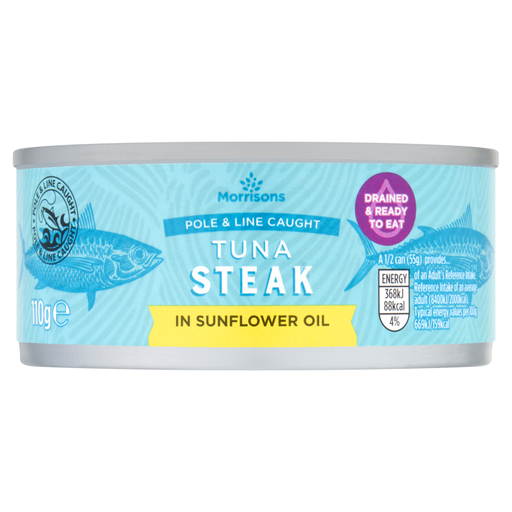
Morrisons Drained Tuna Steaks with Sunflower Oil 110 g
The 110 g, sunflower-oil steak format is an option to compare for a salad or sandwich. If avoiding a draining step is decisive, check the current pack instructions: the product information uses both drained and no-drain descriptions. Check its storage instructions after opening too.
View on Joybuy
 No image available
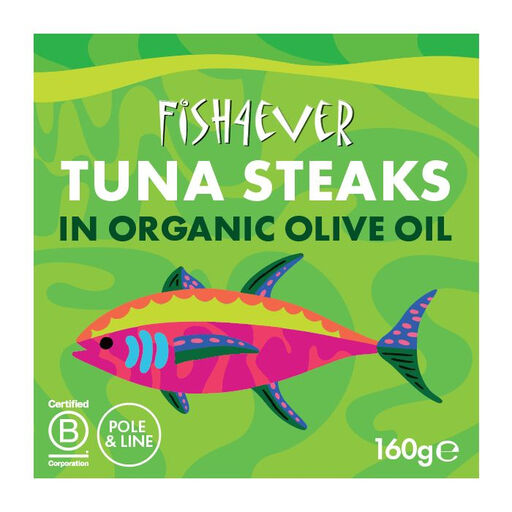
Fish4ever Tuna Steaks in Organic Olive Oil 160 g
For a salad or pasta lunch where olive-oil-packed tuna suits the dish, this is a 160 g steak-format option. If comparing nutrition values with drained tuna, check what the figures on the current pack measure; the product information calls for opened contents to be refrigerated and used within two days.
View on Joybuy
 No image available
Tropical Sun Tuna Steaks in Brine 160 g
Consider this 160 g brine-packed steak only for a lunch that allows a cooking step. Its product information says it is not ready to eat: drain it and cook thoroughly until piping hot before serving. Refrigerate opened contents and use within 24 hours.
View on Joybuy
Common questions
Does “tuna steak” or “fillet” on a tin mean fresh tuna?
No. It describes the cut or presentation of a tinned product, not chilled fresh fish. Choose a steak or fillet-style tin when you want a more intact piece for a quick lunch; choose chilled fish when the meal specifically calls for fresh fish.
Should I choose spring water, brine or oil for lunch?
Choose by the ingredients and flavour you want in the finished meal, then compare the exact labels. Princes lists tuna and water in its spring-water steak, water and salt in its brine version, and sunflower oil and salt in its oil-packed version. Check salt and other nutrition values on the particular can.
How should I store tuna left after lunch?
Follow the storage instructions on the tin you opened. The cited Tesco, John West and M&S product labels call for unused tuna to be transferred to a non-metallic container, refrigerated and eaten within two days; another product may give a different period.
What should I check before serving tinned tuna?
Check the fish allergen declaration, any warning about minor bones and the preparation instructions on the exact pack. Do not assume every tinned tuna steak is ready to serve cold: the Tropical Sun brine product listed here calls for draining and thorough cooking before serving.


