Quick-meal planners
If tuna needs to work in jacket potatoes, pasta, salads or sandwiches, start with a packing medium that suits those meals. Compare the label’s drained weight and salt value, as well as its instructions for any leftovers.


For quick storecupboard meals, choose the packing medium to suit the dish: spring-water tuna is an adaptable starting point, while oil-packed tuna suits recipes where the oil is wanted. For meals on wheels, the more immediate decision may be whether the recipient can open and portion the tin; check the actual can format, drained weight, fish allergen information and instructions for leftovers.
If tuna needs to work in jacket potatoes, pasta, salads or sandwiches, start with a packing medium that suits those meals. Compare the label’s drained weight and salt value, as well as its instructions for any leftovers.
Opening a can, draining its contents and dividing them into portions can matter as much as the recipe. An easy-twist or no-drain format may remove a step, but check the actual opening mechanism and tin size for the person using it.
Check the packing medium, ingredients and nutrition values rather than treating all tinned tuna alike. Princes lists different energy and fat values for its spring-water and sunflower-oil chunks; fish allergen information also matters for the intended recipient.
For meals on wheels, establish how the tin will be opened and served, then compare the packing medium and the amount likely to be used at one meal.
| Concern | What to check | Who this matters to |
|---|---|---|
| Opening and portioning | Check the opening mechanism, whether draining is required and the usable amount in each tin. | If opening or draining is difficult where the meal is served, I need a manageable tin with fewer preparation steps; about 40% of consumers put practical meal readiness first. |
| Packing medium and label values | Compare ingredients and nutrition per 100g on the same basis, including salt and fish allergen information. | When tuna goes into different dishes, I want its packing medium and label values to fit the meal; roughly 30% of consumers put nutrition and dietary fit first. |
| Storage and leftovers | Check the best-before date, drained weight and the pack’s instructions for opened contents. | If one meal will not use a whole tin, I need a portion size and leftover routine I can manage; about 30% of consumers prioritise stock and leftover management. |
Princes lists 99 kcal and 0.5g fat per 100g drained for its spring-water chunks, compared with 180 kcal and 9.5g fat for its sunflower-oil chunks. Those figures describe these two products, not every tuna tin.
Choose the packing medium for the intended recipe and compare nutrition panels on the same stated basis.
The packing liquid means the amount of tuna available for a meal can differ from the weight shown prominently on the front of a tin.
Check drained weight and choose a tin size that can be used within its instructions for opened contents.
A suitable portion is not practical if the person serving it cannot manage the opening mechanism or draining step.
Check the specific pack before purchase. Consider a no-drain or easy-twist format where it removes a real preparation barrier, without assuming either mechanism will suit everyone.
The NHS states that fresh and canned tuna do not count as oily fish. Food Standards Agency guidance identifies fish as an allergen.
Check the current ingredient and allergen information for the recipient, and plan an oily-fish option separately if that distinction matters to the meal plan.
Relevant when opening and draining are important parts of the choice.
Its tuna range provides spring-water, brine and sunflower-oil formats in single tins and multipacks.
Its tinned-tuna category includes different tin sizes, multipacks and no-drain options for comparing formats.
Its 160g spring-water tuna chunks provide a labelled option for checking ingredients and storage directions.
These tins offer no-drain multipacks alongside spring-water, brine and sunflower-oil chunks for planning quick meals. If someone else will prepare the food, check that the specific can and portion size work for them.
 No image available
The no-drain format may suit meals assembled without a convenient place to drain a tin. The pack contains three 100g cans; check the opening mechanism and drained weight per can if access or precise portions matter.
 No image available
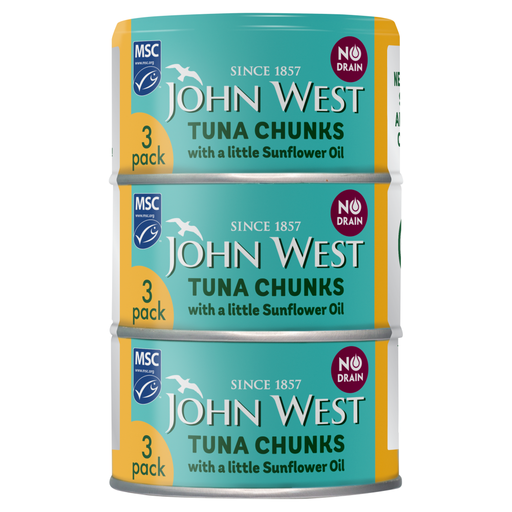
Consider this no-drain option when sunflower oil suits the dish and avoiding a draining step matters. The pack contains three 100g cans. Check that its twist-opening mechanism works for the recipient, and confirm the nutrition basis and drained weight on the current label before comparing it with another tin.
 No image available
Four separate spring-water tins can suit meals planned across several days. Do not assume this particular pack is no-drain: check its draining requirement, opening mechanism and drained weight per can before choosing it for someone who needs help preparing food.
 No image available
Choose a brine-packed option if that packing medium suits the meals you have planned. This pack contains four 145g cans; check the drained weight per can and opening method when portions or ease of preparation are deciding factors.
 No image available
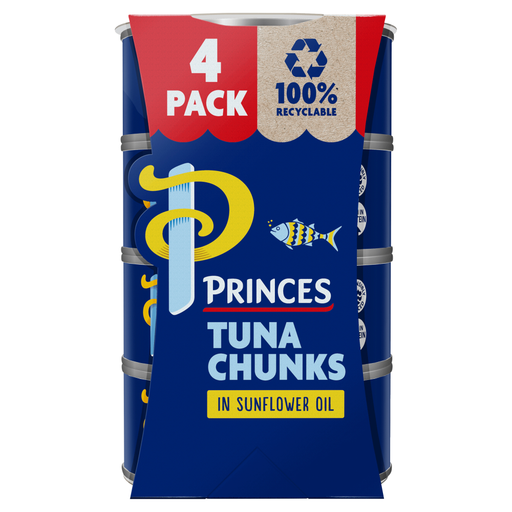
This four-can pack is an option when sunflower oil fits the recipe. Each can is labelled 145g; check drained weight and the current nutrition panel for portion comparisons, particularly if you are relying on a protein value.
No. The NHS states that fresh and canned tuna do not count as oily fish. If an oily-fish meal is part of the plan, choose an oily fish separately.
Yes, within the NHS pregnancy guidance limit of no more than four cans of tuna or two tuna steaks a week. This is a pregnancy-specific limit because tuna can contain pollutants, including mercury; follow individual clinical advice where it differs.
Follow the instructions on the particular tin. The John West product page says to refrigerate opened contents and consume them within two days. M&S instructs users to put unused contents in a non-metallic container, refrigerate and eat within two days.
Check the current tin’s ingredients and fish allergen declaration for the intended recipient. Food Standards Agency guidance identifies fish as an allergen, so this check matters when preparing a meal for someone with a fish allergy.
The Food Standards Agency explains that a best-before date concerns quality rather than being a safety deadline. Check the tin’s date marking, storage instructions and condition, and follow any product-specific directions.