Certification-first weekly shoppers
If independently certified sourcing settles your choice, check the MSC ecolabel on each product you buy rather than relying on a familiar brand name.


For a weekly big shop, look for the blue MSC ecolabel on the exact tin or multipack if independent fishery certification is your priority; a brand-wide sourcing statement or pole-and-line wording is not the same thing. Then match the number of tins and their drained weight to your planned meals, and choose brine, spring water or oil according to the dish and the product label.
If independently certified sourcing settles your choice, check the MSC ecolabel on each product you buy rather than relying on a familiar brand name.
If you plan meals across the week, compare tin counts and drained weights while keeping your preferred sourcing requirement in view. A larger pack is useful only if its contents suit those meals.
If the tuna is destined for lunches, pasta or salads, the choice between chunks and other formats, the packing medium and the instructions for opened tins all affect which pack is practical.
For a weekly big shop, start with the sourcing evidence you require, then check how much usable tuna the pack provides and whether its format fits your meals.
| Concern | What to check | Who this matters to |
|---|---|---|
| Certified sourcing | Look for the blue MSC ecolabel or a product-specific MSC certification statement on the exact tin or multipack. Check catching-method claims separately. | If independent certification is the deciding factor, a general brand promise will not settle the choice. About 36% of consumers would put product-specific certification first. |
| Usable quantity | Compare tin counts and drained weights, not just the stated weight of each can. Check that the exact multipack carries your required sourcing claim. | When several household meals need tuna, enough drained fish in a suitable number of tins matters more than pack size alone; about 29% of consumers would prioritise usable quantity. |
| Meal fit | Choose the chunk or other stated format and the packing medium that suit the planned dish. Check whether the product is described as no-drain. | For quick lunches or a planned pasta dish, texture and whether the tuna comes in brine, spring water or oil can settle the choice. Roughly 21% of consumers would put meal fit first. |
| Label and storage checks | Read the exact product’s ingredients, nutrition panel and after-opening instructions. If pregnancy affects the choice, consult NHS guidance on tuna intake. | If a household needs to check ingredients, salt information or how quickly leftovers must be used, those details take priority; around 14% of consumers would make label and storage checks their main concern. |
A company-wide sourcing statement does not identify the certification shown on each individual product. Packing formats and product claims can also differ within a range.
If MSC certification is essential to your choice, inspect the exact tin or multipack for its ecolabel or certification statement.
Tins of different sizes and packing media can provide different amounts of drained tuna. Four tins will not necessarily meet the same meal plan as another four-tin pack.
Check the drained weight alongside the tin count and sourcing label before choosing a pack for the week.
The packing medium affects the ingredients and the nutrition information you need to compare; the values belong to the exact product, not to tuna as a whole.
Read the product’s ingredient and nutrition panels and choose a medium that suits the dish you intend to make.
After-opening instructions differ by product. The Tesco, Sainsbury’s, M&S and Princes listings described in this article direct shoppers to move unused tuna out of the opened can, refrigerate it and use it within the period stated for that product.
Choose tin sizes your household can use, and follow the storage instructions on the pack you open.
A larger tin can leave more tuna to use within a short refrigerated storage period.
These ranges illustrate different sourcing statements and pack formats. Check the claim on the specific product rather than extending it to every tin bearing the same brand.
Princes sells single tins and multipacks in several packing media. Princes Food and Drinks states that it has completed its commitment to having all its tuna MSC certified.
The John West range includes tuna chunks and no-drain formats; John West identifies a Tuna Chunks in Brine product as MSC.
Sainsbury’s describes its four-tin tuna chunks in brine as sourced from fisheries certified to the Marine Stewardship Council standard.
Tesco identifies its three-tin tuna chunks in brine as coming from a fishery certified to the MSC standard.
Marks & Spencer describes its canned tuna as pole-and-line caught and sourced under its Forever Fish policy. Its spring-water range includes a single tin and a four-pack.
These tins offer single-can, multipack, brine, spring-water, sunflower-oil and no-drain choices for planned meals. If certified sourcing is your deciding factor, check the MSC claim on the exact pack before choosing among them.
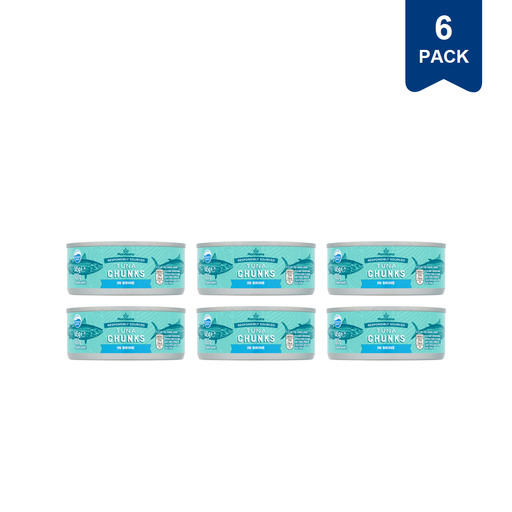 No image available
Six tins suit a household planning several meals with tuna chunks in brine. Check the drained weight against the portions you need and look for an MSC claim on the exact pack if independent certification is essential; a general sourcing statement is not the same evidence.
 No image available
This six-tin option fits meal plans calling for tuna chunks in spring water rather than brine. Compare its drained weight with your planned portions, and check the exact pack for MSC certification if that is your sourcing requirement.
 No image available
The no-drain, three-tin format suits meals where you want tuna chunks in sunflower oil without a separate draining step. The product description makes an MSC fishery claim; inspect the exact pack’s certification label before relying on it for a certification-first purchase.
 No image available
Four tins provide an oil-packed chunk format for several planned meals. Check the exact pack’s certification statement and drained weight: Princes’ company-wide sourcing claim does not replace a product-level label, and the stated tin weight is not itself a drained-weight measure.
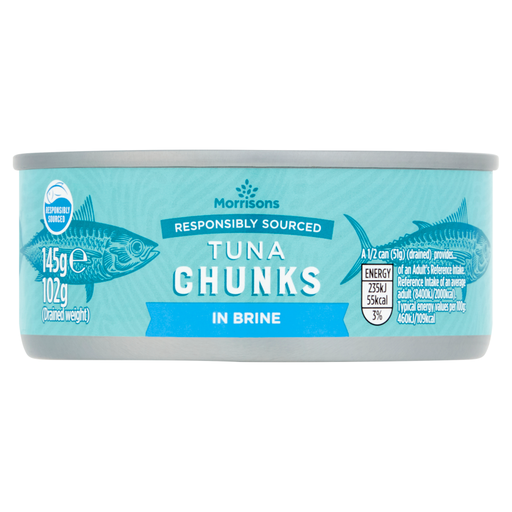 No image available
A single tin may suit a meal plan that does not call for several cans of tuna chunks in brine. Check its drained weight for the portion you need and its exact label for MSC certification if independently certified sourcing is the priority.
Look for the blue Marine Stewardship Council ecolabel or a specific MSC certification statement on the tin or multipack you intend to buy. A brand’s general sustainability wording does not establish the certification of that particular product.
No. Pole-and-line describes a catching method; MSC certification is a separate fishery-certification claim. Sainsbury’s describes both for a named tuna multipack, while Marks & Spencer’s cited product descriptions give pole-and-line and retailer-policy statements, so check each exact pack for the claim you require.
Drained weight indicates how much tuna remains after the packing liquid is removed, helping you judge whether different tins or multipacks cover your planned portions. Check the figure on each product rather than assuming equal-sized cans provide equal amounts of tuna.
Follow the instructions on that product’s label. The Tesco, Sainsbury’s, M&S and Princes listings covered here direct shoppers to transfer unused tuna to a non-metallic container, refrigerate it and use it within the stated period, which differs between products.