Regular bread-meal planners
If tuna goes into sandwiches, filled rolls, toasties or bread-based bakes throughout the week, pack size and drained weight help you plan how much filling each purchase provides.


For repeated tuna fillings, toasties and bread-based bakes, a spring-water multipack makes sense if you are happy to drain each tin and can use the portions within its storage instructions. Choose no-drain or ready-drained tuna when avoiding that preparation step matters more; compare the usable tuna quantity and check the label before treating different pack sizes as equivalent.
If tuna goes into sandwiches, filled rolls, toasties or bread-based bakes throughout the week, pack size and drained weight help you plan how much filling each purchase provides.
When a filling needs to be assembled quickly, a no-drain or ready-drained format avoids a separate draining step. Check the packing liquid too, particularly if you have a particular filling in mind.
For a shared bread-based meal, read the current label for the fish allergen, ingredients, salt, sourcing statements and instructions for any tuna left after opening.
For bread fillings and bakes, decide how much tuna you need to use, whether you want to drain it and how you will handle an opened tin.
| Concern | What to check | Who this matters to |
|---|---|---|
| Usable tuna quantity | Compare stated drained weights on the same basis, alongside the number and size of tins. Tesco and Sainsbury's each list 4 × 10²g drained tuna for their 4 × 145g spring-water packs. | If I make several bread fillings from a multipack, I want to know how much tuna remains after draining; about 50% of consumers put usable tuna quantity first. |
| Preparation | Check whether the specific product is labelled no-drain or ready-drained, and whether it is packed in spring water, brine or oil. | For a quick toastie, skipping the draining step can matter more than the pack format. About 30% of consumers make easier preparation their primary need. |
| Labels and leftovers | Read the fish-allergen and salt information, any sourcing statements, and the product-specific after-opening instructions. | When a tin may leave leftovers for another meal, I need to know how to store them and whether the ingredients suit everyone eating. These checks come first for about 20% of consumers. |
Net weight includes the packing liquid. The Tesco and Sainsbury's spring-water multipacks, for example, state 4 × 145g net weight but 4 × 10²g drained tuna.
For a filling you intend to drain, compare the stated drained quantities rather than assuming equal-sized tins supply equal amounts of tuna.
A multipack can be useful for repeated meals, but an unfinished tin still needs to be handled according to its own label.
Move leftover tuna to a suitable container, refrigerate it and follow that product's after-opening use period.
Spring-water products can have different listed salt values, while every tuna product in this selection contains fish. Sourcing statements also apply to particular products, not automatically to every tin from a brand.
Read the current product label if salt, allergens or a stated catch method affects your choice.
These product lines illustrate differences in pack format, preparation and labelling; the details of one tin should not be assumed to apply across a brand.
Tesco's own-label skipjack tuna chunks in spring water include a 4 × 145g pack for repeated bread fillings.
Sainsbury's own-label spring-water chunks come in single-tin and four-tin formats.
Princes lists standard tuna chunks, sandwich tuna and drained tuna as distinct formats.
John West's No Drain tuna is an option when avoiding a separate draining step is the priority.
M&S lists a 160g skipjack tuna in spring water for shoppers comparing individual tins.
These tins cover quick no-drain fillings, multipacks for repeated bread meals and a single spring-water tin. Choose by the preparation and pack size you need, then check each product's current label.
 No image available
Consider this for a quick sandwich or toastie filling when you want to avoid draining. The pack contains three 100g tins of no-drain tuna chunks in spring water; check the label for ingredients and after-opening storage.
 No image available
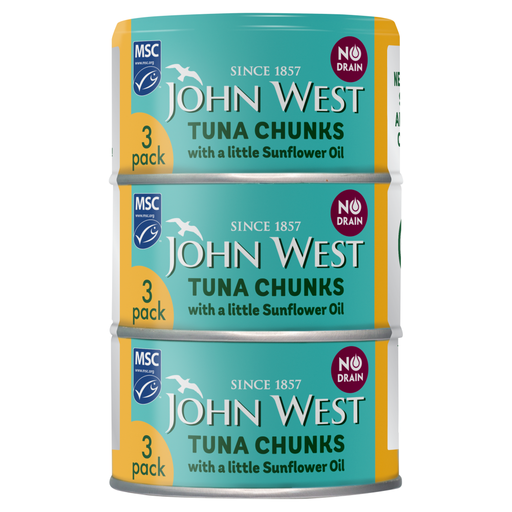
This is another no-drain option for assembling a quick filling, but it is packed in sunflower oil rather than spring water. The pack contains three 100g tins; choose it only if that packing liquid suits the filling you plan to make.
 No image available
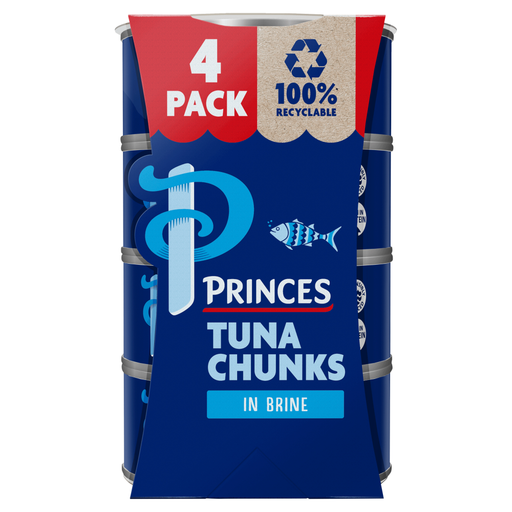
The four-tin pack suits repeated sandwiches or bread-based bakes if you want separate tins for separate meals. These chunks are packed in brine and require draining before use; check the drained weight when planning filling quantities.
 No image available
This four-tin spring-water pack is an option for sandwiches or bread-based bakes made on several occasions. Check the individual tin's preparation instructions if avoiding a draining step matters to you.
 No image available
A single 145g tin may suit a bread filling when you do not need a multipack. It contains tuna chunks in spring water; check the label for the drained quantity and preparation instructions.
Spring-water chunks give you tuna to drain and mix with your chosen filling ingredients. Do not assume the packing liquid tells you the salt content: the Tesco, Sainsbury's and Princes spring-water products listed here have different salt values per 100g drained, so compare their current labels.
Follow that product's label, transferring leftovers to a suitable container and refrigerating them. The listed Sainsbury's products instruct use within one day of opening, while the Tesco, Princes and M&S examples give two days; check the tin you actually use.