What matters when choosing?
Work out the amount of tuna the dinner needs, then compare pack formats and labels on a consistent basis.
| Priority | What to check | Your needs |
|---|
| Usable quantity |
Compare the stated drained weight and unit-price basis. Check the number of tins, their size and any conditions attached to a displayed offer. |
I need enough tuna for a shared dinner, without judging two packs by their outer packaging alone. |
| Pack size |
Check whether the individual tin size fits one meal or leaves an opened portion. A four-pack of 145g tins and a three-pack of 100g tins are not equivalent quantities. |
If I cook with tuna several times, separate tins may be useful; for a smaller filling, I would rather open only what the meal needs. |
| Packing liquid |
Read the ingredients and compare nutrition per 100g on the same stated basis. Princes lists water and salt in its brine chunks, while its sunflower-oil chunks contain oil and salt. |
For a dish that already has a dressing or sauce, I may want a plain base. If the oil is part of the intended dish, I can choose that format deliberately. |
| Texture |
Choose a format for the dish: chunks mix into pasta and fillings; larger steak pieces remain more distinct; flakes mix into softer fillings. Check the product description rather than assuming every tin has the same texture. |
For a pasta bake, distinct large pieces may not matter to me. For a topping, they might. |
| Preparation |
Check whether the tin needs draining and how it opens. John West describes its no-drain spring-water range as using a Smartstrip opening; compare the exact variant and pack quantity you intend to buy. |
On a quick dinner night, less liquid handling could matter more to me than it does when I have time to prepare the filling. |
| Label and storage |
Check the current fish-allergen declaration and the instructions for unused contents. The Sainsbury’s brine pack says to refrigerate transferred leftovers and use them within one day; the M&S spring-water pack specifies two days. |
If someone eating has a fish allergy, tuna is not an option. Otherwise, I need a tin size whose leftovers I can handle according to its own label. |
Brand and retailer references
These ranges illustrate different pack formats and label details; the products available from each retailer should be checked individually.
John West
Its no-drain tuna range is relevant when opening the pack and adding tuna directly to a meal matter more than choosing a standard tin.
- John West describes a Smartstrip opening on its no-drain spring-water product.
- Check the exact packing liquid and quantity: no-drain variants are not all the same product.
Princes
Princes lists chunks in spring water, brine and sunflower oil, making the packing liquid a product-level choice.
- Princes Food and Drinks lists four- and six-pack sizes for its spring-water chunks and a four-pack for its brine chunks.
- Compare the labels by variant: its brine product contains added salt, while its sunflower-oil product contains oil and salt.
Tesco
Tesco’s tinned-tuna listing places own-label chunks alongside Princes and John West products.
- The range includes a Tesco four-pack in brine as well as branded standard and no-drain formats.
- Check an individual listing for its current unit-price basis and any offer conditions before comparing packs.
Sainsbury’s
Its own-label brine chunks provide a four-pack format for households cooking with tuna across several meals.
- Sainsbury’s lists four 145g tins and gives nutrition values on a drained, per-100g basis.
- The pack is in brine; its label says to transfer opened contents to a non-metallic container, refrigerate and use within one day.
Asda
Asda lists a John West no-drain sunflower-oil three-pack, providing a branded convenience-format reference.
- The listed product is a 3 x 100g pack, so its size can be compared with larger standard multipacks.
- This branded listing does not describe the formulation or value of an Asda own-label alternative.
M&S
M&S lists spring-water tuna chunks in a 640g four-pack for shoppers who want that packing liquid in a multipack.
- Marks & Spencer lists 23.5g protein and 0.6g fat per 100g for this product.
- Check the selected store’s listing when comparing it with another retailer’s pack.
Family-dinner product comparison
These positions combine family-pack quantity, retailer-listed unit-price information, meal uses and preparation differences. They are not an independent taste ranking or a permanent market-wide order.
| Rank | Product | Main specifications | Why compare it | Platform |
|---|
| 1 |
Sainsbury’s Tuna Chunks in Brine 4 x 145g |
Four 145g tins; brine; 24.8g protein per 100g drained. |
Sainsbury’s lists a drained-weight unit-price basis for this standard family multipack. Its brine and opened-tin instructions also matter when planning several meals. |
Sainsbury’s |
| 2 |
Princes Tuna Chunks in Brine 4 x 145g |
Four 145g tins; tuna, water and salt. |
The Joybuy product listing and Princes Food and Drinks describe a standard chunk multipack. Compare its drained quantity and current unit-price basis with the Sainsbury’s pack rather than assuming equal value from matching tin sizes. |
Joybuy |
| 3 |
John West No Drain Tuna Chunks with a Little Brine MSC 3 x 100g |
Three 100g tins; no-drain brine format. |
Tesco lists this smaller convenience pack. Its appeal is reduced draining, while its quantity differs from the four-tin standard multipacks; compare the usable amount for the planned meal. |
Tesco |
Tuna options on Joybuy
These Joybuy options cover chunks in brine, spring water and sunflower oil, plus a smaller no-drain sunflower-oil pack. Choose a format for the meal first, then compare drained quantity and current listing details.
 No image available
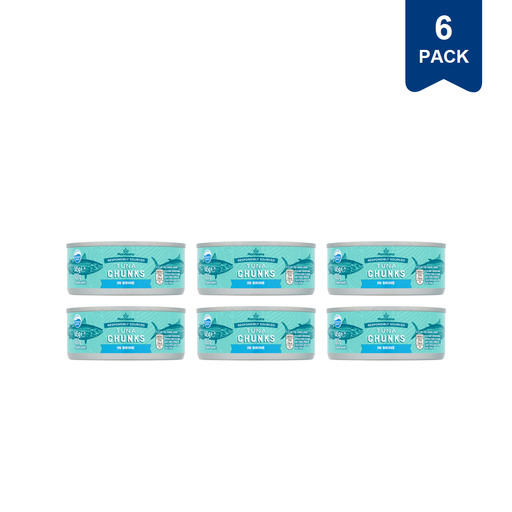
Morrisons Fad Free Tuna Chunks in Brine, 6 x 145g
The six-tin brine format suits households using chunks in several pasta dishes or fillings. Check the drained quantity and label’s salt information when comparing it with another multipack.
View on Joybuy
 No image available
Morrisons Fad Free Tuna Chunks in Spring Water, 6 x 145g
Spring-water chunks offer a plain base for meals where a sauce or dressing is added separately. This six-tin pack can be compared with the brine version by drained quantity and the current nutrition labels.
View on Joybuy
 No image available
Princes Tuna Chunks in Brine, 4 x 145g
Four separate tins provide chunks for pasta, jacket-potato fillings or other shared meals. Princes Food and Drinks lists tuna, water and salt for its brine chunks; check the current pack’s drained weight for a like-for-like value comparison.
View on Joybuy
 No image available
Princes Tuna Chunks in Sunflower Oil, 4 x 145g
Consider this four-tin format when the oil is intended to be part of a pasta salad or topping. Princes Food and Drinks lists sunflower oil and salt among the ingredients, so compare the label with any dressing or oil the recipe also uses.
View on Joybuy
 No image available
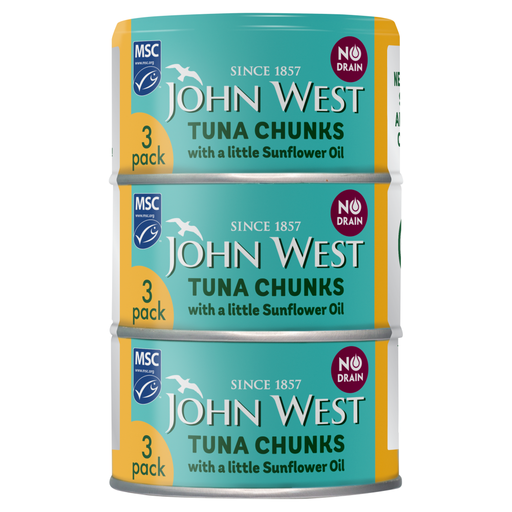
John West No Drain Tuna Chunks in Sunflower Oil, 3 x 100g
The no-drain, twist-open format reduces liquid handling when adding tuna to a quick meal. Its three 100g tins are a different pack size from the four- and six-tin options, so check the usable quantity before comparing them.
View on Joybuy
Frequently asked questions
Should I compare a tuna multipack by net or drained weight?
Use drained weight when comparing how much fish will go into a family meal. Water, brine and oil contribute to net weight, so check whether the retailer’s unit-price figure is based on drained weight and use the same basis for both products.
What changes when tuna is packed in spring water rather than sunflower oil?
The packing liquid changes the ingredients you add to the recipe. Princes Food and Drinks lists 180 kcal and 9.5g fat per 100g for its sunflower-oil chunks; compare the current labels on the exact products and consider whether the meal also includes a dressing, oil or sauce.
Do no-drain tins make more sense for a family dinner?
They can make preparation simpler if you want to add tuna directly to a dish, but they are not interchangeable with larger standard multipacks. Check the number and size of tins, the drained quantity where stated, and whether that format saves a step you would otherwise need to take.
How should I keep tuna left over from an opened tin?
Follow that tin’s label. Sainsbury’s instructs shoppers to transfer unused contents from its brine chunks to a non-metallic container, refrigerate them and use them within one day; the M&S spring-water pack specifies refrigeration and use within two days.
Does tinned tuna count as oily fish?
No. The NHS says fresh and canned tuna do not count as oily fish in its UK fish guidance. Choose tuna for the meal and packing format you want, rather than assuming its classification changes because it is packed in oil.


