Family batch bakers
Parents or carers planning tuna pasta bakes, fishcakes or other savoury recipes across several cooking sessions need tin sizes that fit the quantities in each recipe.


Choose a multipack of tuna chunks when several planned bakes can each use whole tins; consider a larger tin only if you can use its contents promptly. Compare drained weight and packing liquid as well as tin count: spring-water and sunflower-oil products have different ingredients and nutrition, while any opened leftovers need to be handled according to the pack instructions.
Parents or carers planning tuna pasta bakes, fishcakes or other savoury recipes across several cooking sessions need tin sizes that fit the quantities in each recipe.
These cooks choose between tuna packed in water, brine or oil according to the other ingredients already going into the bake.
Families preparing food with children need to check the fish allergen label, look for possible bones and plan how to store tuna left after opening.
For several baking sessions, start with the tuna quantity each recipe calls for, then consider the packing liquid, label and likely leftovers.
| Concern | What to check | Who this matters to |
|---|---|---|
| Pack size and yield | Compare tins per pack and drained weight per tin with the quantities your recipes require. | When I plan several pasta bakes or fishcakes, I want tin sizes that fit each recipe without leaving an opened remainder; about 36% of consumers put batch yield first. |
| Packing liquid | Check whether the tuna is packed in spring water, brine or oil, and compare nutrition labels on the same basis. | If sauce or cheese is already part of my bake, I want to choose the tuna’s packing liquid deliberately; for about 29% of consumers, recipe control is the primary concern. |
| Allergens and handling | Read the fish allergen label and after-opening instructions; have an adult open the tin and check for bones. | With children helping, I need to account for fish allergy, possible bones and any tuna left over; safe handling and storage come first for about 21% of consumers. |
| Sourcing and format | Check claims on the exact product and decide whether chunks or steak pieces fit the recipe. | If the tuna’s sourcing claim or piece size will decide what I buy, I need to compare individual products rather than assume a brand-wide standard; about 14% of consumers put these preferences first. |
Princes lists spring-water chunks in formats ranging from 3 x 80g to 8 x 145g. Tin count alone will not tell you how much drained tuna a recipe can use.
Work from the recipe’s required drained quantity, then compare tin size, drained weight and pack count.
John West lists different ingredients for its brine and sunflower-oil chunk products. Packing liquid is therefore worth checking alongside the other ingredients in your bake.
Read the exact tin’s ingredients and nutrition panel before deciding whether water, brine or oil fits the recipe.
A larger tin is less convenient if the recipe uses only part of it. M&S instructs buyers of its cited tuna products to transfer unused contents to a non-metallic container, refrigerate them and eat them within 2 days.
Choose a tin size you can use within the storage instructions on the pack you buy.
Fish is an allergen identified in GOV.UK food-labelling guidance, and M&S warns that its cited tuna products may contain bones.
Check the exact product’s allergen label. Have an adult open the tin and inspect the tuna before adding it to a recipe for children; do not serve fish to someone with a fish allergy.
John West lists four-pack tuna chunks in different packing liquids, giving shoppers a way to compare similar pack formats.
Princes lists spring-water tuna chunks in 145g tins and multipacks of 3 x 80g, 4 x 145g, 6 x 145g and 8 x 145g.
Tesco Groceries lists own-brand 145g tuna chunks and a 4 x 145g sunflower-oil chunk multipack.
M&S lists 160g spring-water tuna chunks and an 800g four-pack of tuna steak in sunflower oil.
These tuna-chunk multipacks cover spring-water, brine and sunflower-oil options for planning more than one bake or meal. Match each tin’s usable quantity to your recipes before choosing a pack.
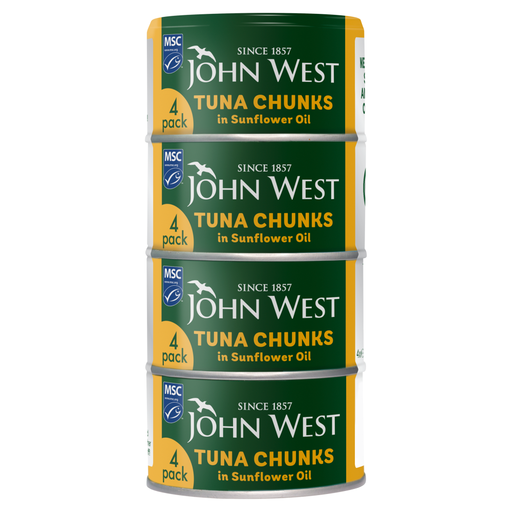 Image unavailable
Consider this four-tin pack if your planned bakes use whole tins of oil-packed tuna chunks. Check the drained weight against each recipe’s quantity, and inspect the tuna for possible bones before serving it to children.
 Image unavailable
This four-tin spring-water option is worth comparing when other ingredients supply the recipe’s oil or sauce. Check the drained weight for recipe planning and follow the can’s draining instructions.
 Image unavailable
Consider this brine-packed four-tin format for recipes that can use whole tins across several sessions. Compare its drained weight with the required tuna quantity, and follow the label’s instructions for any leftovers.
 Image unavailable
The three 100g tins may fit plans calling for smaller quantities of spring-water tuna across several meals. Check the can’s instructions for how to use or drain it, and compare the stated usable quantity with your recipe.
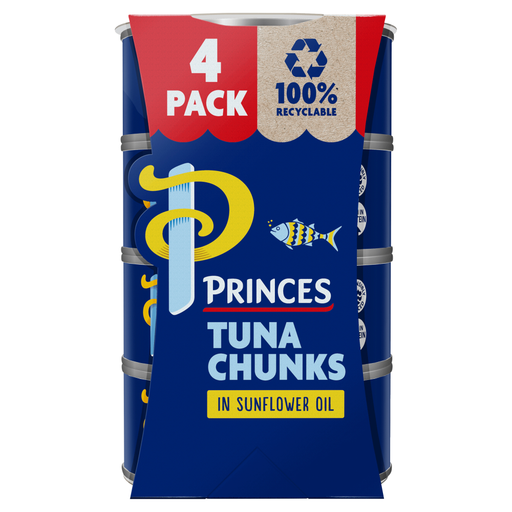 Image unavailable
This four-tin option is for recipes where sunflower-oil-packed chunks fit the other ingredients. Check drained weight for recipe yield and the basis shown on the current nutrition label before comparing it with another tuna.
Check both, but use drained weight to match the tuna to your recipes. Princes lists spring-water chunks in 3 x 80g, 4 x 145g, 6 x 145g and 8 x 145g formats, so a tin count without its size is not enough.
Choose according to the ingredients and packing liquid you want in that particular recipe, rather than treating the two as interchangeable. John West’s cited spring-water chunks list 0.7g fat per 100g, compared with 15g per 100g for its cited sunflower-oil chunks; check the exact tin’s nutrition label when comparing products.
Check the exact tin’s ingredient and allergen label for fish. GOV.UK identifies fish as an allergen that food businesses must declare when it is an ingredient; have an adult handle the tin and check for bones as well.
Follow the storage instructions on the tin you bought. For its cited tuna products, M&S says to transfer unused contents to a non-metallic container, refrigerate them and eat them within 2 days.