Hosts making a sharing dish
For a pasta bake, salad, sandwich filling or canapés, count the tins you expect to use and compare their net contents. Separate tins let you leave any unneeded ones unopened.


For a dinner-party dish, choose a multipack with enough individually sealed tins for the recipe, then match spring water, brine or sunflower oil to the way you plan to dress and season it. A no-drain pack can simplify preparation, but the John West 3 x 100g example contains less tuna by net weight than a 4 x 145g pack; check guests’ fish-allergy requirements and follow the storage directions on the tins you open.
For a pasta bake, salad, sandwich filling or canapés, count the tins you expect to use and compare their net contents. Separate tins let you leave any unneeded ones unopened.
Spring water, brine and sunflower oil bring different ingredients to the dish. Choose the packing medium before deciding how much dressing, oil or seasoning to add.
Tuna contains fish, so confirm whether guests can eat it and check the other ingredients in the meal. Plan how you will handle opened tins and consult NHS tuna guidance if a guest is pregnant or trying for a baby.
Start with the quantity the recipe calls for, then choose a packing medium and tin format that work with your preparation plans.
| Priority | What to check | Your needs |
|---|---|---|
| Quantity | Check the number of tins and their net content before draining. For example, four 145g tins contain 580g in total; three 100g tins contain 300g. | I need enough tuna for the dish without opening every tin in a multipack unnecessarily. |
| Packing medium | Read the ingredients for spring water, brine or sunflower oil. The ASDA brine example includes water and salt, while its oil example includes sunflower oil and salt. | If I am adding a dressing, I want to choose the tuna and its packing medium together rather than adjust the recipe after opening it. |
| Preparation | Check whether the tins need draining and how they open. The John West No Drain example is a 3 x 100g pack; compare that quantity with what the recipe requires. | Draining several tins just before serving would interrupt my preparation, but I still need enough for everyone. |
| Guest safety | Check the fish-allergen declaration, any bone warning and the storage directions for opened tuna. Inspect the product information for each variant you intend to serve. | I need to know whether guests can eat fish and how to store any tuna left after assembling the dish. |
| Sourcing claims | Look for an ecolabel or a specific sourcing statement on the exact tin or listing. A claim on another product in the range does not establish the credentials of this one. | If sourcing matters to my choice, I want to check the product I am actually putting on the table. |
A 3 x 100g pack and a 4 x 145g pack provide different total net contents. The smaller tins may be convenient, but the recipe might require more than one pack.
Work from the recipe’s required quantity, then check both the tin count and net content before choosing a format.
The packing medium changes what goes into the dish. ASDA’s listed sunflower-oil tuna contains 160 kcal and 6.4g fat per 100g drained; its brine product has a different ingredient list.
Choose the medium alongside the dressing and seasoning you plan to use, and compare nutrition information for the exact products if it matters to your recipe.
Once tuna is opened, the product’s refrigerated-storage instructions apply. The researched Princes and John West examples direct shoppers to use opened tuna within two days.
Open tins as needed, transfer unused tuna according to its label and plan when you will use any leftovers.
An ecolabel or brand sourcing statement should not be transferred from one tuna product to another. Princes describes its own traceability and fishing methods, while certification must be checked on the particular product.
Read the exact can or listing if a sourcing claim affects your choice.
These examples show how pack formats and product statements differ; check the particular variant rather than treating a whole range as identical.
The referenced range includes 4 x 145g tuna multipacks in spring water and brine.
The referenced No Drain tuna with a little spring water comes in a 3 x 100g pack.
The referenced own-label brine and sunflower-oil products both come as 4 x 145g multipacks.
Tesco’s referenced own-label category includes 3 x 80g brine and spring-water packs.
These brine, spring-water and sunflower-oil multipacks are options for preparing a shared tuna dish. Choose the packing medium and tin quantity that fit your recipe; confirm the contents of the larger bundle before relying on its total volume.
 No image available
Four separate tins let you open the quantity needed for a sharing dish. The brine contains salt, so consider the other ingredients and seasoning in your recipe; this product contains fish.
 No image available
Choose the sunflower-oil packing medium when it fits the way you plan to prepare the dish. The four individual tins allow staged preparation; check the other ingredients if you intend to use the packing oil, and note that the tuna contains fish.
 No image available
Spring-water packing may suit a dish to which you will add dressing separately. Four 125g tins provide 500g net content before draining; check that quantity against the recipe and account for the fish allergen.
 No image available
This oil-packed format offers four separate tins for a dish prepared in stages. Each tin is labelled 125g; inspect the tuna when adding it to food for guests, as the product information warns that some bones may remain. It contains fish.
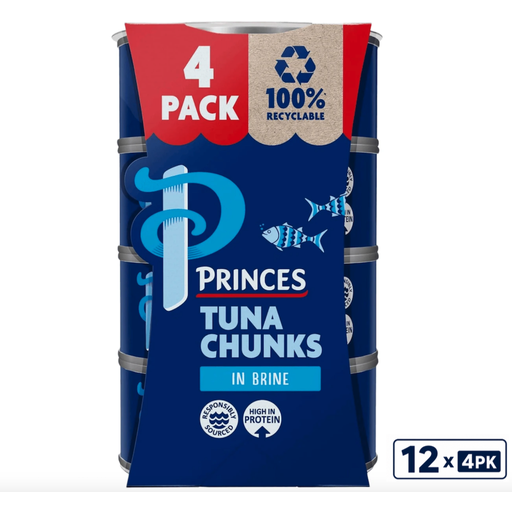 No image available
The title describes a larger brine-packed bundle for preparing more than one sharing dish. Confirm the exact can count and total net weight before planning portions around it; the tuna contains fish.
Choose the medium to suit what else goes into the dish: spring water when adding your own dressing, brine when its salt fits the seasoning, or sunflower oil when you want oil in the preparation. Read the exact product’s ingredients and nutrition information rather than treating the three formats as interchangeable.
Follow the directions on that tin and refrigerate any unused tuna as instructed. The referenced Princes and John West products specify using opened tuna within two days; transfer it to a suitable container where the label directs you to do so.
Tuna contains fish, so do not present a tuna dish as a fish-free option. Check the labels of all ingredients in the meal and provide a separate option that meets the guest’s requirements.
Check the NHS guidance on tuna when planning the menu for someone who is pregnant or trying for a baby. The NHS sets a weekly tuna limit because tuna can contain mercury; the guest’s other tuna meals that week are relevant.
No. Check the exact tin or product listing for its ecolabel or sourcing statement. Princes makes traceability claims about its canned tuna, but a brand statement should not be mistaken for certification of every individual variant.