Households planning meals after Sunday lunch
If tuna is intended for a cold side, sandwiches or another meal, separate tins let you open only what the recipe calls for. A large tin calls for a plan for anything left after opening.


Choose a multipack of separate tins if tuna is planned for a cold side or meals after Sunday lunch. A large single tin makes more sense when you can use its contents promptly; neither format is a like-for-like substitute for a hot, carved roast centrepiece. Compare drained weight, packing liquid and the label on the specific product before stocking up.
If tuna is intended for a cold side, sandwiches or another meal, separate tins let you open only what the recipe calls for. A large tin calls for a plan for anything left after opening.
The number of tins and their headline weight do not tell you how much drained tuna the pack contains. Check the drained quantity for the whole pack when comparing formats.
Look for a certification label on the particular pack if independently certified sourcing matters to you. If someone in the household is pregnant or trying for a baby, account for NHS guidance when planning how often tuna will be served.
Start with the dish and the number of tins you expect to open, then compare the quantity of drained tuna rather than headline pack weight alone.
| Priority | What to check | Your needs |
|---|---|---|
| Usable quantity | Check drained weight per tin and across the pack. Tesco Groceries lists 4 × 10²g drained for its 4 × 145g spring-water pack, compared with 280g drained for its 400g single tin. | I’m making several smaller meals, so separate tins may fit the plan. For one dish serving several people, I can check whether a single tin provides the quantity I need. |
| Packing liquid | Read the ingredients and nutrition panel on the chosen product. Tesco Groceries lists tuna and spring water for its four-pack; Sainsbury’s lists tuna, water and salt for the John West brine product, with 0.9g salt per 100g. | If the tuna is going into a dressed salad or a dish with salty ingredients, I want to choose the packing liquid with that recipe in mind. |
| Opened-tin storage | Check the selected tin’s storage instructions and plan when you will use any remainder. Sainsbury’s John West brine listing says to refrigerate after opening and consume within two days. | For one or two people, I’d rather open another small tin later than leave a large tin partly used without a meal planned. |
| Sourcing label | Check the specific pack for an independent certification mark. Tesco Groceries identifies an MSC claim on its listed Princes spring-water four-pack; Marks & Spencer describes its own four-pack as sustainably sourced. | I want to distinguish a certification shown for the product from a retailer’s own sourcing statement. |
| Frequent use | For someone pregnant or trying for a baby, NHS guidance says no more than four cans of tuna a week. The NHS also says fresh and canned tuna do not count as oily fish. | If tuna could feature in several meals this week, I need to consider who will eat those portions before buying a bulk pack. |
Headline tin weight and drained weight answer different questions. Tesco Groceries declares 4 × 10²g drained for one 4 × 145g pack and 280g drained for its 400g tin.
Compare the total drained quantity with the portions your dish calls for, rather than relying on the largest number on the front of the pack.
A single tin may leave more tuna than a small household needs at once. Storage instructions matter once it has been opened.
Plan the cold dish and any subsequent sandwiches or fillings before choosing the tin size. Follow the selected product’s refrigeration and use-by-after-opening instructions.
Spring water, brine and oil are distinct ingredients. The John West brine product listed by Sainsbury’s contains salt, so its label matters when the recipe also includes salty ingredients.
Choose the format for the recipe, then check that product’s ingredients and nutrition panel rather than transferring figures from another variant.
NHS tuna guidance applies to people who are pregnant or trying for a baby, and a bulk purchase can cover more meals than one Sunday lunch.
Consider the household’s planned weekly tuna consumption: the NHS advises no more than four cans a week for people in those groups.
These examples help identify formats and label details to compare; a claim about one listed product does not apply to every tin from the same brand.
Tesco Groceries lists both a spring-water four-pack and a larger single tin with declared drained weights.
Sainsbury’s lists an own-label 4 × 145g spring-water multipack among its canned fish products.
Tesco Groceries lists Princes Tuna Chunks in Spring Water as a 4 × 145g pack.
Sainsbury’s lists a John West brine four-pack with a stated drained quantity per tin.
Marks & Spencer describes its 640g spring-water tuna product as a four-pack.
These are multipack options for cold sides and meals around Sunday lunch. Check each pack’s drained quantity against the portions you intend to make; the formats shown are not substitutes for a hot roast centrepiece.
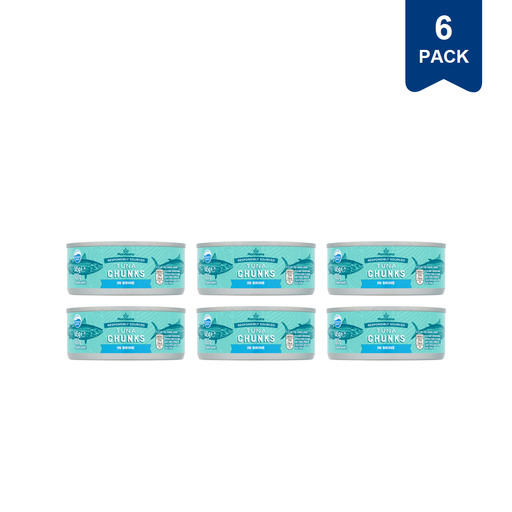 Image unavailable
Six separate tins could suit salads or sandwiches planned across several meals after Sunday lunch. The title specifies brine; check the pack’s drained weight and nutrition panel for the portions and recipe you have in mind.
 Image unavailable
This six-pack is a spring-water option for cold dishes or later meals using separate tins. Check its drained weight per tin and the nutrition panel before comparing it with brine-packed products.
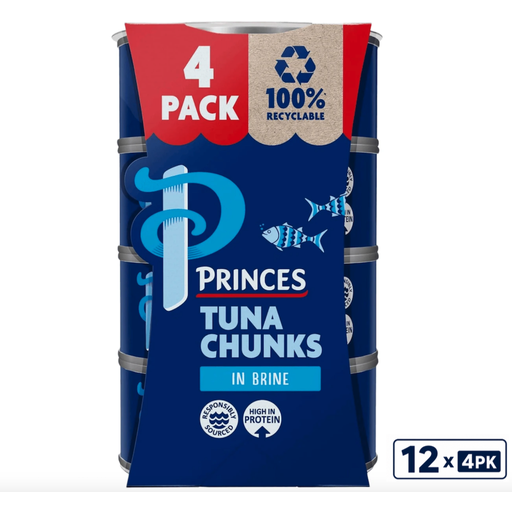 Image unavailable
The title describes twelve four-tin packs, a format to consider only if many separate tuna meals are planned. Confirm the number of tins and total drained weight on the pack before using its headline size to plan portions.
 Image unavailable
This four-tin option is packed in sunflower oil rather than spring water or brine. If it is intended for a salad or sandwich filling, check the drained quantity and nutrition panel for this oil-packed variant.
 Image unavailable
Four separate spring-water tins offer a format for cold sides or sandwiches made on different days. Use the pack’s drained weight and ingredient panel when comparing it with the sunflower-oil variant.
Yes, if you have a cold side or later meals in mind, rather than a replacement for the hot roast centrepiece. Choose separate tins when you expect to use tuna on different days; consider a large single tin when the planned dish will use its contents promptly.
Use drained weight to compare how much tuna the tins provide. Tesco Groceries declares 4 × 10²g drained for its 4 × 145g spring-water pack and 280g drained for its 400g single tin, so the headline weights alone do not give a like-for-like portion comparison.
Choose according to the recipe and the specific product label. Tesco Groceries lists tuna and spring water in its spring-water four-pack, while the John West brine product listed by Sainsbury’s contains salt and declares 0.9g salt per 100g; an oil-packed variant needs its own ingredient and nutrition check.
It can if someone who is pregnant or trying for a baby will eat several of the planned meals. NHS guidance advises those groups to have no more than four cans of tuna a week, so consider the household’s intended use before stocking up.
Follow the storage instructions on the chosen product and plan to use the remainder promptly. Sainsbury’s John West brine listing says to refrigerate after opening and consume within two days; check other tins for their own instructions.