Family ride-day meal planners
Households preparing tuna meals for several people after weekend rides can compare larger chunk multipacks with the number of portions they expect to use.


For a household that regularly makes tuna meals after rides, choose a larger multipack only if its tins fit your usual meal plans; a four-pack is a smaller commitment, while 3 x 100g no-drain tins favour quick preparation over cupboard capacity. Tuna can be one ingredient in a cycling meal, but the cited spring-water products contain little or no carbohydrate, so do not treat them as a substitute for carbohydrate foods when planning a longer ride.
Households preparing tuna meals for several people after weekend rides can compare larger chunk multipacks with the number of portions they expect to use.
Cyclists using tuna as a meal ingredient can add bread, rice, pasta or potatoes when the meal also needs carbohydrate. The cited Princes and John West spring-water products contain little or no carbohydrate.
Someone assembling a sandwich or wrap soon after a ride may value a tin that needs no draining, while accepting a smaller total pack quantity.
Decide whether the tuna is for repeated household meals, quick individual portions or a meal planned around a longer ride. Then compare the pack quantity and current label for the needs that matter in your household.
| Concern | What to check | Who this matters to |
|---|---|---|
| Carbohydrate alongside tuna | Check the carbohydrate figure per 100g and plan other foods for the ride or meal. British Cycling identifies carbohydrate as fuel for endurance activity. | For a longer ride, I need to plan carbohydrate foods rather than rely on a tin of tuna. About 29% of consumers put that meal-planning need first. |
| Pack capacity | Compare tin count, net weight, drained weight where shown and your planned meals. Princes lists spring-water chunks in formats including 4 x 145g, 6 x 145g and 8 x 145g. | If several people eat tuna regularly, I want enough tins for the meals we actually make without buying more than we will use. This is the main concern for about 36% of consumers. |
| Preparation time | Confirm that the exact pack says no-drain and check the amount in each tin. Tesco Groceries lists John West No Drain spring-water chunks in a 3 x 100g pack. | After a commute or club ride, I want to put together a sandwich or wrap without draining a tin. About 21% of consumers prioritise that convenience. |
| Household label checks | Read the current label for fish allergens, ingredients, salt and storage instructions. If pregnancy or trying for a baby is relevant, check the NHS advice on tuna intake. | When someone in my household has a specific dietary consideration, I need to check the pack before deciding whether to buy it. Label and intake checks come first for about 14% of consumers. |
The cited spring-water tuna products contain little or no carbohydrate, whereas British Cycling identifies carbohydrate as fuel for endurance activity.
Use tuna as an ingredient in a meal and plan carbohydrate foods for the ride or meal separately.
Three small tins and three larger tins provide different total quantities, so the count does not tell you how many household meals the pack will cover.
Compare net weight, drained weight where displayed and the portions you intend to make.
The cited Princes and John West products list different salt figures, and tuna contains fish, an allergen.
Check the current pack for ingredients, allergens, salt, bones warnings and instructions for storing leftovers.
The NHS states that fresh and canned tuna do not count as oily fish.
If you are choosing fish specifically to include oily fish, select that separately rather than counting a tuna meal towards it.
Princes lists several sizes of its tuna chunks in spring water, including 4 x 145g, 6 x 145g and 8 x 145g multipacks.
The cited No Drain tuna chunks in spring water come as 3 x 100g tins for meals assembled without draining.
Tesco Groceries lists own-label tuna chunks in spring water in a 4 x 145g format.
M&S lists tuna chunks in spring water among its tinned-fish products.
These packs offer different quantities and packing liquids for tuna meals around cycling: six-tin household packs, four-tin packs and a smaller no-drain option. Choose by the meals you plan to make, and check the current pack label for dietary needs.
 No image available
Consider this six-tin pack if your household uses tuna across several planned meals. It is packed in spring water; check the current label if salt, allergens or storage instructions affect your choice.
 No image available
Choose this smaller pack when assembling individual meals without draining matters more than total pack quantity. Tesco Groceries lists 0g carbohydrate per 100g for this 3 x 100g product; add other foods if the meal needs carbohydrate.
 No image available
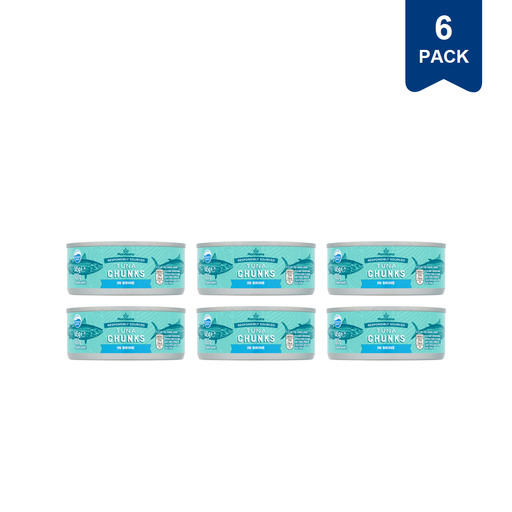
This six-tin format offers portions for repeated household meals, but it is packed in brine rather than spring water. Check the current label if the packing liquid, salt or fish-allergen information matters to your household.
 No image available
Four separate tins may suit meals spread across the week without committing to a larger pack. Check the exact pack if you need a no-drain product; this title does not identify these tins as no-drain.
 No image available
Consider this four-tin pack when sunflower oil is the packing liquid you want for planned meals. It is a different variant from Princes tuna in spring water, so compare the current labels rather than applying the spring-water product’s figures to it.
Do not rely on tuna alone for carbohydrate during a longer ride. The cited spring-water products contain little or no carbohydrate, while British Cycling identifies carbohydrate as fuel for endurance activity; plan suitable carbohydrate foods separately and use tuna as an ingredient in a meal.
An 8 x 145g pack makes sense when the household regularly uses that quantity; a four-pack is a smaller commitment, and a 3 x 100g no-drain pack suits quick individual portions. Princes lists the eight-tin spring-water format, while Tesco Groceries lists four-tin and no-drain examples. Compare the total quantity with meals you have planned.
Follow the instructions on the particular tin. The cited John West and M&S product information says to refrigerate unused tuna and eat it within two days; M&S also says to transfer it to a non-metallic container.
For people who are pregnant or trying for a baby, the NHS advises no more than four cans of tuna a week or two tuna steaks a week because tuna contains more mercury than other fish. Check the NHS guidance when planning how often tuna appears in meals, rather than treating a multipack as a recommended amount to eat.
No. The NHS states that fresh and canned tuna do not count as oily fish. If including oily fish is your aim, choose an oily-fish option separately.