Families planning several tuna meals
If tuna regularly goes into pasta, sandwiches, jacket potatoes or salads, several sealed tins let you open only what the next meal needs. Check the weight of the tuna you can use, not just the pack count.


For regular family meals, start with a multipack of separately sealed tins and compare the drained weight as well as the number of tins. Choose the packing liquid to suit your cooking, but check the salt figure on the same nutrition-panel basis: spring-water four-packs can differ. Smaller no-drain portions reduce preparation, though they provide fewer tins for cupboard stock.
If tuna regularly goes into pasta, sandwiches, jacket potatoes or salads, several sealed tins let you open only what the next meal needs. Check the weight of the tuna you can use, not just the pack count.
If salt or ingredients influence your choice, compare the exact packs. ASDA Groceries and Sainsbury's list different salt figures for their 4 x 145g spring-water tuna chunks.
A smaller no-drain tin can suit a lunch or sandwich filling when draining is inconvenient. John West's listed no-drain three-pack contains 100g tins, rather than the 145g tins in several conventional four-packs.
For a large family shop, decide whether usable quantity, label details, quick portions or sourcing information takes priority; then compare packs on that basis.
| Concern | What to check | Who this matters to |
|---|---|---|
| Usable quantity | Compare the number of tins and their net and drained weights where shown. | If tuna is on the menu several times, I want enough separately sealed tins without opening one large container. About 40% of consumers put usable quantity first. |
| Salt and ingredients | Read the ingredients and compare salt per 100g on the same drained or undrained basis. | When I choose spring-water tuna, I still need to check whether its salt figure suits what I am looking for. Roughly 30% of consumers make label comparison their primary concern. |
| Portion and preparation | Match tin size and no-drain or conventional format to the meals you plan. | For a quick lunch, I would rather open a smaller portion without draining it, even if that leaves fewer tins for later meals. About 20% of consumers prioritise convenient portions. |
| Sourcing information | Look for fishing-method or certification statements on the exact product. | If the stated catch method matters to me, I want to check the particular tin rather than rely on a brand-wide impression. Approximately 10% of consumers put sourcing information first. |
ASDA Groceries lists 0.90g salt per 100g drained for its 4 x 145g spring-water chunks; Sainsbury's lists 0.12g per 100g drained for its equivalent pack format. The packing liquid alone does not settle that comparison.
Read the current nutrition panel on each pack and compare figures stated on the same basis before stocking up.
John West's no-drain format is listed as 3 x 100g. It offers smaller portions with less draining, whereas the conventional family packs discussed here contain four 145g tins.
Choose the smaller format for meals where preparation matters most; check the total quantity if the aim is several family meals.
Opened-product instructions differ. ASDA Groceries and Princes specify use within two days after refrigeration for their cited packs; Sainsbury's specifies one day for its cited four-pack.
Follow the storage instructions on the tin you buy, including any direction to transfer leftovers to another container, and plan when you will use them.
Opening more tuna than a meal needs can leave leftovers that must be used within that product's stated storage window.
These examples show different pack formats and product-specific label details. A claim or specification for one tin should not be assumed to apply across a brand's range.
Tesco Groceries lists John West No Drain tuna chunks in 3 x 100g packs, including spring-water and brine versions.
ASDA Groceries lists Princes spring-water tuna chunks in a 4 x 145g pack.
Tesco Groceries lists own-label 4 x 145g tuna chunks in spring water, brine and sunflower oil.
Sainsbury's lists own-label spring-water tuna chunks in a 4 x 145g pack.
ASDA Groceries lists own-label spring-water tuna chunks in a 4 x 145g pack.
Marks & Spencer lists a 160g spring-water tuna-chunk tin and states that it is pole-and-line caught under its Forever Fish policy.
These tuna multipacks cover spring-water, brine and sunflower-oil chunks, plus a smaller no-drain option. Match the tin size and packing liquid to the meals you plan, then check the exact product label.
 No image available
Six separately sealed tins give a household portions to open across several meals.
Check the drained weight and current salt figure on the pack when comparing it with smaller multipacks.
 No image available
Four separately sealed tins suit meals made on different days when 125g tins fit the portions you use.
Each tin is smaller than the 145g tins in several other packs here; compare drained weights if usable quantity is your main concern.
 No image available
This four-tin format suits repeated meals when brine is the packing liquid you want.
Joybuy's cited product information lists tuna, water and salt. Check the pack's nutrition panel before comparing it with spring-water versions.
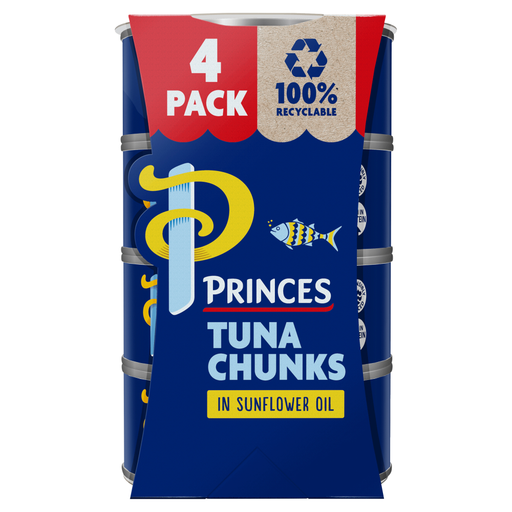 No image available
Choose this four-tin format if your planned meals call for tuna packed in sunflower oil.
When comparing nutrition figures with other packs, check whether the label states them for drained tuna or for the product as packed.
 No image available
The smaller no-drain tins suit quick lunches or fillings when you want less draining preparation.
Three 100g tins provide less cupboard stock than the four- and six-tin formats above, so check how many meals the pack needs to cover.
Check both the number of tins and the drained weight where it is stated. A four-pack of 125g tins and a four-pack of 145g tins have the same tin count but different stated net quantities; the drained-weight labels help you compare the tuna available for meals.
Follow the instructions on the exact tin. The cited ASDA Groceries and Princes packs specify refrigeration and use within two days after opening, while Sainsbury's specifies one day for its cited four-pack.
No. ASDA Groceries lists 0.90g salt per 100g drained for its cited four-pack, while Sainsbury's lists 0.12g per 100g drained for its cited four-pack. Compare the current labels using the same measurement basis.
Tuna is fish, so check the ingredients on the exact product. The Food Standards Agency says allergens present in UK prepacked food must be emphasised in its ingredients list.
No. The NHS states that fresh and canned tuna do not count as oily fish; buying a larger tuna multipack does not change that classification.