Families planning several lunches
Several tins can be useful when sandwiches, pasta, jacket potatoes or salads are planned across the school holidays. Match the pack count to meals the household expects to make.


Choose a multipack of tuna chunks when several school-holiday lunches are planned and the tins are likely to be used. A single tin suits one lunch or a smaller shopping list; choose sandwich tuna if its mix of chunks and flakes suits the filling you want. Compare the pack sizes and drained weights, then check the exact label for allergens, nutrition and storage instructions.
Several tins can be useful when sandwiches, pasta, jacket potatoes or salads are planned across the school holidays. Match the pack count to meals the household expects to make.
A single tin keeps the shopping list to one meal when there is no plan to use several cans.
Princes describes its sandwich tuna as a mix of chunks and flakes. That format may suit someone who prefers a less chunky filling.
Start with the number of lunches and the tuna texture you want, then compare labels for the exact products you are considering.
| Priority | What to check | Your needs |
|---|---|---|
| Pack size | Check the number of tins, weight per tin and drained weight where shown. Match the pack to planned meals rather than comparing pack counts alone. | I have several lunches to make, so a multipack could be useful. For just one meal, a single tin may be enough. |
| Texture | Check whether the label says chunks or a chunks-and-flakes mix. Princes describes its sandwich tuna as the latter. | For sandwiches, I would choose the texture I want in the filling; for other meals, I may prefer chunks. |
| Nutrition label | Compare the same stated basis on each pack, such as per 100g drained. Tesco Groceries lists 0.90g salt per 100g drained for its 4 x 145g spring-water tuna; Sainsbury’s lists 0.12g for its own 4 x 145g pack. | If salt matters in our household, I want to compare the exact variants, not assume that all spring-water tuna has the same label values. |
| Serving and leftovers | Check the fish-allergen declaration, any bone warning and the after-opening instructions on the can. John West and M&S product information warns that bones may remain. | Before serving children, I want to check the tuna for bones. Any opened leftovers need to be handled as the pack directs. |
More tins are useful for repeated lunches only if the household expects to use them.
Count the lunches you intend to make and choose a pack size that fits that plan.
The Tesco Groceries and Sainsbury’s 4 x 145g spring-water packs list different salt values per 100g drained: 0.90g and 0.12g respectively.
Read the nutrition panel on the exact variant you intend to serve.
Opened tuna needs the storage handling stated on its pack. M&S instructs shoppers to use its opened tuna within two days.
Follow the can’s transfer and refrigeration instructions, and plan when any leftovers will be used.
John West and M&S product information says bones may remain.
Check the tuna while preparing lunch, particularly when serving children.
Tesco Groceries lists spring-water tuna chunks as both a 145g single tin and a 4 x 145g pack.
Sainsbury’s lists a 4 x 145g pack of tuna chunks in spring water for meals planned across several days.
Princes offers spring-water tuna chunks and a sandwich tuna made with chunks and flakes.
A John West 4 x 125g spring-water tuna-chunks pack is listed by Sainsbury’s.
M&S describes its spring-water tuna chunks as pole-and-line caught under its Forever Fish policy.
These single tins and multipacks offer different quantities of tuna chunks for planned school-holiday lunches. Use the pack size and exact label to decide which fits your meals.
 No image available
The six-tin pack is an option when several lunches are planned. Check the label’s allergen and after-opening instructions before serving.
 No image available
Three tins can be used for separate lunches. If the No Drain feature matters to you, check the handling directions on the pack.
 No image available
The four-tin pack can be divided across several lunches. Sainsbury’s information for this John West pack says some bones may remain, so check the tuna when preparing it.
 No image available
A single tin suits a one-lunch shop. Check its allergen declaration and follow the can’s instructions if any tuna is left after opening.
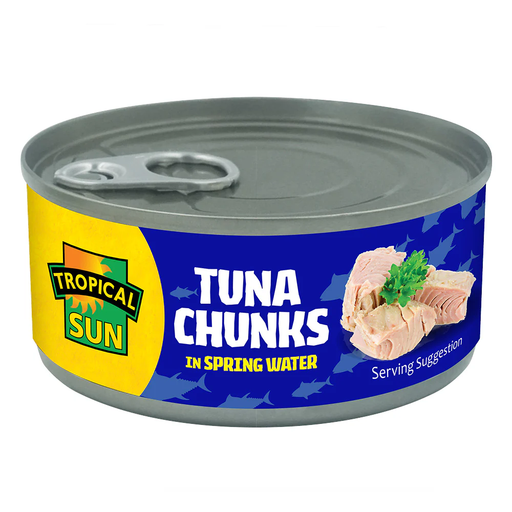 No image available
This single tin is an option for one planned lunch. Check the full allergen declaration and inspect the tuna for small bones when preparing it.
Choose by the number of lunches you plan to make: a multipack provides separate tins for several meals, while a single tin may be enough for one. Check the weight per tin and drained weight where shown so the pack matches your intended portions.
Yes, if it is stored and used as the exact pack instructs. M&S says to transfer its unused tuna to a suitable container, refrigerate it and eat it within two days; check the directions on the tin you have.
No. The Food Standards Agency identifies fish as an allergen that may pose a risk to someone with a fish allergy. Check the declaration on every tin before serving.
The NHS advises people who are pregnant or trying for a baby to have no more than four cans of tuna a week. That guidance concerns the person who is pregnant or trying for a baby, rather than ruling out tuna lunches for the whole family.
Yes. John West and M&S product information warns that bones may remain, so check the tuna as you prepare it, particularly when serving children.