For shared festival meals, compare the drained quantity and number of cans before choosing a multipack. A no-drain format may be more convenient when handling liquid is awkward, while the right can size depends on how much you can eat at once and whether you can refrigerate leftovers.
Who is this for?
Group-meal planners
If you are packing tuna for several people, compare drained quantities and can counts so the pack matches the meals you intend to make. The Competition and Markets Authority explains that unit information helps shoppers compare different pack sizes.
Low-mess meal makers
If you plan to assemble sandwiches, wraps or salads with limited washing-up facilities, an explicitly labelled no-drain format may reduce liquid handling. Check the preparation instructions on the tin.
Sourcing-focused shoppers
If sourcing matters to you, check the claim on the exact product rather than assuming it applies across a brand. The Marine Stewardship Council says its blue label identifies wild-caught fish from practices independently assessed against its environmental requirements.
What matters when choosing?
Start with the amount of tuna you can use at each meal, then decide whether reduced handling, leftover storage or a particular sourcing claim changes your choice.
| Concern | What to check | Who this matters to |
|---|
| Usable quantity |
Compare drained weight, can size and the number of cans; total net weight can include packing liquid. |
When I am making food for a group, I need enough tuna without opening more tins than the meal requires. About 36% of consumers put usable quantity first. |
| Less liquid handling |
Look for explicit no-drain wording and read the preparation instructions for that product. |
With little space to prepare a sandwich or salad, I would rather handle less liquid and washing-up. For about 29% of consumers, that convenience is the primary need. |
| Portions and storage |
Check how much each can holds and its specific refrigeration and use instructions after opening. |
If I cannot chill leftovers, I need a can I can finish at one meal. Avoiding unused opened tuna comes first for about 21% of consumers. |
| Sourcing and packing liquid |
Check the ingredient list, packing liquid and any sourcing label on the exact tin. |
I may want a particular liquid for a recipe or an identifiable sourcing claim on what I buy. About 14% of consumers make one of those product preferences their main concern. |
What should you avoid?
-
Assuming net weight is all tuna
A tin packed in water, brine or oil can include liquid in its net weight, making pack-size comparisons less useful on their own.
Compare drained quantity as well as the number and size of the tins.
-
Opening more tuna than you can use
Opening a tin changes how it must be stored. Sainsbury's instructs shoppers to refrigerate leftovers from its cited spring-water tuna and use them within one day; M&S gives two days for its cited spring-water chunks.
Plan portions around what you can eat at once, and follow the instructions on the tin you take.
Without refrigeration, keeping opened leftovers may not be practical.
-
Treating sourcing claims as interchangeable
The Marine Stewardship Council describes its blue label as an independent fishery assessment. A pole-and-line statement or retailer sourcing policy describes a different, product-specific claim.
Check the exact wording or label on your chosen tuna.
-
Assuming every festival permits tins
An event's prohibited-items and camping rules can affect what food packaging you may bring.
Check the rules for your particular festival before packing metal tins.
Brands to consider
Sainsbury's
Its own-label range includes a four-can spring-water tuna pack for shared-meal planning.
- Sainsbury's states that the fishery sources for its cited spring-water product are MSC-certified.
- For that product, leftovers must be transferred to a non-metallic container, refrigerated and used within one day.
Tesco
Its tuna range includes single tins, multipacks and no-drain formats.
- Tesco Groceries displays drained-weight information for many listed tuna products, making pack quantities easier to compare.
- Check the details of the individual product: format and drained quantity differ across the range.
Princes
Its tuna chunks are offered in spring water, brine and sunflower oil, including multipacks.
- Princes lists several pack sizes for its spring-water chunks, including single tins and four-can packs.
- Check the packing liquid and drained quantity of the particular variant rather than treating the packs as identical.
John West
Its range includes No Drain tuna chunks alongside other tuna formats.
- An explicitly labelled No Drain product is worth considering when liquid handling is awkward.
- Check the exact tin's preparation instructions; not every John West tuna product is a No Drain variant.
M&S
Its spring-water tuna chunks are relevant to shoppers checking product-specific sourcing statements.
- M&S describes its cited 160g spring-water chunks as pole-and-line caught under its Forever Fish policy.
- M&S instructs shoppers to transfer unused contents to a non-metallic container, refrigerate them and eat them within two days.
Tuna multipacks on Joybuy
These John West and Princes multipacks offer spring-water, brine or sunflower-oil choices for festival meals. Compare the quantity and preparation instructions of the exact variant you choose.
 Image unavailable
John West No Drain Tuna Chunks in Springwater 3 x 100g
A three-tin option for sandwiches or salads when reduced liquid handling matters. Check the preparation instructions on the tin; opened leftovers require refrigeration and use within two days.
View on Joybuy
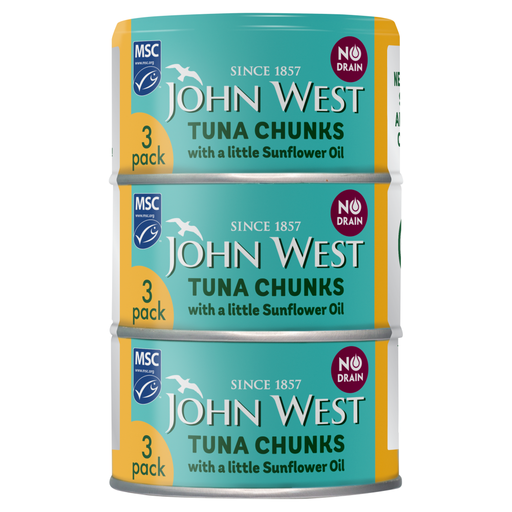 Image unavailable
John West No Drain Tuna Chunks in Sunflower Oil 3 x 100g
Choose this three-tin format if you want sunflower-oil tuna with no draining needed. Refrigerate opened leftovers and use them within two days; check the tin's ingredient and allergen information.
View on Joybuy
 Image unavailable
John West Tuna Chunks in Springwater 4 x 125g
Four separate tins may help when planning several meals. This spring-water product is not identified as No Drain; check its preparation instructions, and refrigerate opened leftovers for use within two days.
View on Joybuy
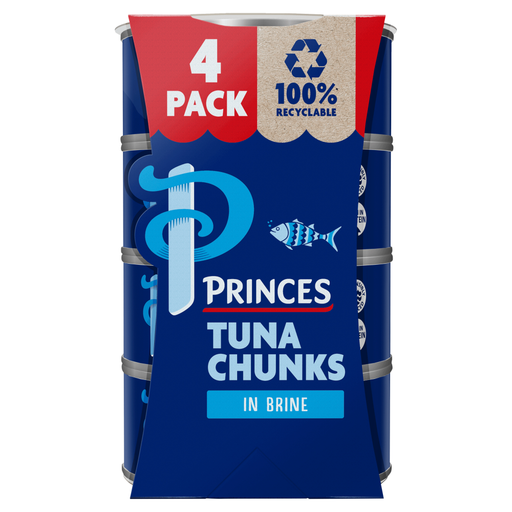 Image unavailable
Princes Tuna Chunks in Brine 4 x 145g
A four-tin brine option for shared meals. Joybuy lists 580g as the pack's total net quantity, not its drained weight; check the drained quantity if comparing usable tuna. Transfer opened leftovers to a sealed container, refrigerate and use within two days.
View on Joybuy
 Image unavailable
Princes Tuna Chunks in Sunflower Oil 4 x 145g
A four-tin choice if sunflower-oil tuna suits the meals you are planning. Check the ingredient and allergen information; refrigerate opened leftovers in a sealed container and use within two days.
View on Joybuy
Common questions
How can I compare tuna tins of different sizes?
Check the drained quantity alongside the net weight and number of tins. Water, brine or oil can be included in net weight, so the largest-looking pack does not necessarily contain the most drained tuna.
Can I keep opened tuna for the rest of a festival weekend?
Only follow the storage period on your particular product if you can meet its refrigeration instructions. Sainsbury's says to transfer leftovers from its cited spring-water tuna to a non-metallic container, refrigerate and use within one day; M&S specifies refrigeration and use within two days for its cited spring-water chunks.
What does the blue MSC label tell me?
The Marine Stewardship Council says its blue label identifies wild-caught fish from fishing practices independently assessed against its environmental-sustainability requirements. Check the specific tin for the label rather than assuming every product from a brand carries it.
Does canned tuna count as oily fish?
No. NHS guidance says fresh and canned tuna do not count as oily fish. Its advice differs for children and for people who are pregnant or breastfeeding, so use the relevant NHS guidance for those circumstances.


