Pasta cooks controlling the sauce
If your tomato, olive or caper sauce already has its own oil and seasoning, spring-water chunks let you decide what to add to the pan. Check the tuna’s salt label before seasoning the finished dish.


Choose spring-water chunks when you want the sauce and added olive oil to set the flavour of a pasta dish. Olive-oil tuna or steaks are worth considering when the tuna will remain prominent in a salad or simple pasta; no-drain chunks reduce preparation steps. Check the packing medium, salt, usable quantity and instructions for storing any leftovers on the particular pack.
If your tomato, olive or caper sauce already has its own oil and seasoning, spring-water chunks let you decide what to add to the pan. Check the tuna’s salt label before seasoning the finished dish.
For an Italian-style salad or antipasto plate where the tuna stays visible, compare chunks with steaks and decide whether you want the packing oil in the finished dish.
If quick assembly matters most, a no-drain pack removes the draining step. Check its ingredients and pack size just as you would for a conventional tin.
Start with the dish: tuna stirred through a sauce calls for a different decision from tuna left in visible pieces on a plate.
| Concern | What to check | Who this matters to |
|---|---|---|
| Oil and seasoning control | Compare spring water, brine and oil; read the salt value per 100 g on the exact pack. | If I am making tomato pasta with olives or capers, I want to choose how much oil and seasoning goes into the sauce. About 40% of consumers put that control first. |
| Visible tuna pieces | Compare chunks with steaks or fillets, and consider whether the tuna will be stirred through a sauce or added gently. | For a simply dressed salad, I want pieces of tuna that remain visible rather than tuna mixed throughout. Larger pieces are the primary need for about 30% of consumers. |
| Quick storecupboard use | Check whether the pack needs draining, its opening method and its stated usable quantity. | When dinner needs little preparation, I would rather open the tuna and add it straight to the dish. About 30% of consumers prioritise that convenience and a straightforward pack comparison. |
The net weight does not necessarily tell you how much tuna you will use after draining. Tesco Groceries displays drained-weight unit information on some tinned-tuna listings.
Compare the stated drained weight where available, then check whether the pack contains chunks, steaks or a no-drain format.
Olives, capers and anchovies can already contribute salt to an Italian-style sauce. Princes lists 0.9 g salt per 100 g drained for its Tuna Chunks in Brine.
Check your tuna’s label and taste the sauce before adding more salt.
The packing medium changes what goes into the dish. Marks & Spencer lists 12.3 g fat per 100 g for its Tuna Steak in Olive Oil and 0.6 g per 100 g for its Tuna Chunks in Spring Water; these are different products as well as different packing formats.
Choose according to the oil you want in the recipe, and use the label on the pack you buy for nutrition comparisons.
Instructions change once the pack is opened. The checked John West no-drain and Marks & Spencer tuna labels say to refrigerate opened contents and consume them within two days; the Marks & Spencer labels also instruct you to transfer unused tuna to a non-metallic container.
Follow your pack’s instructions and plan another use for any leftover tuna.
An opened pack left unused beyond its labelled storage period may have to be discarded.
A reference point for no-drain spring-water chunks when quick pasta or salad assembly is the priority.
Its brine-packed chunks provide a conventional format for tuna mixed through pasta sauce.
A retailer reference for comparing own-label chunks in spring water, brine and sunflower oil, as well as tuna steaks.
A retailer reference for the checked John West No Drain Tuna Chunks with a Little Spring Water MSC multipack.
A retailer reference for the checked John West no-drain spring-water multipack.
Its listed chunks and steaks offer formats to compare for sauce-based pasta and tuna-forward dishes.
These packs cover spring-water chunks for sauce-led dishes, olive-oil steaks for dishes with visible tuna, and sunflower-oil chunks for cooks who want that packing medium. The John West no-drain packs offer a shorter preparation route.
 No image available
Consider this for pasta when you want spring-water chunks without a draining step. The three-pack contains 100 g per pack; the checked listing for this John West variant identifies tuna, spring water and salt as ingredients. It contains fish, and the pack’s post-opening storage instructions should be followed.
 No image available
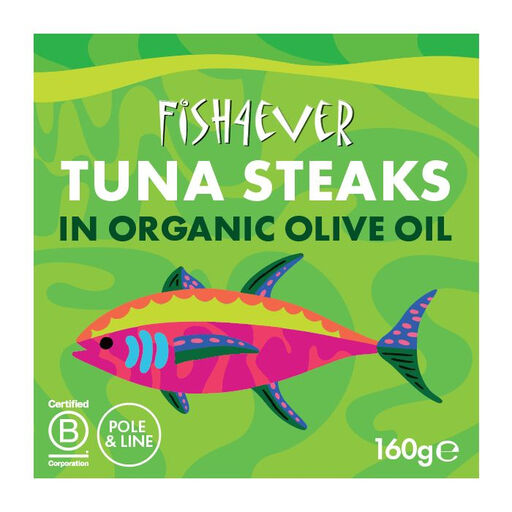
Consider this format for a salad or simple pasta where you want tuna steaks and olive oil in the dish. The pack is 160 g. If you are comparing its nutrition with drained tuna in another packing medium, check that both labels use the same per-100 g basis.
 No image available
The 145 g tin is a spring-water chunks option for pasta when you want to add the recipe’s oil yourself. Check the salt value on the can before seasoning a sauce that includes olives, capers or anchovies.
 No image available
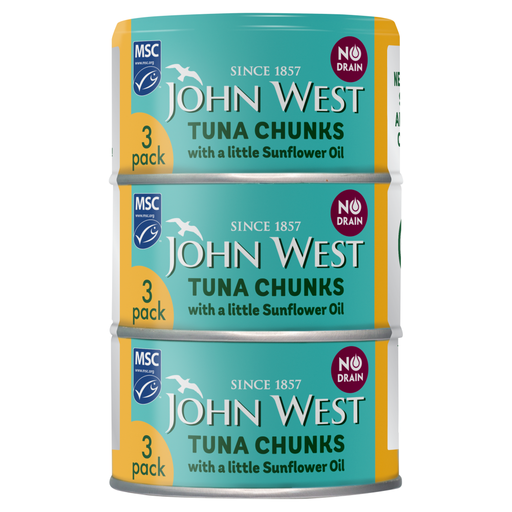
This no-drain three-pack suits quick assembly when sunflower oil is welcome in the dish. It is not the spring-water option for a cook who wants to choose all the added oil; check for bones before serving.
 No image available
This four-tin pack is an option for stirring chunks through pasta when sunflower oil fits the recipe. Each tin is labelled 125 g; check its drained weight if comparing the usable amount with another pack, and follow the label’s instructions after opening.
Spring-water chunks are a straightforward choice when you want the tomato sauce and added olive oil to set the flavour. Brine-packed chunks are another option, but check their salt label if the sauce contains olives, capers or anchovies. Marks & Spencer’s tuna puttanesca recipe uses chunks in a sauce-based dish.
Choose olive oil if you want that packing medium in the finished salad or simple pasta; choose spring water if you would rather add oil yourself. Read the exact product labels for nutrition comparisons: Marks & Spencer lists 12.3 g fat per 100 g for its olive-oil tuna steak and 0.6 g per 100 g for its spring-water chunks.
Follow the instructions on your pack and refrigerate unused tuna. The checked John West no-drain and Marks & Spencer labels specify consumption within two days of opening; the Marks & Spencer labels also say to transfer leftovers to a non-metallic container.
Check the pack for fish allergen information and any warning about bones, particularly when serving someone with a fish allergy or when larger pieces will remain in the dish. The checked John West and Marks & Spencer labels identify fish and warn that bones may remain.