If an organic ingredient matters most, tuna packed in organic olive oil can suit a roast-dinner starter or potato side. Choose spring-water tuna when you want to control how much oil goes into fishcakes or fillings. An organic-oil claim does not establish that wild-caught tuna is organic, so check seafood sourcing separately.
Who each format suits
Organic-ingredient roast cooks
If the olive oil in a tuna starter or potato side matters to you, check which ingredient carries the organic claim. Fish4Ever explains that its wild-caught seafood is not organically farmed; its tuna product uses organic olive oil.
Fishcake and filling makers
Spring-water tuna gives you a base for mixing with roast leftovers or potatoes when you want to add the dressing or oil yourself. Check the drained weight and packing medium for the particular tin.
Seafood-claim checkers
If fish sourcing drives your choice, assess it separately from any organic ingredient. The Marine Conservation Society recommends looking at credible wild-seafood labels and, where available, the species, catch location and fishing method.
What to check before buying
For tuna served alongside roast dinner or mixed into leftovers, start with your main priority: the organic ingredient, the packing medium or information about the fishery.
| Concern |
What to check |
Who this matters to |
| Organic ingredients |
Read the product name and ingredients to identify precisely what is described as organic. The Department for Environment, Food & Rural Affairs says organic food labelling must meet organic production rules. |
If organic olive oil is the reason for choosing a tuna starter or potato side, I need to know that the claim applies to the oil, not assume it applies to wild tuna. About 44% of consumers put that distinction first. |
| Recipe fit |
Check whether the tuna is packed in oil, spring water or brine, then compare the drained weight and the nutrition information for the particular product. |
For fishcakes or a roast-leftover filling, I want to decide how much oil or dressing to add myself. That is the primary concern for about 33% of consumers. |
| Fishery information |
Look for a relevant label on the individual tin and check its species, catch area and fishing method where supplied. The Marine Conservation Society identifies MSC as a credible label for wild-caught seafood. |
When choosing wild tuna, I want information about how and where the fish was caught, rather than relying on the oil's organic claim. Around 23% of consumers make sourcing their main priority. |
Common buying mistakes
-
Assuming organic oil makes wild tuna organic
Fish4Ever describes organic as a farming standard and says wild-caught seafood cannot itself be described as organically farmed. Its tuna in organic olive oil illustrates why the ingredient named in the claim matters.
Read the ingredients panel to identify the organic component, then assess fishery information as a separate question.
-
Comparing tin sizes without checking drained weight
The stated tin weight does not necessarily tell you how much tuna remains after draining. Oil, spring water and brine also give you different starting points for a recipe.
Compare drained weights where shown and choose the packing medium for the dish you plan to make.
-
Applying a brand-wide sourcing claim to every tin
Princes describes traceability across its tuna programme, but a broad brand statement does not establish which labels or catch details appear on an individual product.
Check the particular tin for a relevant seafood label and any species, catch-area or method information.
Brands to consider
Fish4Ever
A reference for tuna packed with an organic agricultural ingredient.
- Fish4Ever describes its skipjack tuna steaks as packed in organic first cold-pressed olive oil and pole-and-line caught.
- The organic description applies to the oil; Fish4Ever says its wild-caught seafood is not organically farmed.
John West
A spring-water format to consider for fishcakes and fillings.
- A John West spring-water multipack listed by Waitrose & Partners contains tuna, spring water and salt.
- Check the individual pack for its current ingredients and any seafood certification; the spring-water format does not establish an organic ingredient.
Princes
A tinned-tuna range with formats for different recipes.
- The range includes chunks, sandwich tuna and steaks. Princes says it can trace its canned tuna to the original boat.
- Its programme-level sourcing statement does not establish that a particular tin is organic or MSC-certified; check the pack.
Tesco
An own-label range to examine when choosing a packing medium or tuna format.
- Tesco lists tuna formats including brine, spring water, oil and steaks.
- Check the specific product label before assuming that any organic claim applies.
Tuna in organic olive oil on Joybuy
This tuna-in-organic-olive-oil option fits a roast-dinner starter or potato side when the packing oil is part of the dish.
 No image available
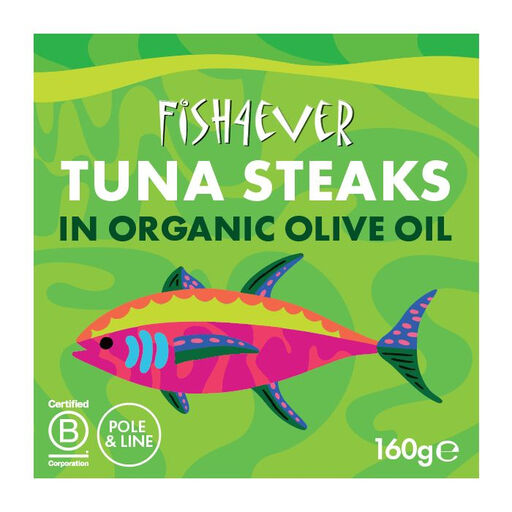
Fish4ever Tuna Steaks in Organic Olive Oil 160g
Consider this for a potato accompaniment or starter where you want to use the olive oil in the dish. The organic description concerns the oil, not a claim that the wild-caught tuna was organically farmed. Check the drained weight if the quantity of tuna matters to your recipe, and check the current pack for fish-allergen information.
View on Joybuy
Questions about choosing tinned tuna
Does organic olive oil mean the tuna itself is organic?
No: organic olive oil identifies an agricultural ingredient, not an organic status for wild-caught tuna. Fish4Ever explains that wild-caught seafood is not organically farmed, while the Department for Environment, Food & Rural Affairs requires organic food labelling to meet organic production rules. Read the exact wording and ingredients on the tin.
Should I use oil-packed or spring-water tuna for fishcakes?
Choose spring-water tuna if you want to add oil or dressing yourself when mixing fishcakes with potatoes or roast leftovers. Oil-packed tuna is an alternative when its oil and flavour suit the finished dish; check the drained weight and ingredients of the tin you choose.
What should I check if I have a fish allergy?
Tuna is fish, so check the current pack's ingredients and allergen declaration before using it. Do not rely solely on an online product description when checking the tin you intend to prepare.


