Family carers planning shared meals
A carer choosing tuna for an older relative or household may need a pack that fits repeated meals, with manageable portions and clear instructions for storing leftovers.


Choose a four-tin spring-water pack when the household will use the tins regularly; choose smaller no-drain tins when portion size and avoiding a draining step matter more. Compare the exact nutrition label and opening method rather than assuming either format suits everyone. If the person has swallowing difficulties or prescribed food textures, seek individual professional advice before serving ordinary tuna chunks.
A carer choosing tuna for an older relative or household may need a pack that fits repeated meals, with manageable portions and clear instructions for storing leftovers.
Someone comparing spring-water, brine and oil-packed tuna should read the nutrition panel on the exact product. Pack size and packing liquid alone do not establish its salt or protein content.
For a person with swallowing symptoms or prescribed food textures, pack convenience cannot establish whether ordinary chunks are suitable. NHS and Kent Community Health NHS Foundation Trust guidance points to individual assessment and texture advice.
If swallowing is a concern, establish the appropriate food texture before choosing a pack. Otherwise, match tin size to the meals the household makes and compare the exact labels.
| Concern | What to check | Who this matters to |
|---|---|---|
| Protein in the meal | Read protein per 100g and per tin on the exact pack; consider what else the meal includes. | If tuna is going into a meal for an older relative, I want to know what the portion contributes without treating the tin as a complete meal. About 36% of consumers would put that meal-planning need first. |
| Portions and handling | Compare the number and size of tins, whether draining is needed, and the instructions for leftovers. | A shared household may use a four-pack regularly, while someone preparing smaller portions may prefer fewer handling steps. For about 29% of consumers, matching the pack to actual use would be the primary concern. |
| Salt and packing liquid | Compare salt on the exact label using the same per-100g basis, and consider other ingredients in the meal. | When salt or packing liquid affects a meal choice, I need the product label rather than an assumption about spring water or brine. Roughly 21% of consumers would prioritise that comparison. |
| Swallowing and texture | Follow individual clinical or speech and language therapy advice before serving ordinary chunks where swallowing symptoms or texture instructions apply. | If the person coughs or chokes while eating, choosing a convenient tin is not the decision to make first. About 14% of consumers would place swallowing suitability ahead of the other buying concerns. |
Four tins may suit repeated shared meals, but a person eating small portions may need a different format to avoid leaving opened tuna unused.
Count the meals you expect to make and check the number and size of tins before choosing between a four-pack and smaller no-drain portions.
Salt varies by product. Marks & Spencer lists 0.75g salt per 100g for its cited spring-water chunks, while the cited John West brine chunks list 0.90g per 100g; those figures do not establish a rule for every variant.
Compare the exact nutrition panels on a like-for-like basis and include other ingredients when considering the finished meal.
Coughing or choking while eating and food sticking are among the swallowing warning signs identified by the NHS. A retail description such as “chunks” does not establish suitability for someone with dysphagia.
If symptoms or existing texture instructions apply, seek individual clinical or speech and language therapy advice before serving ordinary tuna or changing its texture.
The NHS says fresh and canned tuna do not count as oily fish.
When planning meals that include oily fish, choose that separately rather than counting a tuna multipack towards it.
Its cited formats include No Drain 3 x 100g tins and conventional 4 x 125g chunks.
Tesco lists Princes 4 x 145g tuna chunks in spring water, brine and sunflower oil.
Tesco lists own-label spring-water tuna in a 4 x 145g pack and a 400g tin.
Marks & Spencer lists spring-water tuna chunks in 160g and 640g formats.
These John West and Princes multipacks offer smaller no-drain tins and four-tin spring-water, brine or sunflower-oil formats. Compare the exact label and opening method for the person using them; ordinary chunks should not replace prescribed texture advice.
 Image unavailable
Consider these smaller tins when avoiding a draining step matters. The product description declares 27g protein and 0.80g salt per 100g and says to refrigerate opened tuna and use it within two days. If opening tins is difficult, check the opening method on the pack.
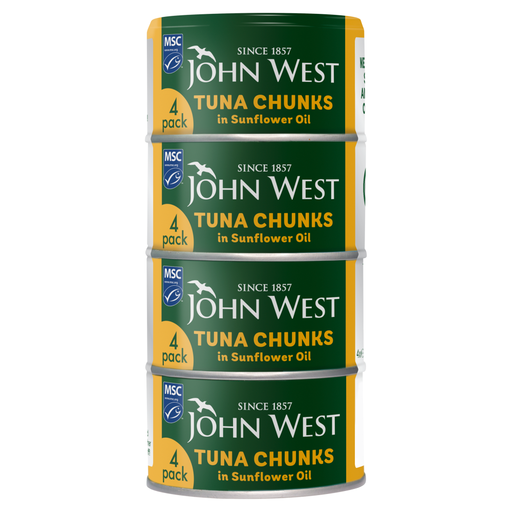 Image unavailable
This four-tin pack is an option for repeated household meals using sunflower-oil tuna. Its description declares 25g protein and 0.90g salt per 100g drained weight, says some bones may remain, and instructs refrigeration after opening and use within two days.
 Image unavailable
Consider this four-tin spring-water pack when the household expects to use separate tins across meals. Its description declares 25g protein and 0.80g salt per 100g drained weight and instructs refrigeration of leftovers and use within two days. Check the opening method if that affects handling.
 Image unavailable
This four-tin brine pack may fit a household preparing tuna meals repeatedly. The description declares 23.5g protein and 0.90g salt per 100g drained weight, notes that small bones may remain, and says to refrigerate leftovers in a sealed container and use them within two days.
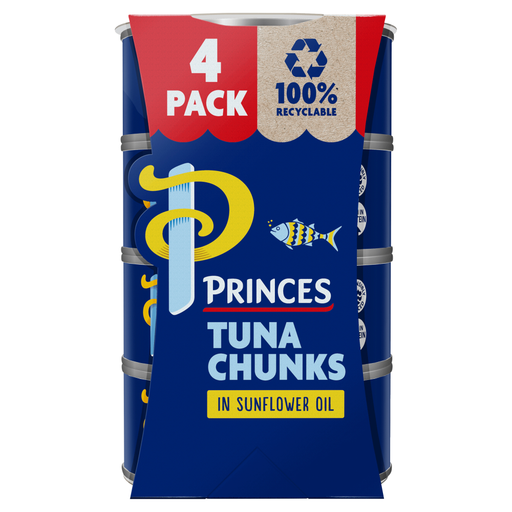 Image unavailable
This four-tin sunflower-oil format is another option for planned household meals. Its nutrition panel declares 23.5g protein and 0.90g salt per 100g; check the label’s weight basis before comparing those figures with drained-weight values on other packs. Follow its instructions for refrigerating and using leftovers.
Yes, it can provide a protein-containing meal component when ordinary tuna is appropriate for the person. Plan the rest of the meal around their needs rather than relying on tuna alone. The NHS says fresh and canned tuna do not count as oily fish.
Choose according to the planned meal and the exact product label, not the packing liquid alone. For example, the cited Marks & Spencer spring-water chunks list 0.75g salt per 100g, while the cited John West brine chunks list 0.90g per 100g; neither figure applies to every product using that liquid.
Do not assume they are suitable. If the person coughs or chokes while eating, has food sticking, or follows prescribed texture instructions, seek individual clinical or speech and language therapy advice before serving ordinary tuna. NHS and Kent Community Health NHS Foundation Trust guidance supports assessing swallowing and following the texture advice given to the individual.
Follow the instructions on that product. For its cited spring-water chunks, Marks & Spencer says to move leftovers to a non-metallic container, refrigerate them and eat them within two days; check other packs for their own directions.