Older households planning simple meals
For older people and carers who want a cupboard-stored tuna ingredient to use with other foods. The NHS advises eating a variety of food groups; tuna alone does not make a complete meal.


Choose tinned tuna as a storecupboard protein ingredient for an older person, not as a complete meal on its own. Compare the exact can’s salt, portion size, packing medium and handling requirements, then plan what else will go into the meal. Spring-water, oil-packed and no-drain products meet different practical needs; the NHS also says canned tuna does not count as oily fish.
For older people and carers who want a cupboard-stored tuna ingredient to use with other foods. The NHS advises eating a variety of food groups; tuna alone does not make a complete meal.
For anyone choosing tuna for an older household where salt is a particular consideration. The cited Sainsbury’s, Tesco and Asda spring-water products have different declared salt values, so the packing medium alone does not settle the choice.
For older people or carers who need a manageable can size and clear instructions after opening. A no-drain description, separate cans in a multipack and the label’s refrigerated-use period are practical points to check.
Start with the main job this tuna needs to do in the household, then compare the exact product label and the amount likely to be used at one meal.
| Concern | What to check | Who this matters to |
|---|---|---|
| Protein in a varied meal | Compare protein per 100g and for the portion you expect to use. Plan the other foods that will accompany the tuna. | When tuna is going into a straightforward meal for an older person, its protein contribution matters alongside the rest of the plate; about 42% of consumers put building that meal first. |
| Salt on the exact label | Compare salt per 100g on the same drained-weight basis where available, then check the amount in the intended portion. | If salt is the household’s leading concern, a spring-water description is not enough to make the choice; roughly 33% of consumers prioritise the salt figure. |
| Opening, portions and leftovers | Check the opening and draining steps, can size, bone warning and instructions for storing tuna after opening. | A can that is awkward to handle or leaves more tuna than one meal needs presents a practical problem; around 25% of consumers put manageable use and portions first. |
Sainsbury’s lists 0.12g salt per 100g drained for its cited spring-water tuna, while the cited Tesco and Asda spring-water products list 0.90g on that basis. Those are figures for specific products, not for every can sold under those brands. For a packing-medium comparison, the cited M&S tuna steaks list 105 kcal per 100g in spring water and 159 kcal per 100g in sunflower oil; consider either figure in the context of the whole meal.
The cited Sainsbury’s spring-water product lists 0.12g salt per 100g drained, compared with 0.90g for the cited Tesco and Asda products.
Read the current label on the particular can, comparing figures on the same per-100g basis before looking at the portion you will serve.
The NHS says fresh and canned tuna do not count as oily fish.
If you are following NHS fish guidance, consider the oily-fish part of the diet separately rather than relying on tuna to fulfil it.
The cited M&S tuna steaks have different declared energy values: 105 kcal per 100g in spring water and 159 kcal per 100g in sunflower oil. Neither figure says whether the finished meal suits an individual’s needs.
Check the exact product’s nutrition panel and consider what else will be served. Follow individual professional advice where a medical condition or prescribed diet affects the choice.
The cited Sainsbury’s single can says to refrigerate transferred leftovers and use them within one day; other cited products specify up to two days. Some product labels also warn that bones may remain.
Follow the instructions on the can you open, refrigerate leftovers as directed and check for bones when preparing the food.
Compare individual cans rather than assuming that a brand name determines salt, portion size or ease of opening across its range.
The cited No Drain Tuna Chunks multipack is relevant if avoiding a draining step matters.
The cited spring-water tuna chunks provide a single-can option for shoppers planning smaller amounts.
The cited own-label spring-water products include a larger single can and separately opened cans in a multipack.
The cited spring-water tuna is worth comparing when the declared salt figure is a leading consideration.
The cited own-label spring-water multipack offers separate cans for meals planned over time.
The cited tuna steaks offer a product-specific comparison between spring-water and sunflower-oil packing.
These tinned tuna packs offer different ways to stock a cupboard: no-drain chunks, spring-water chunks in separate cans and a brine-packed multipack. Choose by the intended portion, packing medium and handling steps, then check the current label for salt and storage instructions.
 No image available
Consider this pack when avoiding a draining step would make meal preparation simpler. Its three 100g cans allow separate openings; check the can’s actual opening method for the intended user and compare the current nutrition label on a consistent basis.
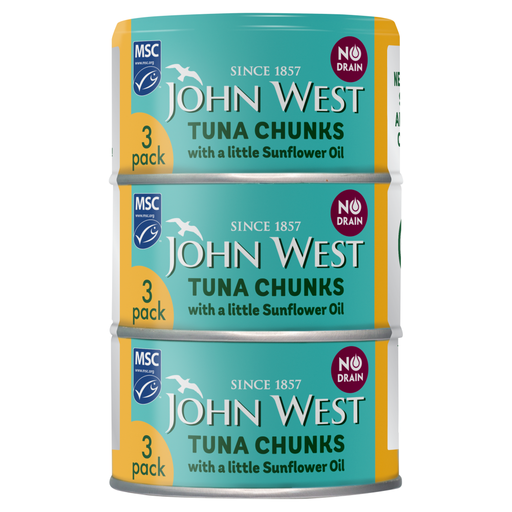 No image available
This is a no-drain option for meals where sunflower-oil packing suits the plan. The product description describes a twist-opening SmartStrip, but the intended user’s ability to manage it needs checking; also check the current salt label and the bone warning before serving.
 No image available
Six separate spring-water cans may suit a household planning tuna meals on different days. Check whether a 145g can fits the intended portion and compare the current salt label; confirm the opening method if handling the can is a concern.
 No image available
Four separate 125g cans give another spring-water portion size to compare for planned meals. Check the current salt figure and whether the can’s opening format is manageable; the product name does not describe this pack as no-drain.
 No image available
This brine-packed multipack suits shoppers who want separate cans and are prepared to drain the tuna before use. Compare its current salt figure with other packing options and check the opening format and refrigerated-storage instructions for leftovers.
No. The NHS says fresh and canned tuna do not count as oily fish. If you are following its guidance to include oily fish, make that a separate food choice rather than counting a tuna meal towards it.
Read the nutrition panel on the exact product and compare salt per 100g on the same basis, preferably drained weight where stated, as well as the amount in the portion. The cited Sainsbury’s spring-water tuna lists 0.12g salt per 100g drained, while the cited Tesco and Asda spring-water products list 0.90g; spring water alone does not establish the salt figure.
Follow that can’s storage instructions and refrigerate leftovers as directed; opened tuna is no longer an ambient storecupboard food. The cited Sainsbury’s single-can label says to transfer leftovers to a non-metallic container and use them within one day, while other cited products specify two days.
Tuna is not suitable for someone with a fish allergy. Several cited labels warn that bones may remain, so check the food carefully when preparing it; seek individual professional advice for someone with swallowing difficulties rather than relying on a can format to address them.
No. Tuna can be a protein component, but the NHS advises a varied diet across food groups. Plan the rest of the meal accordingly, and ask a doctor or registered dietitian for individual advice where a medical condition or special dietary need affects eating.