For a first food shop covering pasta, jacket potatoes, salads and sandwiches, standard tuna chunks are a flexible starting point. Choose a no-drain format if avoiding preparation matters more; consider sandwich tuna for fillings or steaks when you want larger pieces. Check the exact pack’s drained weight, packing medium, ingredients and sourcing information, because those details vary between products.
Who these options suit
New-to-cooking cupboard builders
If your first shop needs to cover several meals, chunks give you a format to consider for pasta, jacket potatoes, salads and sandwiches. Princes and Tesco both list chunks in different packing media, so you can choose a tin that fits what you plan to make.
Fast-lunch and low-mess shoppers
If you mainly make quick lunches, look at products explicitly labelled drained or no-drain. Princes describes its drained tuna as ready to use, while John West has a no-drain chunks multipack; check the particular pack rather than assuming all chunks need the same preparation.
Label-led seafood shoppers
If sourcing or nutrition information drives your choice, compare the exact cans. An MSC ecolabel, a catch-method statement, ingredients and the nutrition panel answer different questions; a retailer-wide sourcing policy is not the same as certification on an individual tin.
What to check when buying
For a first food shop, decide which need takes priority, then check the format and label details that affect that choice.
| Concern |
What to check |
Who this matters to |
| Flexibility across meals |
Check for chunks, the packing medium and drained weight if the tin needs to work across several dishes. |
If I am planning pasta one day and sandwiches or jacket potatoes another, I want a format I can use across those meals. About 33% of consumers put that flexibility first. |
| Quick, low-mess preparation |
Look for an explicit no-drain or ready-to-use description; check the number and size of tins. |
For a lunch with little preparation, avoiding a draining step matters more to me than choosing between larger and smaller pieces. About 25% of consumers put low-mess preparation first. |
| Verifiable sourcing |
If MSC certification is required, look for its ecolabel on the exact product; read other sourcing statements for their stated scope. |
When choosing seafood, I want to check the assurance on the tin itself rather than rely on a general brand or retailer statement. About 25% of consumers make verifiable sourcing their primary concern. |
| Ingredients and dietary checks |
Read the ingredients and nutrition panel for the exact packing medium; check applicable NHS guidance if pregnant. |
If an ingredient, nutrition value or pregnancy-specific limit affects my food shop, that check comes before convenience. About 17% of consumers put these dietary checks first. |
For texture-led meals, sandwich tuna and steaks are worth distinguishing from ordinary chunks. Princes describes its sandwich tuna as a mixture of chunks and flakes, while Tesco lists tuna steaks separately from chunks. Neither format establishes a nutrition or sourcing advantage on its own.
Common first-shop mistakes
-
Assuming every tin serves the same purpose
Chunks, sandwich tuna, no-drain products and steaks offer different textures or preparation steps. A format chosen mainly for one type of lunch may be less useful across the other meals in your plan.
Start with the meals you expect to make. Choose ordinary chunks for varied uses, or a more specific format when sandwiches, minimal draining or larger pieces are the priority.
-
Counting tuna as an oily-fish purchase
The NHS says fresh and canned tuna do not count as oily fish. A tin of tuna therefore does not cover a shopping plan that specifically calls for oily fish.
If you also intend to buy oily fish, choose a separate product such as sardines, mackerel or salmon.
-
Taking a sourcing policy as certification on every can
A retailer’s sourcing commitments may cover a different scope from a product carrying an independently certified label. Asda’s stated policy for its own-brand tuna, for example, does not establish that every individual tin has MSC certification.
If certification is your requirement, check for the MSC ecolabel on the exact pack you intend to buy.
Brands to compare by range
These brands and retailers offer different formats or sourcing information to examine. Compare individual packs rather than applying a range-wide description to every tin.
John West
A branded range that includes standard chunks and no-drain options.
- Tesco lists John West no-drain chunks in several packing media, and the Joybuy product selection below includes a 3 x 100g no-drain spring-water multipack.
- Check the exact product: a no-drain label on one pack does not describe every John West tin or establish its sourcing certification.
Princes
A range spanning chunks, drained tuna, sandwich tuna and steaks.
- Princes lists chunks in brine, spring water and sunflower oil, giving shoppers several format and packing-medium combinations to compare.
- Ingredients and nutrition values belong to the specific variant; do not apply the sunflower-oil product’s label to its spring-water or brine products.
Tesco
An own-label route listed alongside branded tuna in Tesco’s tinned-tuna category.
- The category lists Tesco chunks in brine and spring water as well as tuna steaks, making it possible to compare those formats within one catalogue.
- Use the label of the particular tin for ingredients, drained weight and sourcing information.
Asda
An own-label retailer with published seafood-sourcing commitments.
- Asda describes sourcing routes for its own-brand tinned tuna, including pole-and-line, FAD-free and specified fisheries-improvement routes.
- That retailer policy is not proof that every tin carries an MSC ecolabel; check the exact product if certification matters.
M&S
A retailer range listing both tinned tuna chunks and steaks.
- Marks & Spencer provides product-specific details for its Tuna Chunks in Spring Water, including ingredients and instructions for storing leftovers.
- Do not assume its other tuna products have the same ingredients or storage instructions.
Joybuy tinned-tuna options
These selections cover standard chunks for varied first-shop meals and no-drain chunks for quicker preparation. Compare each pack’s medium and size against the meals you intend to make.
 Image unavailable
John West Tuna Chunks in Springwater 4 x 125g
Consider these chunks if your first shop needs tuna for salads, sandwiches and pasta. The pack contains four 125g tins; check the exact can’s draining instructions if using it straight away matters to you.
If MSC certification is a requirement, check the ecolabel on the pack.
View on Joybuy
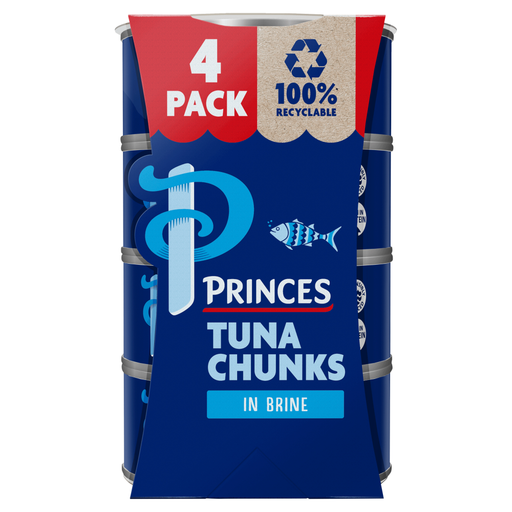 Image unavailable
Princes Tuna Chunks in Brine 4 x 145g
This chunk format suits a cupboard plan spanning sandwiches, salads and pasta. The pack contains four 145g tins, and its instructions call for draining before use.
The product contains fish, and its listing warns that small fish bones may remain.
View on Joybuy
 Image unavailable
John West No Drain Tuna Chunks in Springwater 3 x 100g
Choose this labelled no-drain format if you want to add tuna to a quick sandwich or salad without a draining step. It comes as three 100g tins packed in spring water.
For a like-for-like nutrition comparison, check whether the figures on the pack refer to drained or undrained contents.
View on Joybuy
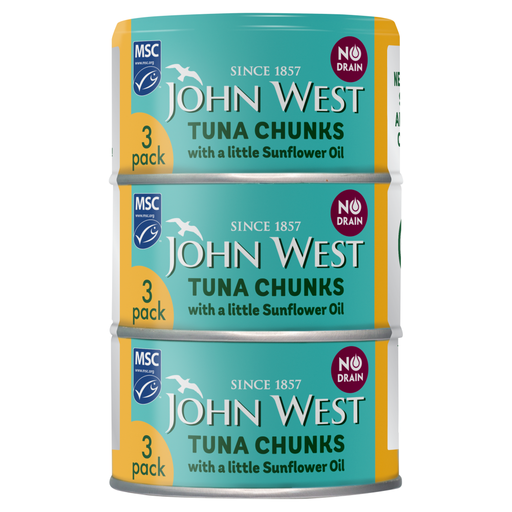 Image unavailable
John West No Drain Tuna Chunks in Sunflower Oil 3 x 100g
This is another no-drain option for quick meals, but its sunflower-oil packing medium makes it a different product from the spring-water version. The pack contains three 100g tins.
Check the pack’s nutrition basis when comparing variants, and look at the exact can’s ecolabel if MSC certification matters to you.
View on Joybuy
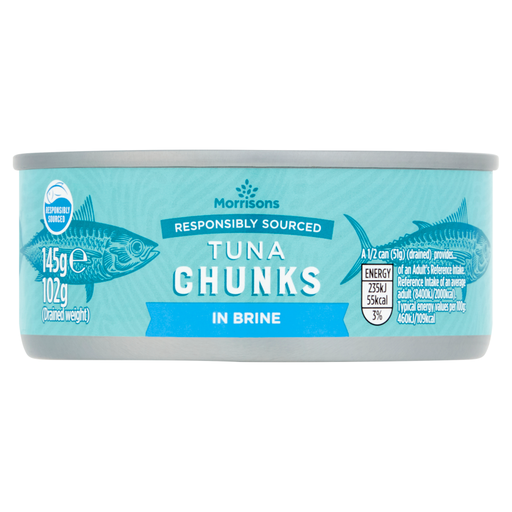 Image unavailable
Morrisons Fad Free Tuna Chunks in Brine 145g
A single 145g tin offers a way to try brine-packed chunks before choosing a multipack for sandwiches, salads or pasta. Check its preparation instructions if avoiding draining is important.
The product name’s sourcing wording does not itself establish MSC certification; look for the ecolabel on the exact can if you require it.
View on Joybuy
Questions about tinned tuna
Does tinned tuna count as oily fish?
No. The NHS says fresh and canned tuna do not count as oily fish. If oily fish is also on your shopping list, choose a separate product such as sardines, mackerel or salmon.
Is spring-water tuna automatically preferable to tuna in oil or brine?
No single packing medium answers every buying need. Compare the ingredients and nutrition panel on the exact products: Princes Tuna Chunks in Sunflower Oil, for example, lists tuna, sunflower oil and salt, which should not be assumed to describe its spring-water or brine variants.
How should I store tuna left over from an opened tin?
Follow that product’s pack instructions. Marks & Spencer directs shoppers to transfer unused M&S Tuna Chunks in Spring Water to a non-metallic container, refrigerate it and eat it within 2 days; instructions for another product may differ.
Is there a tuna limit during pregnancy?
Yes. NHS pregnancy guidance says not to eat more than 4 cans or 2 tuna steaks a week because tuna can contain pollutants including mercury. This is pregnancy-specific advice, not a limit stated here for every shopper.


