Choose tuna in organic olive oil if the certified packing ingredient and an oil-dressed topping matter to you; that wording does not mean the fish itself is organic. Choose brine or spring water if you want a breakfast base without added oil. For either format, compare the exact tin’s ingredients, salt and nutrition labelling, and check fisheries claims separately from organic claims.
Who is choosing?
Organic-label shoppers
If the organic claim is your reason for choosing a breakfast tin, look at which ingredient it describes. Ocado’s Fish4Ever yellowfin listing states that organic ingredients make up 17.5% of that product; it does not establish that the fish is organic.
Toast and egg eaters
If tuna is going on toast or into a mixed breakfast topping, decide whether you want it packed in oil, brine or spring water. Check the exact tin’s nutrition panel rather than assuming the formats have interchangeable values.
Fisheries-sourcing shoppers
If catch method or fisheries certification matters most, look for an MSC claim or a pole-and-line statement on the product you are considering. Neither claim tells you whether its packing ingredients are organic.
What should you check?
Start with the claim that matters to you, then compare packing medium, the nutrition panel and fisheries information on the exact tin.
| Priority | What to check | Your needs |
|---|
| Organic wording |
Read the full product name and ingredients to see whether ‘organic’ describes the olive oil or a broader product claim. Check the certification information for the claim being made. |
I want to know exactly what is organic before choosing a tin for breakfast. |
| Packing medium |
Check whether the tuna is in olive oil, brine or spring water, and whether the product contains steak pieces or chunks. |
For toast, I may want the oil included in the topping; for eggs or a mixed filling, I may prefer tuna without added oil. |
| Nutrition and salt |
Compare energy, fat, protein and salt per 100g on the exact products. Check whether values are given for drained tuna before comparing them. |
I want figures measured on a comparable basis. Sainsbury’s labels its brine chunks at 105 kcal, 24.8g protein and 0.42g salt per 100g drained; those figures do not describe every brine tin. |
| Fisheries sourcing |
Look for the MSC claim and any stated catch method on the particular tin. Consider these separately from organic ingredients. |
If sourcing is my priority, I want a product-specific fisheries claim rather than assuming an organic-oil claim answers that question. |
What is easy to overlook?
-
Reading ‘organic olive oil’ as ‘organic tuna’
Ocado’s Fish4Ever yellowfin listing identifies organic olive oil and states that organic ingredients account for 17.5% of the product. The claim’s scope matters when comparing it with a standard tuna tin.
Read the ingredient list and certification wording, and describe the product as tuna in organic olive oil unless its own label supports a broader claim.
-
Comparing unlike nutrition figures
Packing medium and the basis used for the nutrition panel can differ between tins. Sainsbury’s gives values per 100g drained for its brine chunks, so a figure on another tin needs its own basis checked before comparison.
Compare energy, fat, protein and salt on the exact labels, noting whether the figures refer to drained contents.
-
Confusing fisheries and organic claims
MSC certification and pole-and-line statements concern fisheries sourcing; they do not certify the tuna’s olive oil or other agricultural ingredients as organic.
Check organic wording for the ingredient question and the product’s fisheries information for the sourcing question.
-
Forgetting the instructions after opening
An opened tin may leave more tuna than one breakfast needs, and storage instructions can be product-specific.
Follow the tin’s refrigeration and use-after-opening directions. Transfer leftovers to a suitable covered container if the label instructs you to do so.
Relevant brand references
These product and sourcing examples help distinguish organic ingredients from other tuna claims; they do not imply that every brand offers organic tuna.
Fish4Ever
A tinned-fish reference for shoppers looking specifically at tuna packed in organic olive oil.
- Ocado’s Fish4Ever yellowfin listing states that organic ingredients account for 17.5% of that product.
- That ingredient claim should not be read as a claim that the wild tuna itself is organic. Check the species and ingredient proportions on the particular Fish4Ever tin.
Sainsbury’s
An own-label brine example for a breakfast topping without added oil.
- Sainsbury’s lists its 4 × 145g brine chunks at 105 kcal, 24.8g protein and 0.42g salt per 100g drained. The company also states that its own-label canned tuna is MSC-certified and pole-and-line caught.
- Those fisheries statements do not establish an organic ingredient claim for the brine product.
Princes
A brine-tuna reference for shoppers checking ingredients alongside the brand’s fisheries statement.
- Princes states that it has completed its commitment to 100% MSC-certified tuna. Its Joybuy brine multipack lists tuna, water and salt.
- An MSC statement does not make the brine multipack an organic-ingredient option; check its own label if that is essential.
M&S
Product examples include spring-water chunks and tuna steak in olive oil.
- M&S labels its spring-water chunks at 99 kcal, 23.5g protein and 0.75g salt per 100g, and lists olive oil among the ingredients of its olive-oil steak.
- Olive oil in an ingredient list should not be assumed organic without a claim on that product.
John West
Tesco Groceries lists a John West MSC no-drain tuna product with a little spring water.
- The listed no-drain format offers another packing option to consider for breakfast.
- That category listing does not establish an organic claim for the item; inspect its individual ingredients if organic packing ingredients matter.
A Joybuy tuna option
This tuna-steak option is for a weekend breakfast where organic olive oil is the ingredient of interest. It is a different product from the Fish4Ever yellowfin example discussed above.
 No image available
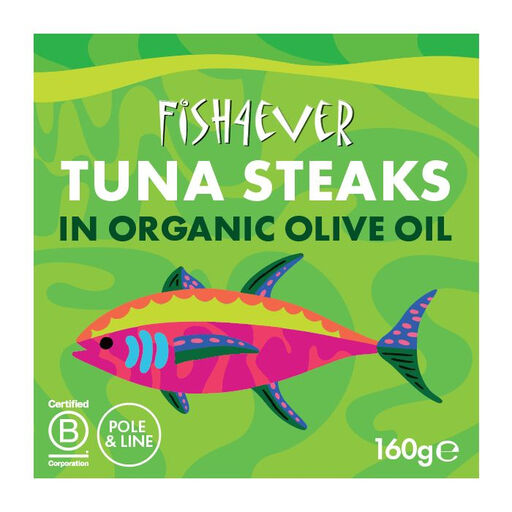
Fish4ever Tuna Steaks in Organic Olive Oil 160g
For tuna on breakfast toast when you want organic olive oil in the tin. Joybuy’s ingredient listing gives skipjack tuna (65%), organic olive oil (33.5%) and sea salt (1.5%); the organic wording applies to the oil, not automatically to the fish. Check the package’s nutrition basis before comparing it with a drained brine tin.
Purchase link unavailable
Frequently asked questions
Does ‘organic tinned tuna’ mean the fish is organic?
Not necessarily. Ocado’s Fish4Ever yellowfin listing describes tuna in organic olive oil and states that organic ingredients make up 17.5% of the product. Read the full ingredient and certification wording to see what the claim covers; organic oil does not by itself establish an organic claim for the fish.
Should I choose oil, brine or spring water for tuna on toast?
Choose according to how you want to serve it: oil is already part of an oil-packed topping, while brine or spring-water tuna gives you a base without added oil to mix with other ingredients. Compare the exact tins’ nutrition panels, including whether values are stated for drained contents.
Does an MSC or pole-and-line claim mean the tuna is organic?
No. Those claims address fisheries certification or catch method, not whether an added agricultural ingredient such as olive oil is organic. Check each claim separately on the product you intend to buy.
Does tinned tuna count as oily fish?
No. The NHS states that fresh and canned tuna do not count as oily fish. Packing tuna in olive oil does not change how tuna is classified in that guidance.
What should I do with tuna left after breakfast?
Follow the tin’s instructions for refrigerating and using opened contents. If its label specifies transferring leftovers to a non-metallic container, do that rather than keeping them in the opened can.


