Parents introducing fish in familiar meals
If a young child rejects unfamiliar foods, a small serving that fits an existing meal may be easier to offer without pressure. The NHS advises offering variety and trying a rejected food again another time.


Choose a cut and packing liquid that fit the familiar meal you plan to make, then check exactly which ingredient carries the organic claim. An organic olive oil claim does not establish that the tuna itself is organic; texture, the ingredient list and how often tuna is served may matter more to your choice.
If a young child rejects unfamiliar foods, a small serving that fits an existing meal may be easier to offer without pressure. The NHS advises offering variety and trying a rejected food again another time.
For shoppers seeking an organic claim, the distinction is whether it applies to the product, the fish or an ingredient such as olive oil. The ingredient list and any stated organic percentage help make that distinction.
Frequent tuna meals call for attention to dietary variety. NHS guidance says canned tuna does not count as oily fish, and separate weekly tuna limits apply during pregnancy or when trying for a baby.
Start with the meal and the eater’s preferred texture. Then compare the packing liquid and label claims on the individual tin.
| Concern | What to check | Who this matters to |
|---|---|---|
| Texture and familiar meals | Check whether the tuna comes as chunks or fillets and whether that cut fits the intended dish. Start with a small serving, as the NHS advises for fussy eaters. | When distinct pieces of fish are likely to be rejected, a format that can go into a familiar meal matters most; about 36% of consumers put meal acceptance and texture first. |
| Meaning of “organic” | Read the full product name, ingredient list and stated organic percentage. Check whether certification refers to the olive oil rather than the tuna. | If the reason for choosing the tin is its organic claim, it matters which ingredient carries that claim. Roughly 29% of consumers make that distinction their primary concern. |
| Packing liquid and salt | Compare oil, spring water or brine alongside the salt declaration and drained weight on each pack. | For a familiar filling or sauce, control over the liquid added with the fish can shape the recipe; about 21% of consumers chiefly prioritise packing liquid and salt. |
| Regular use | Consider how often tuna appears across meals. Where pregnancy or trying for a baby applies, count weekly tuna intake against NHS guidance. | In a household serving tuna often, dietary variety and applicable intake guidance become the main consideration; roughly 14% of consumers put regular use first. |
Ocado’s Fish4Ever yellowfin and Azores skipjack listings identify organic ingredients as 17.5% and 33.5% of their respective products. Those figures do not establish that the fish is organic.
Check the ingredient list, stated organic percentage and certification information on the product you are buying. Choose it for organic oil only if that meets your priority.
Larger, visible pieces may not fit a meal intended to introduce fish in small amounts. Their appearance is not evidence that a fussy eater will accept them.
Choose a cut that fits a familiar dish and begin with a small portion. The NHS advises against forcing a child to eat a rejected food.
The NHS says canned tuna does not count as oily fish. Organic olive oil does not change that classification or remove the separate tuna guidance for pregnancy.
Keep fish choices varied. If pregnancy or trying for a baby applies, include tuna from all meals when checking the weekly limit.
Catch method, traceability and fishery certification describe different matters from whether an ingredient is certified organic.
Decide which claim you need, then check that specific claim on the current pack rather than treating the terms as interchangeable.
An option for shoppers specifically seeking tuna packed in organic olive oil.
An albacore fillet option in organic olive oil for meals where intact pieces are wanted.
A range with different tuna formats for familiar meals.
A route for comparing packing liquids and convenient tuna formats.
An own-label option for comparing tuna cuts and packing liquids with branded tins.
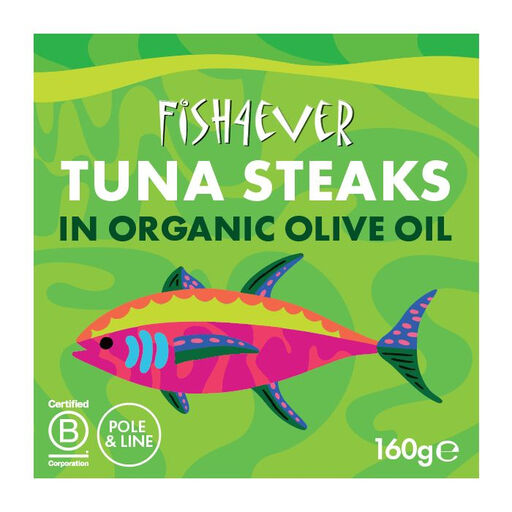
This tuna-in-organic-olive-oil option is relevant when the organic packing ingredient matters and the oil suits the meal you intend to make.
 No image available
Consider this for a familiar pasta, couscous or rice dish if organic olive oil is the ingredient you want. The listing describes 65% skipjack tuna and 33.5% certified organic olive oil; it does not establish that the tuna itself is organic. It also uses both “steaks” and “chunks” for the cut, so check the current pack if piece size matters. Compare its salt declaration on the pack, as the listing’s ingredient and nutrition figures differ.
No. It identifies the olive oil, not necessarily the fish, as organic. Ocado’s Fish4Ever yellowfin and Azores skipjack listings state organic-ingredient shares of 17.5% and 33.5% respectively; read the individual ingredient list and certification details before deciding what the claim covers.
Try a small amount in a familiar meal without forcing the child to eat it. The NHS advises offering variety and trying a rejected food again on another occasion; no particular tuna cut guarantees acceptance.
No. The NHS states that fresh and canned tuna do not count as oily fish, so an olive-oil packing liquid does not make a tuna meal an oily-fish portion.
NHS and Food Standards Agency guidance limits tuna to no more than four medium cans or two tuna steaks a week for people who are pregnant or trying for a baby. Count tuna across meals, not just the tin used in one recipe.
No. An organic claim describes ingredient production, not mercury content. The Food Standards Agency identifies mercury as a consideration for tuna; follow applicable intake guidance rather than treating organic olive oil as a mercury-related claim.