Time-pressed meal builders
New parents putting together sandwiches, jacket potatoes, salads or pasta meals with little preparation time. A no-drain pack removes the draining step; standard cans offer another option when that step is manageable.


For flexible cupboard meals, start with tuna chunks in spring water; choose a no-drain pack when avoiding a preparation step matters more. Tuna in sunflower oil offers a different packing medium for recipes that call for it, while brine and mixed chunks-and-flakes tuna offer other flavour and texture choices. Check the exact pack’s ingredients, drained weight and storage instructions; anyone pregnant or trying for a baby should also account for NHS tuna limits.
New parents putting together sandwiches, jacket potatoes, salads or pasta meals with little preparation time. A no-drain pack removes the draining step; standard cans offer another option when that step is manageable.
Shoppers choosing between single tins and multipacks who want portions they can use. Compare drained weight, not just the number or size of cans, and consider what will happen to any tuna left after opening.
People who are pregnant or trying for a baby and need to account for tuna across the week. NHS guidance for this group limits tuna intake; it does not apply to every new parent simply because they are buying for a new-parent household.
For consumers choosing tinned tuna as a new-parent cupboard staple, identify the need that would take priority if pack formats pull the decision in different directions.
| Concern | What to check | Who this matters to |
|---|---|---|
| Preparation time | Check whether the exact pack is labelled no-drain and how it opens. | If I have a short break to make a sandwich, I want to skip draining and get on with the meal. About 36% of consumers put minimal preparation first. |
| Portions and leftovers | Compare drained weight across pack sizes and read the instructions for storing opened tuna. | When stocking the cupboard, I need tins my household can use without leaving more tuna than we can store and eat promptly; manageable portions come first for about 29% of consumers. |
| Recipe and label fit | Compare the packing medium, ingredients, texture, fish allergen declaration and nutrition values on the exact pack. | If I am making a sandwich filling or pasta salad, I want the tuna’s texture and packing medium to suit that dish. Roughly 21% of consumers make recipe and label fit their primary concern. |
| Pregnancy-related intake | If pregnant or trying for a baby, account for total tuna eaten during the week against NHS guidance. | Where pregnancy guidance applies to me, I need to plan tuna alongside the rest of the week’s meals; for about 14% of consumers, that intake check takes priority. |
For packing-medium comparisons, use like-for-like label values. Princes lists 99kcal and 0.5g fat per 100g drained for its spring-water chunks, against 180kcal and 9.5g fat per 100g drained for its sunflower-oil chunks. Those figures describe the two Princes products, not every tin packed in water or oil.
Net and drained weights can differ, so two tins of similar size need not provide the same amount of tuna for a meal.
Compare drained weights where shown, then choose a pack size that fits the portions you expect to use.
The packing medium affects the dish and its stated nutrition. Princes’ sunflower-oil and spring-water chunks, for example, have different energy and fat values per 100g drained.
Choose the medium for the recipe and read the nutrition panel on the exact product rather than applying another variant’s figures.
The Tesco and M&S spring-water products covered here instruct shoppers to transfer unused contents to a non-metallic container, refrigerate them and eat them within two days.
Follow the instructions on the pack you buy, especially if a larger tin will supply more than one meal.
The NHS says people who are pregnant or trying for a baby should eat no more than four cans of tuna or two tuna steaks a week. It also says fresh and canned tuna do not count as oily fish.
If that guidance applies, account for tuna across meals rather than treating each tin as a separate decision.
Its range includes standard tuna formats and no-drain spring-water chunks for meals where draining would be inconvenient.
Princes offers chunks in spring water, brine and sunflower oil, as well as a mixed chunks-and-flakes sandwich format.
Tesco’s own-label spring-water range includes different can and multipack sizes for cupboard planning.
M&S lists spring-water chunks and tuna-steak formats, with sourcing information for shoppers who want to check that detail.
These tins cover no-drain packs and multipacks of chunks in spring water or sunflower oil. Choose by the preparation step you can manage, the packing medium your meal calls for and the portions your household will use.
 No image available
A no-drain option for a sandwich or salad when there is little time to prepare lunch. The pack contains three 100g cans of tuna chunks in spring water; check the pack’s storage directions after opening.
 No image available
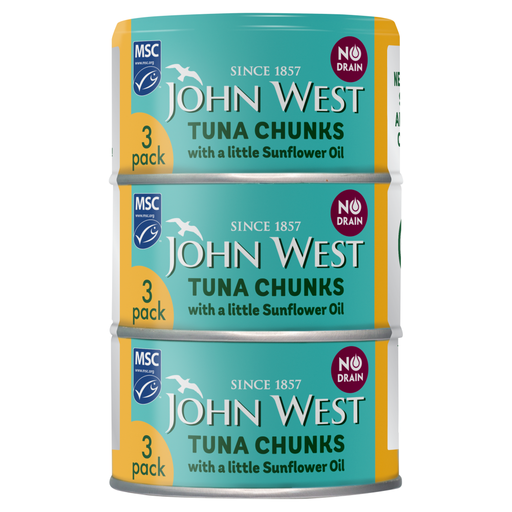
For a quick meal that calls for tuna packed in oil without a draining step. This is a three-can, 100g-per-can pack; check its own nutrition label rather than using values from the spring-water variant, and note the product warning that some bones may remain.
 No image available
A six-can option for planning several meals with spring-water tuna chunks. Each can is labelled 145g; check its drained weight when deciding how much tuna a serving or recipe will use.
 No image available
Four 125g cans of spring-water chunks for cupboard meals such as sandwiches or pasta. If avoiding draining is essential, check the exact pack before choosing it: the product information gives conflicting indications about whether this variant is no-drain.
 No image available
A four-tin option when sunflower-oil tuna suits the meals you plan to make. Each tin is labelled 145g; check the drained weight and the nutrition panel for this exact pack when comparing portions or packing media.
Yes. Tuna can be used in sandwiches, salads, jacket potatoes or pasta dishes. Choose standard chunks if you can drain a can, or a pack explicitly labelled no-drain when removing that step matters most.
Choose according to the recipe and the exact label: spring water, brine and sunflower oil bring different ingredients and packing media. Princes’ spring-water and sunflower-oil chunks also have different stated energy and fat values per 100g drained, so do not carry one variant’s nutrition figures over to another.
Follow the directions on the tin you bought. The Tesco and M&S spring-water products covered here say to transfer unused tuna to a non-metallic container, refrigerate it and eat it within two days.
The NHS advises people who are pregnant or trying for a baby to eat no more than four cans of tuna or two tuna steaks a week. That limit concerns total tuna intake across the week, not the number of tins bought at once.
No. The NHS says fresh and canned tuna do not count as oily fish, so a tin of tuna should not be counted as an oily-fish portion when planning fish variety.