Meal planners stocking several weeks of meals
For sandwiches, pasta and other repeat meals, compare the drained quantity, number of cans and dates on the packs. A larger multipack is useful only if its contents fit the meals you expect to make.


For a storecupboard stock, choose a pack size whose cans you can use and rotate before their best-before dates, rather than assuming more tins will suit every household. Spring-water chunks offer a flexible base for several meals; a no-drain format may suit quick lunches, while brine or oil may suit particular recipes. Check the exact pack for its drained quantity, ingredients, storage instructions and sourcing claims before buying in bulk.
For sandwiches, pasta and other repeat meals, compare the drained quantity, number of cans and dates on the packs. A larger multipack is useful only if its contents fit the meals you expect to make.
If a meal uses only part of a tin, opened-food instructions matter as much as unopened storage. The cited Asda and M&S packs instruct buyers to transfer leftovers to a non-metallic container, refrigerate them and use them within two days.
John West and Princes offer no-drain or drained ranges for buyers who would rather open a tin and use its contents without handling much packing liquid. Check the exact pack size and ingredients against the lunches you make.
Start with the quantity and format you will use, then check how the tins and any leftovers need to be stored.
| Concern | What to check | Who this matters to |
|---|---|---|
| Usable pack quantity | Compare can count and drained quantity; inspect the best-before dates on the tins. | If I plan several weeks of meals, I want enough tuna without buying cans I cannot rotate through. About 36% of consumers put usable pack quantity first. |
| Storage and leftovers | Read the unopened storage and opened-food instructions on the exact pack. | When a recipe leaves part of a tin unused, I need to know how to keep it for another meal. For about 29% of consumers, managing storage and leftovers is the main concern. |
| Meal format | Choose chunks or larger pieces for the intended dish; check the packing liquid and whether draining is needed. | For a quick lunch, I may care most about opening a tin without draining it, while another recipe calls for a different liquid or texture. That format choice comes first for about 21% of consumers. |
| Labels and sourcing | Read the exact ingredients and nutrition panel; check which pack carries any fishery or catching-method claim. | If I am stocking one product for repeated meals, I want its ingredients and sourcing information to match what I am looking for. Roughly 14% of consumers make those label details their primary concern. |
More tins increase the amount you need to store and rotate. Different can sizes can also leave different amounts unused after a meal.
Check the can count, drained quantity and dates against the meals you expect to make before committing to a larger stock.
Unopened storage instructions no longer describe how to keep the contents once a tin has been opened. The cited Asda and M&S packs specify a non-metallic container, refrigeration and use within two days.
Follow your pack's opened-food directions. Plan to use a whole tin where practical, or transfer and cover the remainder promptly.
GOV.UK distinguishes best-before dates, which concern quality, from use-by dates, which concern safety. Storage instructions and the condition of the tin still matter.
Read the date wording on each product and rotate stored tins so those with earlier dates are used first.
A damaged tin warrants a closer look before it joins a long-term cupboard stock. GOV.UK says a shallow dent alone may leave a can fit to eat if there are no other signs of damage, while Reading Borough Council advises avoiding damaged cans.
Inspect tins on arrival. If a can's condition is uncertain, contact the retailer rather than setting it aside for later use.
Its range includes conventional spring-water chunks and ECOTWIST No Drain tuna.
Princes lists spring-water chunks in several can and multipack sizes, alongside a separate drained-tuna range.
Tesco's tinned-tuna category includes own-label chunk multipacks and tuna-steak options.
A cited own-label spring-water option is a 4 × 145g multipack.
A cited own-label spring-water pack contains four 145g tins and gives instructions for opened leftovers.
Its cited spring-water tuna four-pack includes storage directions and product-specific sourcing statements.
These packs cover spring-water chunks, a no-drain option, and tuna packed in sunflower oil or brine. Choose by the meals you plan to make and the amount in each tin; check the dates and directions on the pack you receive.
 Image unavailable
For repeated meals such as sandwiches or pasta where spring-water chunks suit the recipe. The pack contains four 125g tins; check each tin's date and follow its directions for any leftovers.
 Image unavailable
The no-drain format suits lunches where you want less liquid handling. Three 100g tins let you open one at a time; check the exact ingredients and opened-food directions on the pack.
 Image unavailable
A six-tin spring-water pack for households planning several tuna meals. Each tin is described as 145g; check the pack's total and drained quantities, dates and storage directions before stocking up.
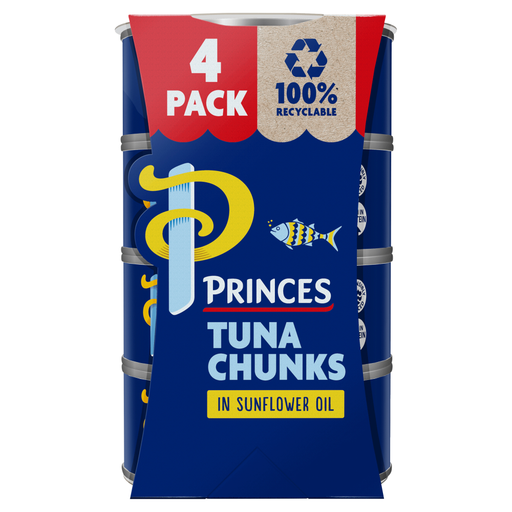 Image unavailable
Choose this four-tin pack when sunflower oil suits the meals you are planning rather than a spring-water packing liquid. Check the ingredients, dates and directions for any opened remainder.
 Image unavailable
This four-tin pack suits recipes where you want tuna packed in brine. If packing liquid or salt matters to your choice, read this product's ingredients and nutrition panel rather than assuming it matches a spring-water tin.
Check the number and size of tins, the stated drained quantity and the dates on the pack, then choose a packing liquid and format that suit your planned meals. A larger pack is useful when you can store it as directed and use its contents.
Follow that product's opened-food instructions. The cited Asda and M&S spring-water packs both say to move unused tuna to a non-metallic container, refrigerate it and eat it within two days; their unopened cupboard-storage directions no longer apply to the leftovers.
No. GOV.UK explains that best-before dates concern quality, whereas use-by dates concern safety. Check how the tin has been stored and its condition, and do not treat the two kinds of date as interchangeable.
Inspect it before adding it to cupboard stock. GOV.UK says a shallow dent may be acceptable if there are no other signs of damage, while Reading Borough Council advises avoiding damaged cans. If you are unsure about a tin's condition, contact the retailer.