Comfort-dinner batch cooks
If you make pasta bakes, jacket-potato fillings or tuna melts for several servings, a multipack lets you plan how many tins to open for each meal. Check the drained quantity when working out portions.


For pasta bakes and jacket-potato fillings, choose a multipack by the amount of drained tuna you need and whether spring water, brine or oil suits the recipe. A no-drain three-pack can make assembly simpler, but its declared pack size is different from a four-tin pack, so check the quantity before stocking up.
If you make pasta bakes, jacket-potato fillings or tuna melts for several servings, a multipack lets you plan how many tins to open for each meal. Check the drained quantity when working out portions.
Four tins with the same count on the front can contain different declared quantities. Compare the can size and drained weight before deciding how much tuna a pack will provide.
A no-drain format is worth considering when you want to assemble dinner without draining a tin. Check its can count and size against a standard multipack so the format still fits the meals you have planned.
Start with the quantity of tuna your dinners require, then choose the packing liquid and opening format. Read the exact pack label for details that matter to anyone eating the meal.
| Priority | What to check | Your needs |
|---|---|---|
| Usable quantity | Check the number of tins, each tin’s declared size and the drained weight where stated. Do not treat net weight and drained weight as the same measure. | I’m making more than one dinner and want to know how much tuna I can portion into each dish. |
| Packing liquid | Identify spring water, brine or oil on the exact pack. If salt or nutrition values matter, compare the labels using the same per-100g basis. | For a pasta bake with its own sauce, I may want spring-water tuna; for another dish, oil-packed tuna may suit the ingredients I’m using. |
| Preparation | Check whether the tuna needs draining and how the tin opens. Compare the declared can count and size as well as the opening format. | On a quick dinner night, I’d rather open and use the tuna with less draining. |
| Labels and storage | Read the fish allergen information, any bone warning and the instructions for unused contents after opening. | I need the pack information to work for everyone eating the meal, and I may not use a whole tin at once. |
| Sourcing information | If a certification matters to you, check the claim on the particular pack rather than assuming it applies to every product in a range. | I want to identify a specific sourcing claim before choosing a multipack. |
Tin count alone does not tell you the drained quantity available for a pasta bake or several jacket potatoes.
Compare the declared can size and drained weight on the exact packs you are considering before planning portions.
Oil becomes part of an oil-packed tuna dish, while spring-water tuna leaves you to add the sauce or oil separately. Nutrition labels also differ between individual products.
Decide how you will prepare the meal, then read the packing-liquid and per-100g declarations for that product.
The John West no-drain example listed by Tesco Groceries is a 3 x 100g pack, whereas the own-label spring-water examples listed by Tesco Groceries and Sainsbury’s are 4 x 145g packs. They serve different quantity and preparation needs.
Choose the easier-opening format if it helps with assembly, but check whether its declared quantity covers the dinners you have planned.
These range examples show formats and label details to compare; a brand name alone does not determine which pack suits a particular dinner.
Tesco’s own-label range includes 4 x 145g tuna chunks in spring water, brine and sunflower oil.
Sainsbury’s lists own-label 4 x 145g tuna chunks in spring water, brine, olive oil and sunflower oil.
John West offers conventional tuna multipacks and a 3 x 100g No Drain sunflower-oil format.
Princes supplies 4 x 145g tuna-chunk multipacks in spring water, brine and sunflower oil.
M&S lists a 640g four-pack of tuna chunks in spring water.
These packs cover brine, sunflower-oil, spring-water and no-drain tuna for comfort dinners. Check each pack’s declared quantity and packing liquid against the meals you intend to make.
 No image available
Four brine-packed tins for planned pasta dishes and other cooked meals. Check the drained weight when deciding how much tuna the pack will provide.
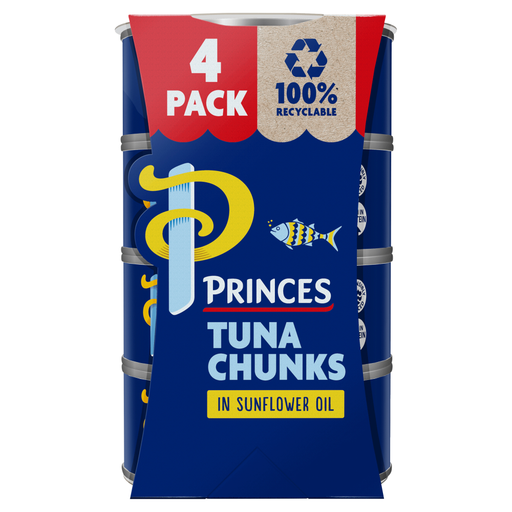 No image available
A four-tin option for pasta or jacket-potato dishes where sunflower oil suits the recipe. Check the label’s nutrition basis and drained weight when comparing it with other packs.
 No image available
Four spring-water tins for pasta bakes and other dishes in which you add the sauce yourself. Check the pack’s total drained weight before planning portions.
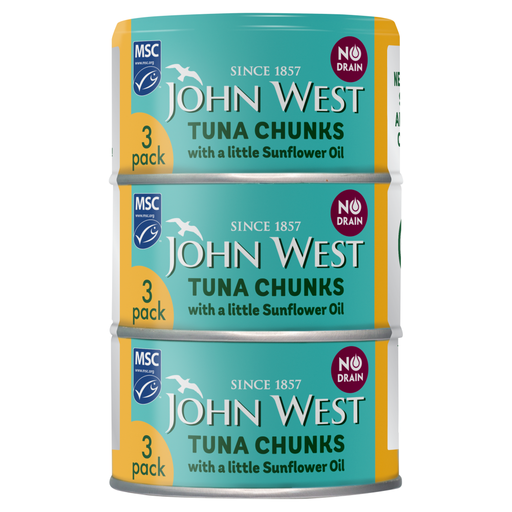 No image available
The no-drain, twist-opening format suits a meal you want to assemble without draining tuna. This is a three-tin pack, and the product description says some bones may remain.
 No image available
A spring-water six-pack described for pasta and baked-potato meals. Confirm the total pack quantity and drained weight before allocating tuna across several dinners; the stated 145g quantity does not establish the pack total.
Check the number and declared size of the tins, then use the drained weight where it is stated to plan how much tuna will go into a dish. Packs with the same tin count need not provide the same drained quantity.
Choose by how you intend to prepare the dish: spring-water tuna leaves you to add your own sauce or oil, while oil-packed tuna brings oil into the recipe. For brine or either alternative, check the exact product’s ingredient and nutrition label rather than assuming the variants have the same values.
Follow the instructions on that pack. The checked John West listing and Marks & Spencer product page say to refrigerate unused contents and use them within two days; M&S also specifies transferring them to a non-metallic container.
No. The NHS classifies neither fresh nor canned tuna as oily fish, regardless of the packing liquid you choose for a meal.