Occasional second-home visitors
If stays are irregular or the number of guests changes, separate unopened tins give you more flexibility than opening one large tin. Check dates on the cans and use older stock first.


Choose a four-pack of separately sealed tins if visits to the second home are irregular: you can open only what a meal needs. A larger reserve makes more sense when you visit often enough to rotate it, while larger tins suit planned group meals only if you can use the contents promptly. Check the packing liquid, individual tin size and storage instructions on the exact pack.
If stays are irregular or the number of guests changes, separate unopened tins give you more flexibility than opening one large tin. Check dates on the cans and use older stock first.
If you regularly prepare meals for several people, a larger reserve or larger individual tins may fit your menus. Choose a tin size that the group can use promptly once opened.
If packing liquid or labelled nutrition affects your recipes, compare the exact variants. Anyone who is pregnant or trying for a baby should also account for tuna eaten across the week under NHS guidance.
Start with how often the property is used and how much tuna a typical meal needs; then compare the individual tins, not just the outer pack.
| Concern | What to check | Who this matters to |
|---|---|---|
| Flexible stock | Compare tin count, size per tin and best-before dates. Princes lists both 4 x 145g and 8 x 145g spring-water chunk packs. | When visits are unpredictable, I want enough sealed tins for a meal without leaving an oversized reserve untouched. About 40% of consumers put that stock flexibility first. |
| Family portions | Check the size of each tin against the planned meal, plus the instructions for unused contents. M&S lists four-pack tuna-steak products with an 800g pack weight. | If several people are coming for lunch, I need portions that suit the meal without leaving more opened tuna than we can use. About 30% of consumers make family-meal capacity their primary concern. |
| Packing liquid and labels | Read the exact variant’s liquid and nutrition label. For its 800g tuna-steak packs, M&S lists 0.6g fat per 100g in spring water and 6.4g in sunflower oil. | For meals where the liquid or labelled nutrition matters, I want to choose the variant deliberately. Packing-liquid and label fit come first for about 30% of consumers. |
Princes lists both four- and eight-tin chunk packs, but extra tins are useful only if they fit the property’s likely use and cupboard space.
If visit frequency is uncertain, start with fewer tins. Check the dates on the pack and use older stock first.
Poor stock rotation can leave tins unused past their best-before dates.
An outer pack does not tell you how much tuna is in each tin or how much remains after draining. Tesco’s tuna listings identify drained weight separately.
Compare the number of tins, their individual sizes and drained weight where it is stated.
A larger tin may suit a group, but it also leaves more to store if only one or two people eat. M&S instructs buyers of its tuna-steak products to transfer unused contents to a non-metallic container, chill them and eat them within two days.
Choose a smaller tin unless the remaining tuna is planned for another meal within the product’s stated storage period.
The comparable M&S tuna-steak variants have different listed fat values per 100g. Pack size also does not change NHS tuna guidance for people who are pregnant or trying for a baby.
Read the exact variant’s label and choose its liquid for the intended meal. If the NHS guidance applies to you, account for tuna eaten throughout the week.
A reference for choosing between standard chunk tins and a larger cupboard reserve.
Its own-label four-tin chunk formats are relevant when comparing standard cupboard portions.
Its smaller multipack formats are worth considering when large individual tins would leave leftovers.
Its 800g four-pack tuna-steak products are relevant to planned meals for several people.
These chunk multipacks offer four separately sealed tins for flexible meals, alongside a six-tin option for a larger reserve. Compare the individual tin sizes and packing liquids against how the second home is used.
 No image available
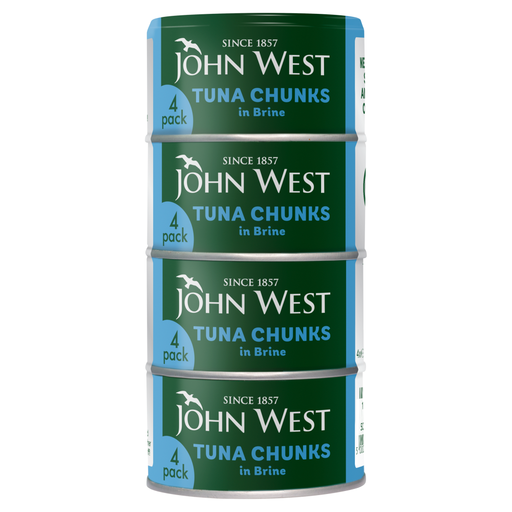
Four separate tins suit stays when you may need only one tin at a time. The stated format is 4 x 145g, packed in brine; check the dates on the cans when stocking the cupboard.
 No image available
Choose this four-tin format if sunflower oil suits the meals you plan to make at the property. Each tin is 145g; use this variant’s own label when comparing nutrition with tuna packed in another liquid.
 No image available
The four separate 125g tins offer a smaller stated tin size than the 145g four-packs shown here. That distinction matters if a single tin is closer to what an occasional meal needs; this variant is packed in brine.
 No image available
For meals calling for spring-water tuna, this pack provides four individually sealed 125g tins. Check the instructions on the purchased pack before storing any contents left after opening.
 No image available
Six separate 145g tins provide a larger reserve than a four-pack while still allowing one tin to be opened at a time. This spring-water format is more stock to rotate, so check its dates against how often the second home is used.
Start with a four-pack if visits or meal sizes are uncertain; consider an eight-pack when regular use makes stock rotation practical. Princes lists both 4 x 145g and 8 x 145g spring-water chunk formats, so check the dates and cupboard space before choosing the larger reserve.
Follow the instructions on the exact product. For its tuna-steak products, M&S says to move unused contents to a non-metallic container, refrigerate them and eat them within two days.
Not for the comparable M&S 800g tuna-steak packs: M&S lists 0.6g fat per 100g for spring water and 6.4g per 100g for sunflower oil. Use those figures only for those variants and read the label of the pack you intend to buy.
No. NHS guidance says people who are pregnant or trying for a baby should have no more than four cans of tuna a week. Count cans eaten across the week rather than treating a multipack as one portion.